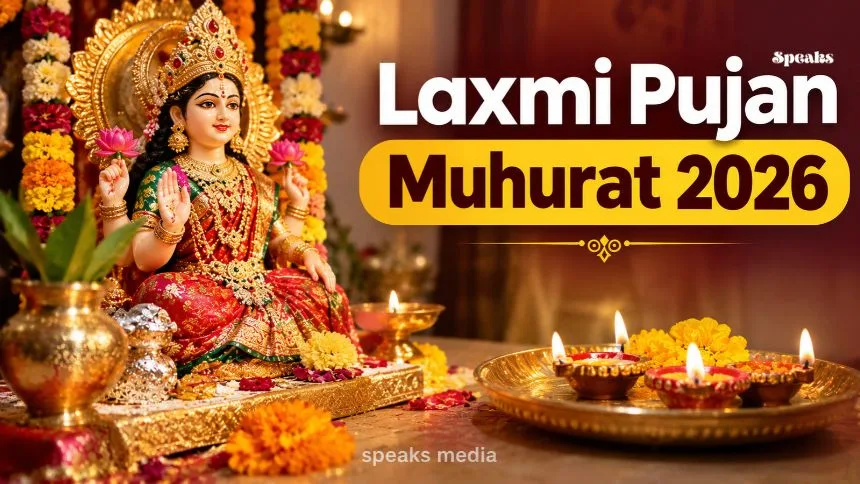
Diwali 2026 will be celebrated on Sunday, November 8, with devotees preparing to welcome Goddess Lakshmi into their homes. The evening Lakshmi Puja is one of the most important rituals of the festival, traditionally associated with prosperity, good fortune and happiness.
For families planning their celebrations, knowing the correct laxmi pujan muhurat 2026 is essential. The main evening worship is scheduled during the Pradosh period, with the Vrishabha Kaal considered an important window for performing the traditional Lakshmi-Ganesh Puja.
Laxmi Pujan Muhurat 2026: Date and Main Puja Timings
According to the published Panchang timings for Diwali 2026, the main Lakshmi Puja muhurat on November 8 will be from 5:54 PM to 7:50 PM.
The main worship window lasts approximately one hour and 56 minutes. Devotees can use this period to perform the traditional rituals, offer prayers and seek blessings from Goddess Lakshmi and Lord Ganesha.
Diwali 2026 Lakshmi Puja Timings
| Puja Details | Timings (IST) |
|---|---|
| Diwali Date | Sunday, November 8, 2026 |
| Lakshmi Puja Muhurat | 5:54 PM – 7:50 PM |
| Puja Duration | 1 hour 56 minutes |
| Pradosh Kaal | 5:31 PM – 8:09 PM |
| Vrishabha Kaal | 5:54 PM – 7:50 PM |
| Nishita Kaal | 11:39 PM – 12:31 AM |
| Amavasya Tithi Begins | 11:27 AM, November 8 |
| Amavasya Tithi Ends | 12:31 AM, November 9 |
These timings provide a guide for planning the evening’s worship. Since Panchang calculations can vary by location, devotees should also check their local city’s timings before beginning the puja.
Why Is Lakshmi Puja Performed on Diwali?
Diwali falls on Kartik Amavasya, the new moon day in the Hindu lunar calendar. According to Hindu tradition, Goddess Lakshmi emerged during the Samudra Manthan, or the churning of the cosmic ocean.
The occasion is also associated with the return of Lord Rama to Ayodhya after completing 14 years of exile. People are believed to have welcomed him by lighting rows of oil lamps, a tradition that remains central to Diwali celebrations.
Devotees worship Goddess Lakshmi as the goddess of wealth and prosperity. Lord Ganesha is worshipped alongside her because he is traditionally regarded as the remover of obstacles and the deity of wisdom and new beginnings.
Diwali 2026 Pradosh Kaal and Vrishabha Kaal
Pradosh Kaal is the period around sunset and is considered particularly significant for Diwali Lakshmi Puja. In traditional Hindu worship, this period is associated with prayers offered to Goddess Lakshmi.
For November 8, 2026, the Pradosh Kaal will run from 5:31 PM to 8:09 PM. The Vrishabha Kaal will fall between 5:54 PM and 7:50 PM, overlapping with the main Lakshmi Puja window.
The Vrishabha period is traditionally considered a favourable fixed-sign window for worship. Devotees often prefer this period for Lakshmi-Ganesh Puja during Diwali.
Diwali 2026 Nishita Kaal Muhurat
Apart from the evening puja, Nishita Kaal is another important period associated with Diwali worship. It takes place around midnight and has a special place in certain Hindu religious traditions.
The Nishita Kaal for Diwali 2026 will begin at 11:39 PM on November 8 and end at 12:31 AM on November 9. The duration is approximately 52 minutes.
Another auspicious period, Singh Lagna, is listed from 12:25 AM to 2:42 AM on November 9. These timings are additional worship windows and should not be confused with the main evening Lakshmi Puja muhurat.
Diwali 2026 Amavasya Tithi Timings
Amavasya is the lunar phase associated with Diwali. The date and duration of this tithi are important when determining the festival’s religious observances.
In 2026, the Amavasya Tithi will begin at 11:27 AM on November 8 and end at 12:31 AM on November 9.
The evening worship is planned during the Amavasya period, with devotees lighting diyas, decorating their homes and offering prayers to Goddess Lakshmi.
How to Perform Lakshmi Puja at Home on Diwali 2026
Families can perform Lakshmi-Ganesh Puja at home by following their customary traditions. The worship generally begins with cleaning and preparing the puja area before placing the idols or pictures of the deities.
Here is a traditional step-by-step puja procedure:
1. Clean and decorate the puja area
Clean the house and prepare a dedicated place for worship. Place a red or yellow cloth over a wooden platform and decorate the area with flowers, rangoli and diyas.
2. Perform Kalash Sthapana
Fill a clean Kalash with water and add a coin, flowers, rice and other traditional offerings. Place mango leaves around its opening and position a coconut on top.
3. Place Goddess Lakshmi and Lord Ganesha
Install the idols or pictures of Goddess Lakshmi and Lord Ganesha on the decorated platform. Lord Ganesha is traditionally worshipped first, followed by Goddess Lakshmi.
4. Offer flowers and traditional items
Apply roli or kumkum tilak to the deities and offer rice grains, fresh flowers, incense sticks and a diya. A red chunari and lotus flowers are also traditionally offered to Goddess Lakshmi.
5. Offer sweets and fruits
Prepare traditional offerings such as sweets, fruits, dry fruits, batasha and other items according to family customs. Place the offerings before the deities as bhog.
6. Perform Lakshmi and Ganesh Aarti
Light the prayer lamps and perform the aarti of Goddess Lakshmi and Lord Ganesha. Family members can participate in the prayers and distribute prasad after the ritual.Amar Ujala Hindi News Live
Lakshmi Puja Mantras for Diwali 2026
Mantras are an important part of traditional Diwali worship. Devotees chant prayers to seek blessings for prosperity, wisdom, peace and well-being.
Two commonly recited mantras include:
Goddess Lakshmi Mantra
Om Shreem Mahalakshmyai Namah.
Lord Ganesha Mantra
Om Gan Ganapataye Namah.
Devotees can chant these mantras during the puja according to their family traditions. There is no requirement to perform elaborate rituals to participate in the festival.
What Should Be Kept During Diwali Lakshmi Puja?
The puja arrangements can be prepared in advance to avoid interruptions during the auspicious period. Traditional items commonly used during Lakshmi-Ganesh worship include:
- Idols or pictures of Goddess Lakshmi and Lord Ganesha
- Red or yellow cloth
- Kalash, coconut and mango leaves
- Roli, kumkum and Akshat (rice grains)
- Fresh flowers and lotus flowers
- Incense sticks and camphor
- Ghee or oil diyas
- Fruits, sweets and dry fruits
- Coins and traditional offerings
- Panchamrit and clean water
The selection of offerings may differ between families and regional traditions. Devotees can arrange the items according to their customs and availability.
Diwali 2026 Why Is Lakshmi-Ganesh Puja Important?
Lakshmi-Ganesh Puja is one of the central religious traditions of Diwali. Goddess Lakshmi represents wealth, abundance and prosperity, while Lord Ganesha represents wisdom, good beginnings and the removal of obstacles.
For many families, the puja is also an opportunity to pray for financial stability, harmony and success in the coming year. Business owners and shopkeepers traditionally perform special worship of their account books, cash boxes and workplaces.
The festival is celebrated with different customs across India and by Hindu communities around the world. Lighting diyas, sharing sweets, decorating homes and gathering with family remain important parts of the celebrations.