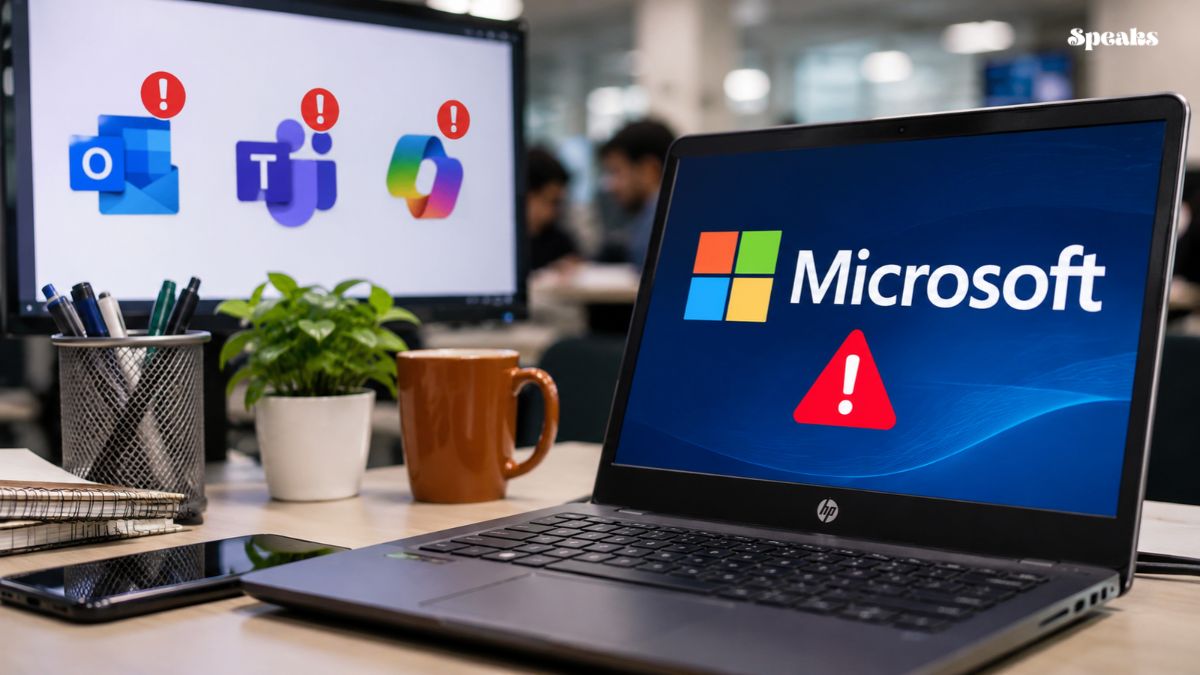
A widespread Microsoft outage on Thursday, November 12, disrupted Outlook email and other workplace services, exposing how heavily employees depend on digital tools and highlighting the value of traditional, offline work skills.
Downdetector recorded as many as 130,000 reports of Microsoft service disruptions shortly after 1 p.m. Eastern time. Users reported problems sending and receiving emails, opening inboxes and accessing services including Teams and Copilot.
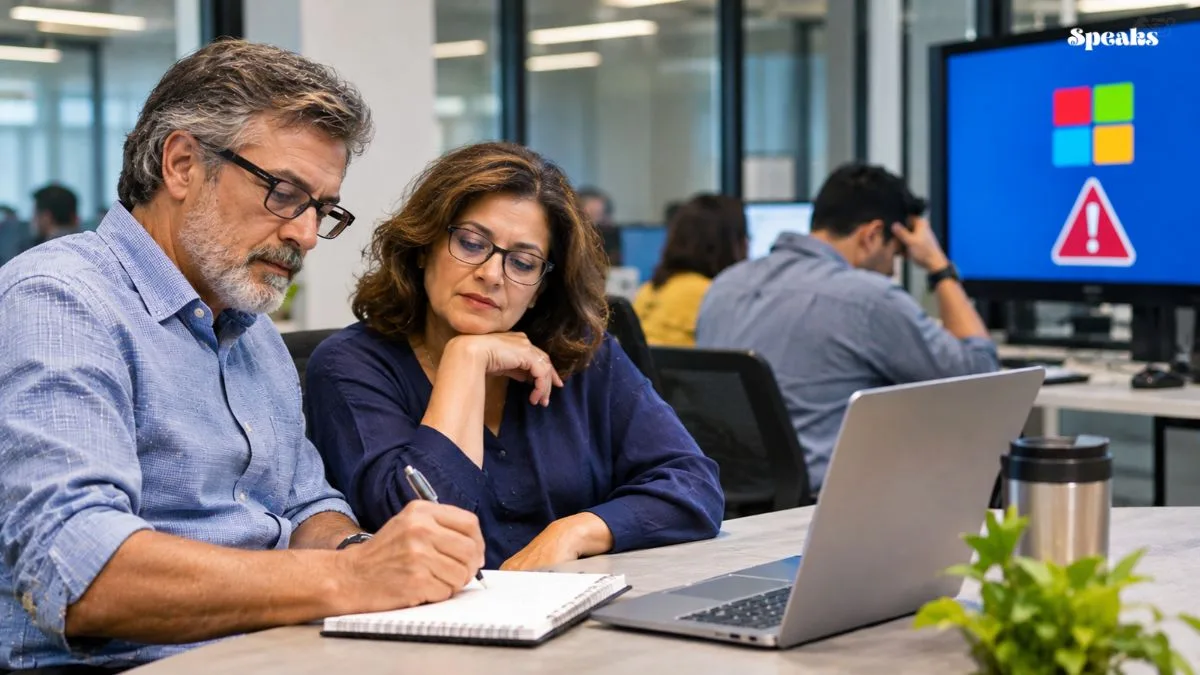
As employees struggled to work without familiar applications, some turned to alternative methods. A Gen X employee described helping younger colleagues save reports as computer files and take handwritten notes instead of relying on phones.
The Reddit post described colleagues from the Millennial and Gen Z generations trying to prepare reports in their phone notes so they could use the material once Outlook became available again.
The employee said the experience revealed a gap in basic offline work habits, including saving documents locally and using pen and paper. The account sparked discussion about how different generations respond when workplace technology becomes unavailable.
Shelly S. Rauvola, an associate professor of industrial-organizational psychology at DePaul University, told Inc. that experienced workers can be especially valuable when digital systems fail.
Rauvola said employees with experience using different platforms, devices and traditional working methods are better positioned to adapt when technology becomes unreliable. She described these skills as an important resource for organizations facing unexpected disruptions.
The Gen X advantage highlighted by the incident is not simply age, but familiarity with working without constant access to digital services. Those practical skills can help teams maintain productivity when essential systems go offline.
According to the U.S. Bureau of Labor Statistics figures cited by Inc., Generation X workers, generally born between 1965 and 1980, account for 31% of the American workforce.
Millennials represent 36% of the workforce, while Generation Z accounts for 18%, according to the same figures. Rauvola encouraged organizations to share knowledge across generations rather than overlook experienced employees.
Microsoft told Inc. that the outage was caused by a technical issue, not a cyberattack. The company traced the problem to an earlier network-capacity upgrade and a subsequent network change.
Microsoft said it had addressed the underlying issue and was gradually restoring services to remaining customers and regions. The company said it was validating stability at each stage of the recovery process.