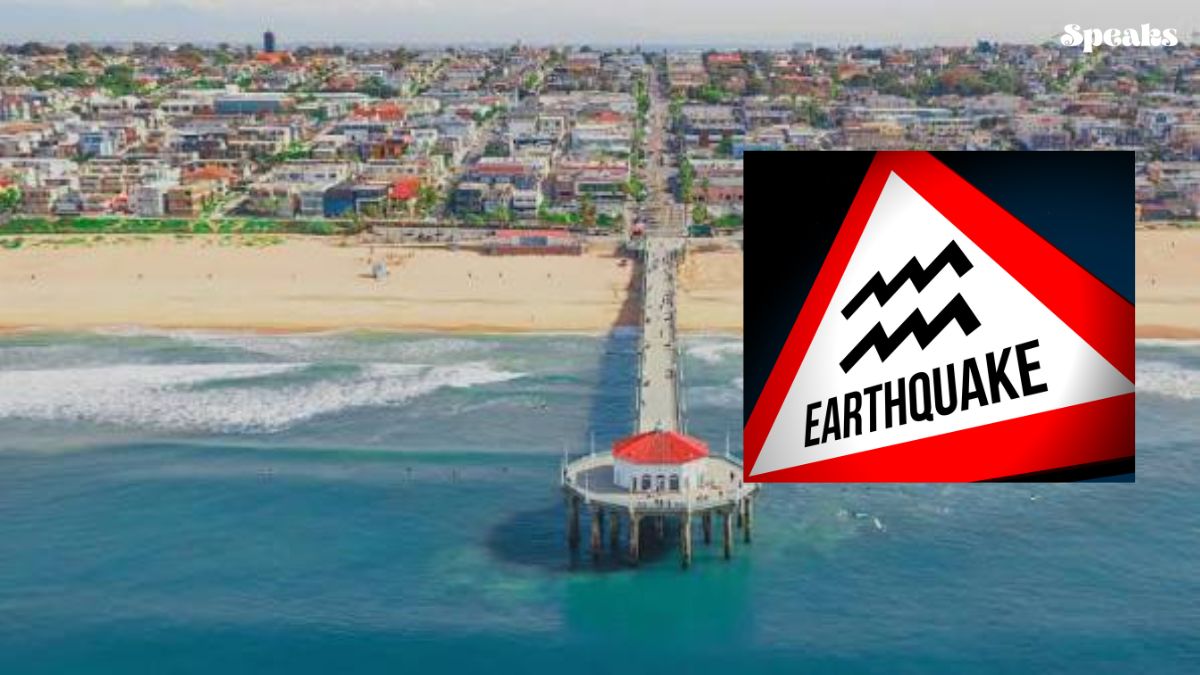
A preliminary 2.0 magnitude earthquake struck near Manhattan Beach, California, late Sunday night, November 22, according to the U.S. Geological Survey (USGS).
The earthquake was recorded at approximately 10:47 p.m. local time. Its epicenter was located about 4 miles west-southwest of Manhattan Beach, at an estimated depth of 8 miles beneath the surface.
The relatively small earthquake occurred amid a week of seismic activity across the greater Los Angeles region. Several other tremors were recorded near coastal communities and areas surrounding the city.
Residents who felt the shaking can share their experiences through the USGS online Felt Report form. These reports help scientists understand how strongly an earthquake was experienced in different locations.
Three earthquakes measuring magnitude 2.5 or higher were recorded in the surrounding region over the previous week. The strongest measured magnitude 3.9 and occurred northwest of Commerce on November 20.
Another magnitude 3.3 earthquake was recorded south-southeast of San Pedro on November 21. A separate magnitude 3.3 tremor occurred west-southwest of Manhattan Beach on November 22.
Although the latest Manhattan Beach earthquake measured only 2.0, smaller earthquakes remain an important part of California’s ongoing seismic activity.
According to the USGS, magnitude measures the energy released at an earthquake’s source. It has replaced the traditional Richter scale in modern earthquake reporting.
Earthquakes measuring between magnitude 2.5 and 5.4 are often noticeable to people but generally cause little damage. Tremors below magnitude 2.5 are rarely felt by most individuals.
However, stronger earthquakes can produce dangerous ground shaking and trigger secondary hazards, including landslides, fires and tsunamis. California remains among the US states with significant earthquake exposure because of its active fault systems.
If an earthquake occurs, emergency officials recommend following the Drop, Cover and Hold On procedure rather than attempting to run outside during the shaking.
People indoors should drop to their hands and knees, take cover beneath a sturdy table or desk if available, and protect their head and neck. Hold onto the shelter until the shaking stops.
Those without access to a table should move toward an interior wall away from windows. People using wheelchairs should lock their wheels, remain seated and protect their head and neck.
If an earthquake strikes while driving, motorists should pull over to a safe location, stop the vehicle and engage the parking brake. Drivers should avoid stopping beneath bridges, overpasses or near power lines.
People outdoors should move away from buildings, streetlights and utility wires. Anyone in bed should remain there and protect their head with a pillow unless an immediate hazard makes moving necessary.
After the shaking ends, residents should remain alert for aftershocks and potential damage to buildings, gas lines, water pipes and electrical infrastructure.