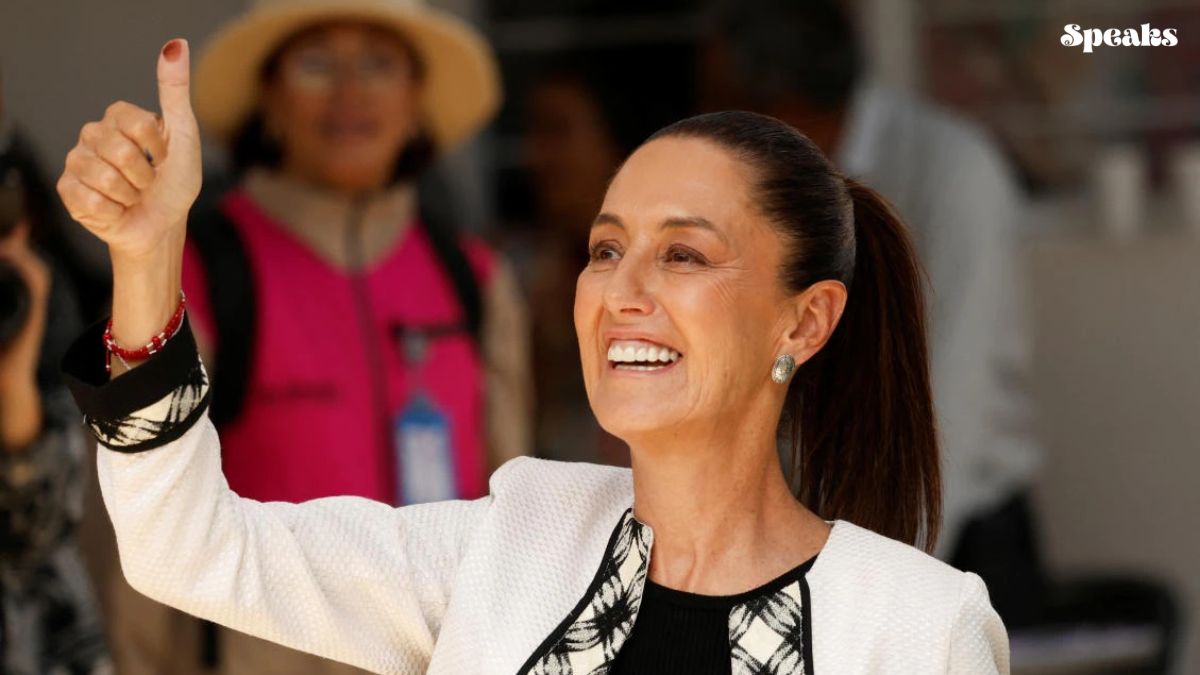
Mexican President Claudia Sheinbaum has concluded a four-day visit to Shenzhen, China, following a series of high-level diplomatic meetings at the 2026 Asia-Pacific Economic Cooperation (APEC) Leaders’ Meeting. The trip focused on strengthening international partnerships, attracting investment and advancing Mexico’s trade interests.
Sheinbaum departed China on Thursday evening, November 19, after meeting several prominent world leaders, including Chinese President Xi Jinping and U.S. President Donald Trump. She described the visit as highly productive and said it had delivered progress on multiple issues important to Mexico.
One of the most closely watched meetings took place between Sheinbaum and Xi Jinping on Tuesday. The two leaders discussed opportunities to expand cooperation between Mexico and China across science, technology, agriculture, clean energy, water resources, healthcare, culture and tourism.
Sheinbaum described the discussions as the beginning of a new era in relations between the two countries. Xi also expressed support for stronger political trust and closer bilateral cooperation, according to China’s Foreign Ministry.
However, the meetings took place against the backdrop of trade tensions following Mexico’s decision to introduce higher tariffs on certain imports from China. The Mexican government did not indicate whether the tariff issue was directly discussed during the leaders’ meeting.
Relations with the United States also remained a major priority during the visit. Sheinbaum met Trump on Wednesday, with discussions focusing on trade negotiations, tariffs and outstanding commercial issues between the neighboring countries.
Following the meeting, the Mexican president said negotiations with Washington were progressing well. She later explained that both governments had made significant progress on issues the United States describes as non-tariff barriers.
Mexico also wants Washington to reduce tariffs affecting Mexican vehicles, steel, aluminum and related products. Sheinbaum said that most of the issues surrounding non-tariff barriers had been addressed, although a final agreement had not been announced.
Canadian Prime Minister Mark Carney was another important participant in Sheinbaum’s diplomatic discussions. Their Tuesday meeting included support for renewing the United States-Mexico-Canada Agreement (USMCA), which remains central to North American economic relations.
The future of the trade agreement has become increasingly important as the three countries navigate negotiations over its continuation. Sheinbaum has maintained that the agreement can be renewed through 2042, while discussions involving Washington, Ottawa and Mexico City continue.
Beyond China, the United States and Canada, Sheinbaum also held discussions with Vietnamese President Tô Lâm. On Thursday, she met Australian Prime Minister Anthony Albanese, Singaporean Prime Minister Lawrence Wong and Peruvian President Keiko Fujimori.
Her schedule also included a meeting with International Monetary Fund Managing Director Kristalina Georgieva, alongside discussions with other international representatives.
During her appearance at the APEC CEO Summit on Tuesday, Sheinbaum used the opportunity to promote Mexico as an attractive destination for international investment.
She highlighted Mexico’s geographic position, trade agreements, infrastructure, natural resources and workforce as important advantages for businesses considering investment opportunities in the country.
She also presented Plan México, the government’s broader economic and industrial development strategy. The initiative emphasizes economic growth alongside social development and improving living conditions for Mexican families.
The APEC CEO Summit brought together more than 2,000 representatives from 21 APEC economies and 13 economies outside the organization, providing an important platform for business and investment discussions.
Addressing the APEC Leaders’ Meeting on Thursday, Sheinbaum also spoke about the challenges facing the global economy as artificial intelligence and technological developments continue to reshape industries.
She argued that economic progress should not be measured exclusively through market size, technological leadership or growth figures. Instead, she emphasized the importance of employment, education, housing, food security and human dignity.
Her visit also attracted attention in China for a different reason. Sheinbaum travelled from Mexico to Shenzhen on a commercial China Southern Airlines flight, spending more than 20 hours in economy class, including a stop in Tijuana.
The decision generated considerable interest on Chinese social media. A hashtag related to her arrival reportedly received approximately 10 million views on Weibo, according to Bloomberg.
During her stay, she also met members of the Mexican community living in China at a restaurant in Shenzhen. She praised Mexicans who had established their lives abroad and highlighted the importance of maintaining connections with their home country.
Before leaving China, Sheinbaum confirmed that Mexico had signed memorandums of understanding with China covering areas such as environmental cooperation, science and renewable energy.
She also clarified that closer relations with Beijing would not mean a change in Mexico’s economic relationship with Washington. The president stressed that Mexico currently has no plans to negotiate a free trade agreement with China.
Sheinbaum pointed to the deep economic integration between Mexico and the United States, describing their commercial relationship as particularly important to both countries.
Mexico is scheduled to host the APEC annual meeting in 2028, although the location has not yet been announced. Sheinbaum said she had not decided whether she would attend the organization’s next leaders’ meeting in Vietnam in 2027.