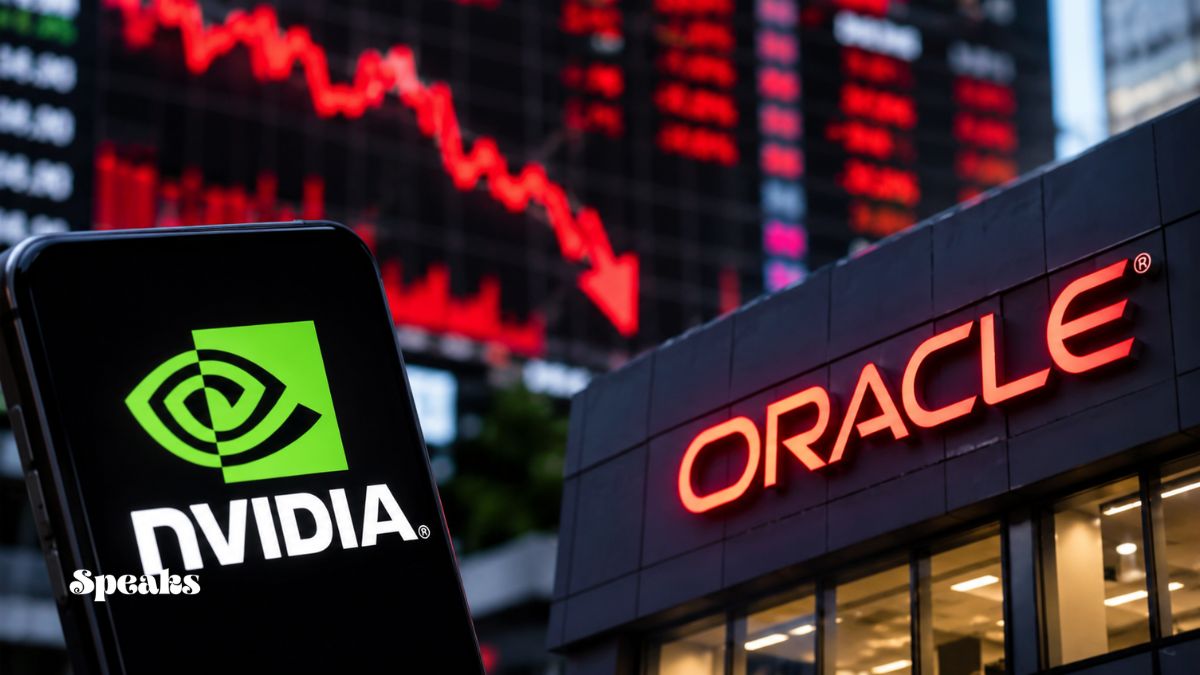
The artificial intelligence boom is facing renewed scrutiny as major technology stocks suffer sharp declines, raising questions about whether years of aggressive investment have created an unsustainable market bubble.
Several companies closely associated with the AI expansion have lost significant market value in 2026. Nvidia, Oracle, CoreWeave and Intel are among the companies facing pressure as investors reassess valuations, financing arrangements and future growth expectations.
The latest concerns have also raised questions about retirement savings, pension funds, corporate debt and the potential impact on the wider US economy.
AI Bubble Concerns Intensify After Major Technology Stock Declines
Economist Dean Baker warned in a November 27 analysis published by CounterPunch that the recent weakness in AI-related shares could represent the beginning of a larger market correction.
His analysis argues that enormous amounts of investment have flowed into AI infrastructure, sometimes without sufficient evidence that future profits will justify the spending.
Nvidia has been among the biggest companies affected. Baker reported that its stock had fallen 32.7% in 2026, with more than $2.5 trillion erased from its market capitalization compared with its previous peak.
Oracle has also experienced substantial losses. Its shares were down 48.1% for the year, representing more than $300 billion in lost market value, according to the analysis.
Other companies have faced similar pressure as investors reconsider the financial assumptions supporting the artificial intelligence industry.
Nvidia, Oracle and CoreWeave Face Growing AI Investment Risks
Nvidia remains central to the global AI infrastructure market because its processors power many of the data centers used to train and operate advanced AI systems.
However, concerns about financing arrangements, export restrictions and the sustainability of semiconductor demand have added pressure to the company’s investment outlook.
Baker also highlighted Oracle’s growing financial exposure to data center construction. Unlike larger cloud competitors, Oracle has a smaller established business outside its infrastructure expansion to support its investment requirements.
The company’s borrowing costs have attracted attention as investors evaluate the financial risks associated with its ambitious AI infrastructure plans.
CoreWeave, one of the major specialized cloud computing providers serving AI customers, has also experienced a significant decline.
Its stock was down 44.8% in 2026, according to Baker’s November 27 analysis, representing a market value reduction approaching $20 billion.
Intel has faced additional pressure, with its shares down 39% during the year.
Google, Microsoft, Amazon and Meta Also Lose Market Value
The recent weakness has extended beyond companies primarily associated with AI chips and specialized infrastructure.
Large technology companies with substantial AI investments have also experienced notable declines.
Baker reported the following stock losses during the previous week:
- Google: Down 10.3%.
- Microsoft: Down 7.5%.
- Amazon: Down 7.4%.
- Meta: Down 12.6%.
- SpaceX: Down 8.4%.
These declines highlight how concerns about AI valuations can affect companies with different business models and revenue sources.
However, a decline in share prices does not automatically mean these businesses are financially distressed. Their earnings, cash flows and ability to generate returns from AI investments remain important factors.
Why the AI Bubble Could Affect Retirement Savings and Pension Funds
A prolonged technology market correction could extend beyond Wall Street and affect ordinary investors.
Many Americans hold technology stocks indirectly through retirement accounts, index funds and pension investments.
Because major technology companies represent substantial portions of widely followed stock indexes, a sustained decline could reduce the value of diversified investment portfolios.
Pension funds could also face pressure if their portfolios have significant exposure to AI-related companies.
Insurance companies may face another challenge if they hold substantial amounts of technology-related stocks and corporate debt backing their long-term obligations.
The impact would depend on each institution’s exposure, investment strategy and ability to absorb market losses.
A deeper correction could become more damaging if it also affects employment, business investment and consumer confidence.
US Dollar Faces a New Risk From a Possible AI Market Crash
The potential consequences of an AI downturn could extend into the foreign exchange market.
A November 27 analysis by FXStreet highlighted the relationship between American AI spending, Asian semiconductor exports and international investment in US financial markets.
American technology companies purchase large quantities of advanced chips and components from suppliers in countries such as South Korea, Taiwan and Japan.
Those semiconductor exports generate revenue for Asian manufacturers and economies. Some of the resulting capital can eventually flow back into US financial assets.
According to FXStreet’s analysis, Deutsche Bank data showed that foreign investors purchased more than $1 trillion in US equities over the previous year.
If American technology companies significantly reduce their infrastructure spending, semiconductor demand and related export earnings could weaken.
That could also reduce one source of international investment supporting US stocks.
However, an AI market correction would not necessarily cause an immediate decline in the dollar. Investors often move toward US currency during periods of financial uncertainty because of its global reserve-currency role.
China’s AI Stock Sell-Off Raises Questions About Market Valuations
China’s recent technology market performance offers another indication of how quickly investor expectations can change.
FXStreet reported that China’s STAR50 index, which includes major AI and semiconductor companies, declined approximately 40% in less than four months.
The sell-off erased around $480 billion in market value amid concerns about high valuations, uncertain AI demand and restrictions on technology exports.
AI-related stocks had represented approximately 42% of China’s market capitalization and 57% of trading turnover, according to data cited from Goldman Sachs.
The Chinese market is not directly comparable with the United States. American technology companies have different financial positions, revenue streams and access to capital.
Nevertheless, the decline illustrates how concentrated investment in a popular technology theme can increase market vulnerability.
Is the AI Bubble Really Bursting? Wall Street Has Different Views
Not every market analyst believes the technology sell-off signals the beginning of a prolonged bear market.
A separate November 26 analysis published by Seeking Alpha presented a more optimistic assessment of the situation.
The analysis noted that technology stocks were approximately 20% below their recent highs but argued that investors should not automatically interpret the correction as a reason to abandon the sector.
It highlighted the potential value of established technology businesses with strong earnings and substantial cash generation.
The analysis pointed to Nvidia, Broadcom and Alphabet as companies whose valuations could become more attractive following the market decline.
It also argued that continued spending by major cloud computing companies could support future demand for AI infrastructure.
This creates an important distinction in the current debate: some investors see the declines as evidence of an unsustainable investment cycle, while others view them as a valuation correction within a growing industry.
Three Factors That Could Determine the Next AI Market Move
Investors are likely to focus on several financial indicators when assessing whether the current correction will deepen.
1. AI Infrastructure Spending
Major cloud companies’ capital expenditure plans will remain important. Significant reductions in data center construction could signal that demand is not keeping pace with earlier expectations.
2. Corporate Debt and Financing Costs
Companies building expensive AI infrastructure need access to affordable financing. Rising borrowing costs and difficult debt distribution could put pressure on businesses with substantial expansion plans.
3. Revenue Growth and Profitability
Investors will increasingly examine whether AI products generate enough revenue to justify the billions being spent on computing infrastructure, chips and data centers.
These factors could help determine whether the market is experiencing a temporary correction or a more prolonged repricing of technology companies.