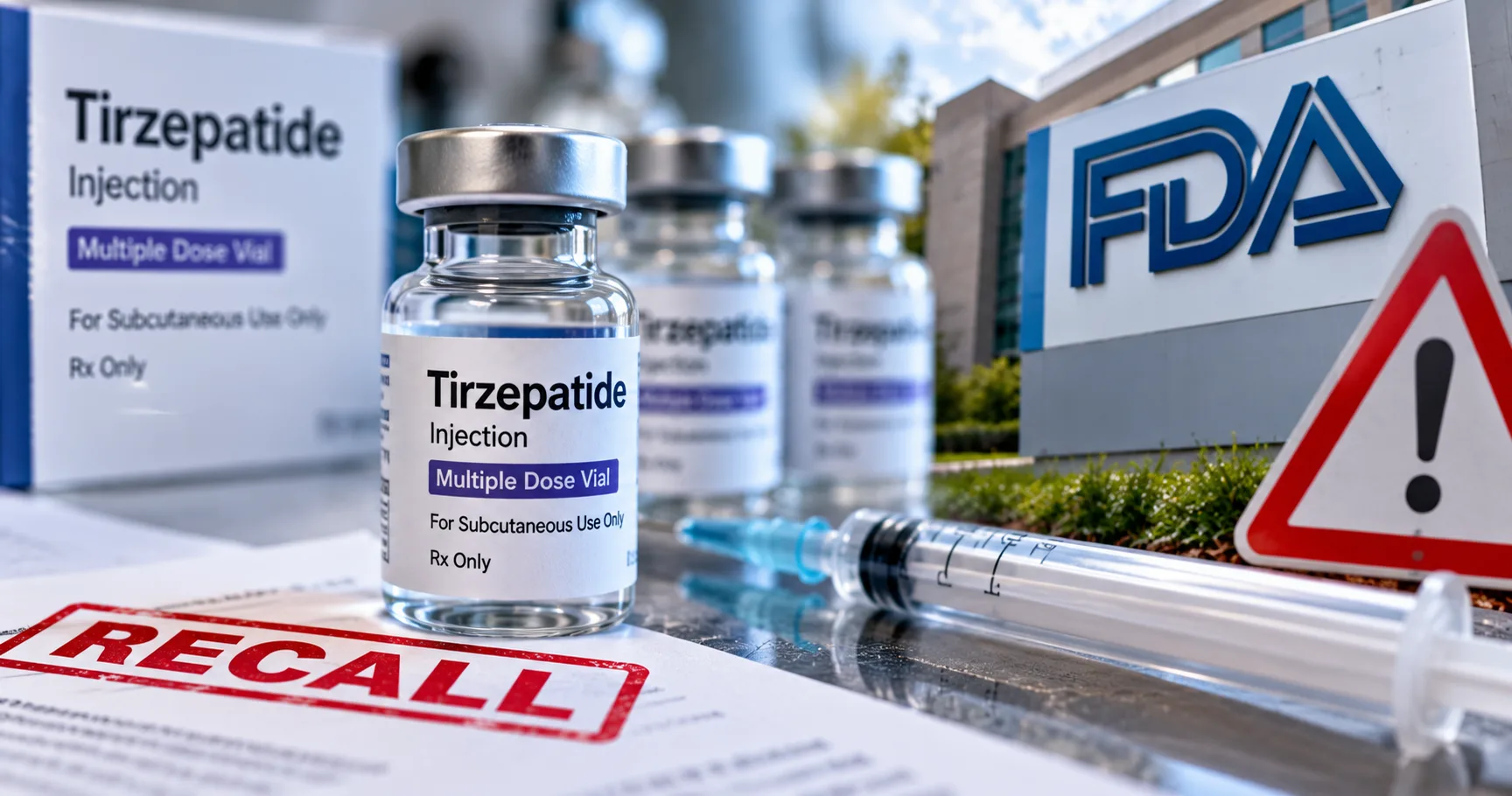
The U.S. Food and Drug Administration is highlighting a safety concern involving compounded weight-loss injections after Apothecary Pharma voluntarily recalled 22 vials of tirzepatide because the products could not be assured sterile.
The recall, reported by the Los Angeles Times on October 20, 2026, raises concerns about contamination in injectable medications used for weight management and Type 2 diabetes. Patients who obtain compounded medications through pharmacies or telehealth providers should check whether their products are affected.
The recall applies to specific compounded tirzepatide vials. It does not mean that all GLP-1 medications or FDA-approved versions of tirzepatide have been recalled.
Which GLP-1 Injections Are Included in the Recall?
Apothecary Pharma issued the voluntary recall for 22 vials of compounded tirzepatide after identifying a lack of assurance of sterility. Tirzepatide is the active ingredient in the FDA-approved medicines Mounjaro, prescribed for Type 2 diabetes, and Zepbound, approved for weight management and certain other uses.
Compounded tirzepatide is prepared by a pharmacy rather than supplied as the finished, FDA-approved brand-name product. The recalled vials are therefore distinct from commercially manufactured Mounjaro and Zepbound.
Patients should check the medication label and contact the dispensing pharmacy or prescribing clinician to determine whether their specific vial is affected. They should not assume that every tirzepatide prescription is included in the recall.
Why Sterility Matters for Injectable Medications
Injectable medicines must be manufactured and handled under appropriate conditions to minimize contamination. If an injection is not sterile, harmful microorganisms could enter the body and potentially cause serious infections.
The FDA has previously raised concerns about Apothecary Pharma’s manufacturing practices, citing serious deficiencies related to sterile drug production. Those findings add context to the latest recall and highlight the importance of quality controls when medications are prepared for injection.
The recall is based on the lack of assurance of sterility; it does not establish that every vial was contaminated or that every person who received the medication will become ill.
What Patients Should Do After the GLP-1 Medication Safety Recall
Anyone who uses compounded tirzepatide should check the product name, dispensing pharmacy and vial details against the recall information. If there is uncertainty, contact the pharmacy or prescribing healthcare professional before using the medication.
Patients who confirm that their product is affected should follow the recall instructions and seek guidance about replacement treatment. Anyone who has already used a potentially affected injection and develops symptoms of infection should contact a healthcare professional promptly.
Patients should not stop or change prescribed diabetes treatment without medical advice. A clinician can help determine the safest next step while avoiding unnecessary interruptions to care.
Compounded GLP-1 Drugs Are Not the Same as FDA-Approved Medicines
Compounded medications can serve specific medical needs, but they do not undergo the same FDA premarket review for safety, effectiveness and quality as approved drugs. Their quality depends on the pharmacy’s ingredients, preparation methods and manufacturing controls.
The FDA has also warned about dosing errors involving compounded GLP-1 injections, particularly when patients must measure doses from multidose vials. Patients should follow professional instructions carefully and avoid relying on online dosing advice that may not match their prescription.