
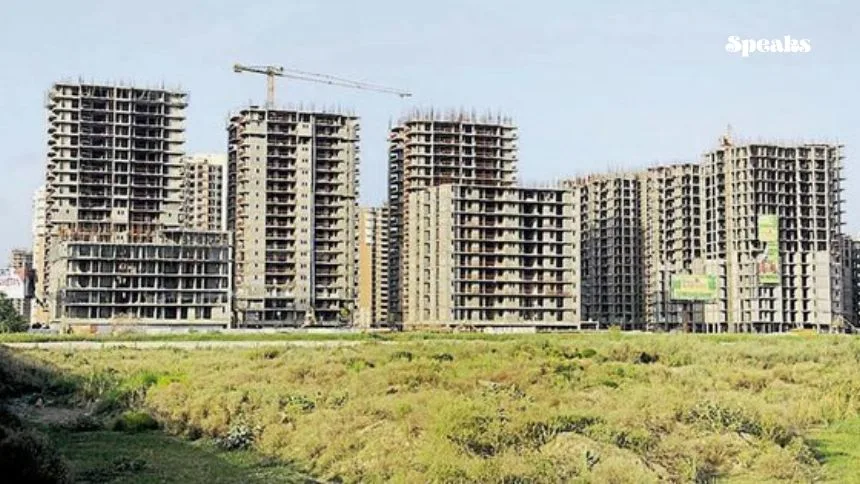
Around one crore houses are lying vacant in Indian cities, but still people are not getting affordable rental houses. According to the Niti Aayog report, the total housing shortage is estimated at 5-7 crore in metro, urban and semi-urban areas. This includes a housing shortage of 2-3 crore in metro cities and 1.5-2 crore in other urban areas. At the same time, according to the 2011 census, about 27% of households in urban India lived in rented houses.
According to a NAREDCO report, about 80% of the households living on rent come from economically weaker and lower income groups. Landlords fear low rental income, legal disputes related to tenancy and difficulties in eviction. This is the reason why many landlords avoid renting out their vacant properties. On the other hand, the rising cost of land and construction is making it difficult to build new affordable houses. The government had launched an Affordable Rental Housing Complex (ARHC) scheme for migrant laborers and the urban poor, but its implementation has been slow.
One crore houses empty, but why on rent?
According to a report by Niti Aayog, about one crore houses are vacant in urban areas of India. Despite this, there remains a huge gap between demand and availability of rental housing. There are three main reasons behind it-
- Landlords earning less than rent.
- Fear of legal disputes related to tenancy.
- Tenant’s risk of non-eviction and non-payment of rent.
An important statistic is that rental properties in most cities in India yield only 2-3% annual rental. This means that the rental income from the property is much less than the total value of the property. In such a situation, many landlords find it better to keep the house vacant or for sale in the future rather than renting it out.
How big is the housing shortage?
The December 2025 assessment of NITI Aayog is cited in the PRS report for 2026-27. According to the report, the estimated housing shortage in metro, urban and semi-urban areas is as follows:
Here one important thing needs to be understood. These figures are indicative not only of a shortage of rental housing, but of a wider housing shortage. This also includes the needs of families who do not own their own homes. Delhi, Mumbai, Chennai, Kolkata, Bengaluru, Hyderabad, Ahmedabad and Pune are considered metro cities in the report.
How many people live in the rental?
According to the 2011 census, about 27% of households in urban India lived in rented houses. At the same time, according to the NAREDCO report, about 80% of the households living on rent come from the EWS and LIG categories. Apart from this, migrant laborers, workers and others coming from rural areas to the city in search of employment also increase the demand for rental housing. These include a large number of people who have limited income and are not in a position to buy expensive houses or pay high rents. A big question arises here. Are the people most in need of affordable rental housing the least available on the market?
Why didn’t rental houses increase despite government schemes?
The government launched the Affordable Rental Housing Complex (ARHC) scheme in September 2020. Its aim was to provide affordable rental housing to the urban poor, migrant labourers, workers and women. Two models were kept under this scheme. The first model involves converting vacant government houses into rental housing and the second involves building new rental houses by government and private institutions.
According to the PRS report, a target of converting 75,000 vacant government houses into ARHCs was set. By March 2025, 82,273 new ARHC units were sanctioned in seven states. At the same time, till February 2023, only 5,648 government houses were replaced under the scheme, of which 4,470 houses were occupied by people. An important distinction needs to be understood here. Approval of 82,273 units does not mean completion of their construction or allotment to people. Similarly, the inclusion of government houses in the scheme and the people living in them are two separate phases. In such a situation, the question is, why is the pace of building cheap rental houses under the government scheme and making them available to people so slow?
Why is it so expensive to build a house?
In reports by Niti Aayog and PRS, the cost of land has been described as a major barrier to building affordable housing. Land cost in metros and urban areas can be up to 63% of the total cost of the house. Besides, limited availability of land in cities, building construction regulations, FAR/FSI restrictions and increasing cost of construction materials and labor also increase the cost of building a house. Profits in affordable housing for developers also remain relatively low, which affects the pace of investment in the sector.
According to NITI Aayog, 85% of households in metro cities cannot afford a 30 square meter house even after getting subsidy. From this it is clear that the problem is not only to increase the number of houses, but also to make them accessible to the common people. High land and construction costs make it difficult to build affordable housing, while low rental yields and legal risks deter landlords from renting out vacant properties. In such a situation, on the one hand, there are millions of vacant houses in the cities, on the other hand, it is a big challenge for low-income families to get affordable rental houses.


