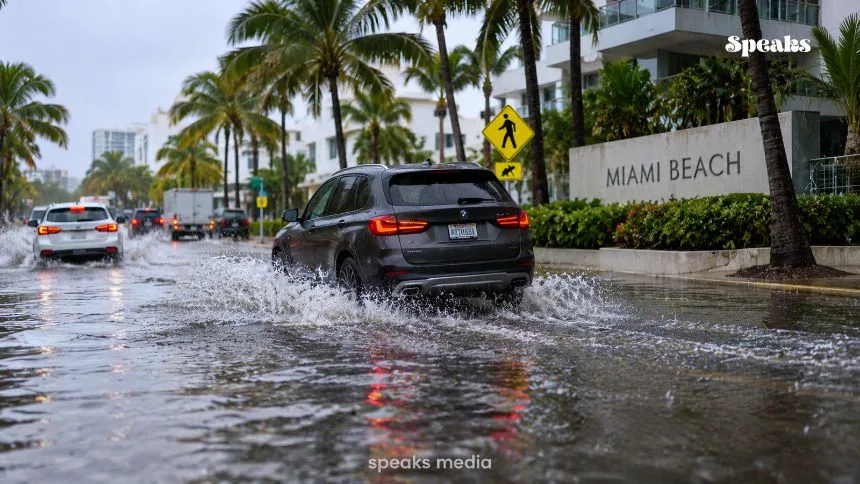
South Florida is facing a heightened risk of heavy rain and flooding as November begins, with repeated downpours expected across Miami-Dade, Broward and Palm Beach counties on Sunday, November 1, and Monday, November 2.
The National Weather Service (NWS) warned that some areas could receive between 3 and 5 inches of rain, while isolated locations could see totals reaching 5 to 7 inches. A Flood Watch was in effect across the three counties through Monday afternoon.
The exact location of the heaviest rainfall remained uncertain, leaving several communities exposed to the possibility of sudden street flooding and water accumulation in low-lying neighborhoods.
South Florida Weather Forecast Raises Flood Concerns
The incoming weather system could bring repeated showers and thunderstorms capable of producing significant rainfall over short periods.
According to the National Weather Service, intense rainfall could overwhelm local drainage systems, increasing the risk of urban flooding across parts of South Florida.
The weather alert also highlighted dangerous beach conditions. A High Surf Advisory covered Broward and Palm Beach counties through Sunday evening, while a high risk of rip currents affected Atlantic beaches.
Residents and visitors were advised to pay attention to local weather alerts, particularly when traveling through areas vulnerable to flooding.
Why Miami Beach Continues to Face Flooding Problems
Miami Beach has long struggled with stormwater drainage because of its unusual geography and proximity to the Atlantic Ocean and Biscayne Bay.
Much of the island sits only a few feet above sea level, making it difficult for rainwater to flow away naturally. Its relatively flat landscape also means water can take longer to drain after intense rainfall.
The city’s high groundwater levels and porous limestone underground further complicate the drainage process. Elevated tides can also slow the movement of stormwater into surrounding waterways.
According to the City of Miami Beach, these conditions can create drainage bottlenecks when rainfall arrives faster than the stormwater system can handle.
Miami Beach Stormwater Infrastructure Needs Major Improvements
The city’s long-term drainage challenges extend beyond individual rainstorms. Miami Beach has been investing in infrastructure improvements to reduce flooding and strengthen its resilience against extreme weather.
A stormwater modeling update published by the city in March 2024 identified substantial infrastructure requirements for handling a 10-year, 24-hour rainfall event.
The model estimated that addressing the identified stormwater needs citywide would require 83 additional pump stations and approximately 104 miles of large stormwater pipes.
These figures reflect long-term infrastructure planning rather than a prediction of flooding from the current November weather system.
The city has also been installing stormwater pumps and raising roads in vulnerable neighborhoods to improve drainage and reduce the impact of recurring floods.
Heavy Rain and High Tides Can Increase Flooding Risk
Rainfall is not the only factor affecting Miami Beach. High tides can make it harder for stormwater to flow through drainage outlets and discharge into nearby waterways.
When heavy rain coincides with elevated tidal levels, water can accumulate on streets and in other low-lying areas faster than drainage systems can remove it.
The city explains that stormwater moves through several stages, including street drains, collection basins, underground pipes and outfalls. A delay at any stage can slow the entire drainage process.
This combination of environmental conditions makes Miami Beach particularly vulnerable during periods of intense rainfall.
What Residents Should Know About Flood Safety
The City of Miami Beach advises residents to avoid driving through flooded streets or coming into contact with floodwater. Standing water can contain pollutants, debris and other hazards that may not be visible.
Residents should also consider moving vehicles to higher ground when flooding is expected and keeping storm drains clear of trash and debris.
People can report flooding or drainage problems through the Miami Beach Gov app or by contacting the city’s 24-hour Public Works Control Room at 305-673-7625.
Local weather alerts remain important as rainfall patterns can change quickly and the heaviest downpours may affect different neighborhoods at different times.