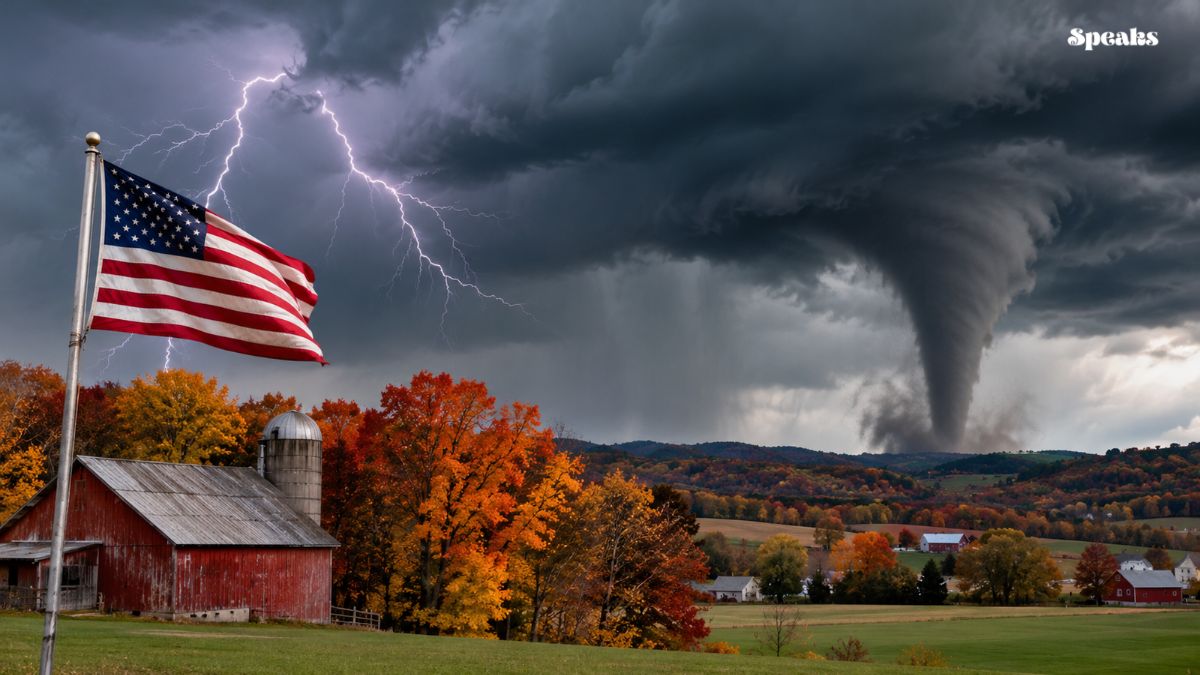
Pennsylvania experienced an unusual round of severe weather on Thursday, November 12, as thunderstorms, heavy rain, hail and tornado warnings affected parts of the region. The late-autumn storm system raised questions about how frequently tornadoes occur in Pennsylvania during November.
Tornadoes are relatively uncommon in the northeastern United States during late autumn. According to National Oceanic and Atmospheric Administration (NOAA) data covering 2001 through 2025, Pennsylvania, New Jersey and Delaware each average fewer than one November tornado per year.
The unusual weather prompted the National Weather Service’s Storm Prediction Center to issue Tornado Watch 705 at 12:50 p.m. Eastern Time on Thursday. The watch covered 20 counties across eastern Pennsylvania, central and southern New Jersey, and northern Delaware.
The alert remained in effect until 7 p.m. ET, warning residents that atmospheric conditions could support severe thunderstorms and possible tornado development.
Forecasters identified a combination of strong winds, cold air in the upper atmosphere and wind shear near the ground as factors contributing to the threat. These conditions can help thunderstorms rotate and potentially produce tornadoes.
The Storm Prediction Center estimated a 50% probability of two or more tornadoes developing within the watch area. It also identified a 20% probability of at least one tornado reaching EF2 intensity or stronger.
The forecast included additional threats from hail measuring up to 1.5 inches in diameter and damaging wind gusts reaching 70 mph.
A tornado warning was subsequently issued for northeastern New Castle County in Delaware, including Wilmington and Newport, after weather radar detected rotation in a developing storm.
The National Weather Service later confirmed that a tornado had touched down in New Castle County. Officials planned additional damage assessments to determine its strength, path and width.
The storm system also produced significant rainfall and flooding across parts of the Philadelphia region. Several roads experienced water-related disruptions, while emergency responders carried out water rescues in affected communities.
Although November tornadoes are unusual in Pennsylvania, they are not unprecedented. Historical records include multiple tornadoes in New Jersey and Pennsylvania during late autumn, demonstrating that severe weather can develop outside the traditional spring and summer season.
One notable outbreak occurred on November 16, 1989, when seven tornadoes touched down across New Jersey in a single day. The event remains an example of how powerful storm systems can produce tornadoes even during November.
Another significant event occurred around Halloween in 2019. The National Weather Service confirmed an EF2 tornado in Glen Mills, Delaware County, Pennsylvania, on October 31, followed by an EF1 tornado that crossed into New Jersey shortly after midnight on November 1.
Pennsylvania’s overall tornado activity is considerably higher during warmer months. NOAA records show that May, June and July are among the state’s busiest months for tornado development.
The state averages approximately 18 tornadoes annually based on records from 1996 through 2025, although the number varies considerably from year to year. Most tornado activity occurs during the warmer part of the year when atmospheric conditions become more favorable.
November also tends to have fewer thunderstorms across the Philadelphia region. Historical weather observations indicate that thunderstorms occur in the area approximately once every two years during the month.
Meteorologists explain that late-season storms can still become severe when warm, moist air interacts with approaching cold fronts and powerful upper-level weather systems. These interactions can create the instability and wind conditions needed for dangerous thunderstorms.
The distinction between a tornado watch and a tornado warning is particularly important during severe weather events. A watch means conditions are favorable for tornado development across a designated area, while a warning means a tornado has been detected or indicated by radar.
Residents should seek shelter immediately when a tornado warning is issued for their location. The National Weather Service recommends moving to a basement or an interior room on the lowest floor, away from windows.