The Economist has launched The World Ahead 2027, its annual outlook examining the political, economic, technological and social forces expected to shape the coming year. This edition highlights a world facing political uncertainty, financial pressure and growing disruption from artificial intelligence.
Released on November 16, the report presents 10 major themes that could influence governments, businesses, financial markets and consumers in 2027. Its central argument is that the world is entering a period of transition, even as the consequences of current conflicts and political decisions continue to unfold.
Tom Standage, editor of The World Ahead and deputy editor of The Economist, describes the emerging period as the beginning of the post-Trump era. However, he warns that Donald Trump is unlikely to step away quietly from political influence.
The publication also examines the consequences of the Iran war, the possibility of another record-breaking year of global temperatures, growing concerns about AI-related financial risks and rising pressure on government borrowing.
The Economist 2027: A New Political Era After Donald Trump
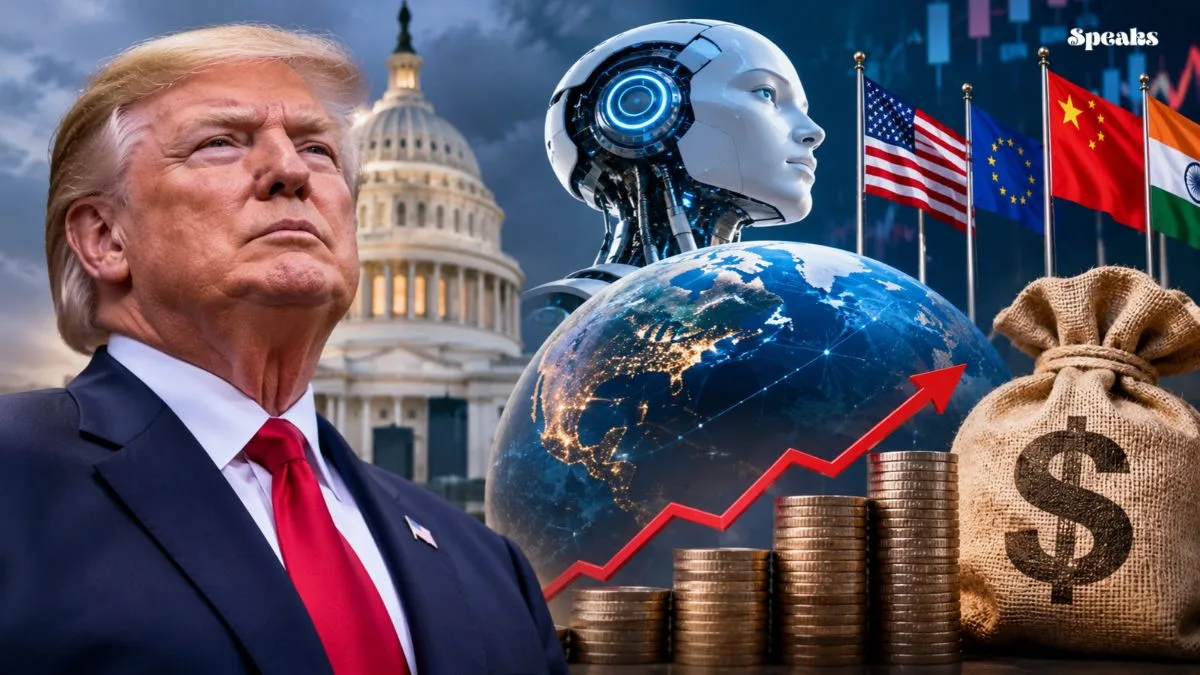
One of the report’s biggest themes is the changing political landscape in the United States. The Economist argues that the race to succeed Trump will become increasingly important as Washington enters a new phase of political competition.
The report expects Trump to remain an aggressive political force rather than becoming a conventional lame-duck president. It points to the possibility of further executive orders, legal disputes, major construction projects and foreign-policy actions as he seeks to shape his legacy.
Standage also highlights the implications of Democrats taking control of both chambers of Congress. A more confrontational relationship between the White House and Congress could create fresh political battles over legislation, executive authority and national priorities.
For international governments and businesses, uncertainty in Washington could complicate decisions involving trade, diplomacy, defence and investment. The wider question is how America’s political direction may change once the contest to replace Trump gathers momentum.
Iran War Aftershocks Could Reshape Energy and Food Security
The consequences of the Iran war are another major focus of the 2027 outlook. The Economist expects the conflict’s impact to extend beyond military and diplomatic developments, affecting energy markets, regional alliances and global supply chains.
The report argues that America’s allies may increasingly question the reliability of US support, while its adversaries reassess how much they should fear American military power.
Energy flows could also change as governments and businesses respond to geopolitical risks. Disruptions affecting important routes and regional infrastructure may influence prices, investment decisions and energy security strategies.
Food security is another concern. The publication warns that fertiliser shortages linked to the conflict could create additional pressure on agricultural production and threaten food supplies for millions of people.
For countries dependent on imported energy and agricultural inputs, the consequences could extend into inflation, household costs and government spending.
AI Backlash Could Grow as Financial Risks Increase
Artificial intelligence is expected to remain one of the biggest forces shaping business and technology in 2027. However, The Economist argues that the debate will increasingly focus on the financial, political and cybersecurity risks associated with the industry.
One concern is the amount of debt being used to finance AI infrastructure and expansion. The report warns that complex and less transparent financial arrangements could make the sector more vulnerable if investor confidence weakens.
A sudden decline in AI investment could affect companies building data centres, supplying advanced computing equipment and providing the infrastructure needed to operate large AI systems.
Political opposition is also expected to grow as governments face questions about regulation, accountability and the influence of major technology companies.
The publication distinguishes between concerns it considers justified and those it views as overstated. It highlights financial instability, political influence and cyber threats as serious issues, while arguing that some fears surrounding employment and environmental consequences may be exaggerated.
The outlook suggests that 2027 could become an important year for determining how AI companies balance rapid expansion with financial responsibility and public trust.
France Election Could Put Europe’s Political Stability Under Pressure
Europe faces another major political test in 2027, with France’s presidential election emerging as a key issue in the report.
The Economist highlights the possibility of Marine Le Pen winning the presidency. Such an outcome, it argues, could create significant uncertainty for the European Union and weaken the political partnership between France and Germany.
The Franco-German relationship has traditionally played a central role in shaping major European decisions. A major political shift in Paris could complicate cooperation on economic policy, defence and the future direction of the EU.
France’s public finances are another concern. The country’s high debt burden and fiscal challenges could become more important if investors begin demanding higher returns to hold French government bonds.
A change in political leadership could therefore have consequences beyond France, particularly if it raises questions about European economic coordination and financial stability.
Rising Bond Yields Put Government Debt Under the Spotlight
The report identifies government borrowing as another major source of potential instability. Several wealthy countries are facing high debt levels while continuing to spend beyond what their public finances can comfortably support.
Bond yields are rising in several markets, increasing the cost of borrowing for governments. If this pressure continues, countries could face difficult choices involving public spending, taxation and debt management.
Higher borrowing costs can also affect businesses and households. Governments may have less room to fund new programmes, while expensive credit can weigh on investment and consumer demand.
The Economist warns that the current situation cannot continue indefinitely without consequences. Its analysis suggests that financial markets could eventually force governments to confront the gap between spending commitments and available resources.
The issue is particularly important for investors watching sovereign debt, currency movements and the stability of global financial markets.
Taiwan Faces a Critical Moment as China Expands Military Readiness
Tensions surrounding Taiwan remain one of the most important geopolitical risks in the report.
The Economist discusses claims that Chinese President Xi Jinping has set 2027 as a target for the country’s armed forces to be ready to capture the island. Military readiness, however, should not be confused with a confirmed decision to launch an invasion.
The report also considers how changes in military technology could influence the balance of power across the Taiwan Strait.
Recent conflicts have demonstrated how smaller and less expensive systems, including drones and other advanced technologies, can challenge traditional military advantages.
For Taiwan, the challenge involves strengthening its defence capabilities while managing the risk of escalation with Beijing.
Any serious crisis could have consequences well beyond the region, particularly for international trade, semiconductor supply chains and the wider security relationship between China and the United States.
The Economist Expects Another Year of Extreme Heat
Climate change is also among the major themes shaping the publication’s 2027 outlook. The report expects another exceptionally hot year, with droughts, wildfires and heatwaves likely to remain significant concerns.
A potential super El Niño could add further pressure to global weather patterns. Such an event can influence rainfall, temperatures and agricultural conditions across different regions, although its effects vary by location.
The report also identifies an unexpected political dimension to the energy transition. Trump’s approach to energy policy and global uncertainty could indirectly strengthen the commercial case for renewable power.
Solar and wind energy offer countries an opportunity to reduce exposure to volatile international fuel markets while expanding domestic energy production.
For governments and businesses, the challenge will be balancing energy security, affordability and climate commitments as weather-related risks increase.
Ozempic and Weight-Loss Drugs Could Change Consumer Spending
The growing market for weight-loss medication is another trend highlighted in The World Ahead 2027.
The Economist expects medicines such as Ozempic and other drugs in the same broader category to influence consumer behaviour beyond healthcare.
As some users lose weight, demand patterns could shift in industries including clothing, cosmetics and fitness. Companies may need to adjust their products and marketing strategies as consumer preferences change.
The report also points to renewed pharmaceutical interest in longevity treatments. Research into the broader effects of weight-loss medicines could encourage companies to explore new opportunities connected to ageing and long-term health.
The commercial impact may extend across healthcare, retail and consumer services, although the scale and speed of these changes remain uncertain.
SpaceX and Commercial Space Industry Could Enter a New Phase
The commercial space sector is expected to make further progress in 2027, with lower launch costs among the report’s major themes.
The Economist points to SpaceX’s Starship programme as an important development to watch. It expects regular satellite launches to become part of the next phase of commercial space activity.
The report also highlights the expected launch of the first private-sector space station. Such projects could create new opportunities for research, commercial operations and international partnerships beyond government-led space programmes.
Another idea receiving attention is the possibility of building data centres in orbit. Although the concept faces substantial engineering and economic challenges, the publication suggests that falling launch costs could make previously unconventional proposals more serious topics for discussion.
The wider space industry will be watching whether technological progress can translate into commercially sustainable services.
Hollywood Faces Pressure to Find New Audiences
The entertainment industry is also expected to experience a period of change. The Economist questions whether established franchises can continue attracting audiences without offering something genuinely new.
Major properties such as Star Wars are trying to connect with younger and different audiences, while lower-budget productions from YouTubers have demonstrated the potential of alternative entertainment models.
The report raises questions about whether viewers are becoming more interested in fresh ideas rather than relying exclusively on familiar franchises.
It also suggests that established film properties may remain relevant if they adapt their storytelling to changing audience expectations.
For Hollywood studios, the challenge will be finding a balance between protecting valuable intellectual property and taking creative risks that attract new viewers.
Global Leaders and Experts Contribute to The World Ahead 2027
The annual publication brings together perspectives from politicians, academics, business executives and technology leaders.
Its guest contributors include Japanese Prime Minister Sanae Takaichi, Finnish President Alexander Stubb, Anthropic co-founder Jack Clark, International Energy Agency chief Fatih Birol and UK Conservative Party leader Kemi Badenoch.
Other contributors include Yale history professor Odd Arne Westad, Commonwealth Fusion Systems chief executive Bob Mumgaard, Xpeng chairman and chief executive He Xiaopeng, and UCLA mathematics professor Terence Tao.
Their contributions cover issues ranging from international relations and artificial intelligence to energy, science and economic development.
The 2027 edition will appear in The Economist’s weekly print edition dated November 21. A separate newsstand edition is scheduled to go on sale from November 26, while articles covering the 10 major themes are available online.