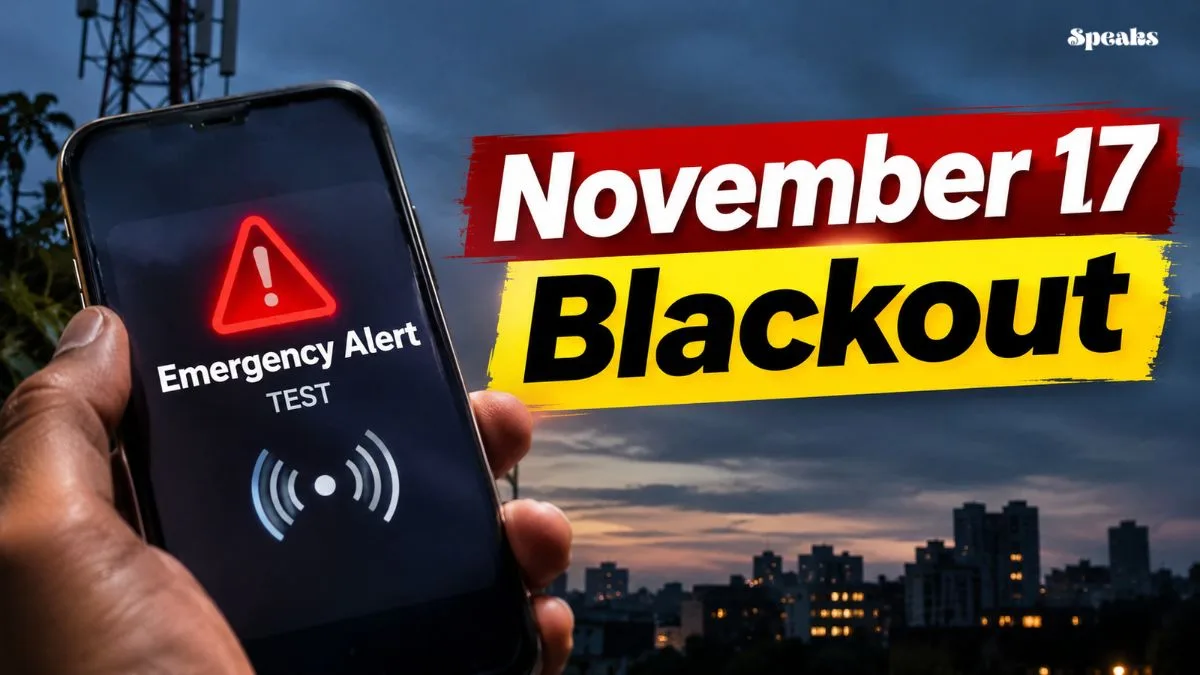
Claims about a massive blackout on November 17, 2026, are spreading across social media, with posts warning of possible power outages, internet shutdowns and disruptions to banking services. However, there is no verified evidence of a planned nationwide or global blackout on that date.
The rumors have gained attention partly because the Federal Emergency Management Agency (FEMA) and the Federal Communications Commission (FCC) have scheduled a nationwide Emergency Alert System test for November 17.
While the government exercise is real, the claims connecting it to a global cyberattack or widespread power failure are unsupported. Here is what Americans need to know before the scheduled test.
Blackout November 17
No nationwide power shutdown has been announced for November 17, 2026. The date is associated with a scheduled test of America’s Emergency Alert System, not an order to disconnect electricity or communications networks.
The online claims have suggested that electricity, internet services and banking systems could stop working simultaneously. Some posts have also encouraged people to withdraw cash and purchase large quantities of emergency supplies.
However, no verified government announcement supports those predictions. The scheduled FEMA exercise does not involve switching off the national power grid or shutting down internet infrastructure.
Why Is FEMA Conducting an Emergency Alert System Test on November 17?
FEMA, working with the FCC, will conduct a nationwide test of the Emergency Alert System (EAS) on Tuesday, November 17, 2026.
The test is scheduled to begin at approximately 2:20 p.m. Eastern Time. It will involve radio and television broadcasters, cable systems, satellite radio and television providers, and wireline video providers across the United States.
The exercise is designed to check whether the national public warning infrastructure can distribute emergency information effectively.
Federal law requires FEMA to conduct nationwide tests of public alert and warning capabilities at least once every three years. These exercises help identify technical problems before an actual emergency occurs.
What Will Happen to TVs and Radios on November 17?
During the scheduled test, participating television and radio services will briefly interrupt their normal programming to broadcast an emergency test message.
The announcement will identify itself as a nationwide Emergency Alert System test conducted by FEMA. It will also clearly state that no action is required from the public.
The interruption is expected to last approximately one minute. Once the test is complete, normal television and radio programming will resume.
The message may be delivered in English, Spanish or both languages, depending on the broadcaster and its audience.
Will Americans Receive an Emergency Alert on Their Phones?
One of the biggest questions surrounding the November 17 test concerns whether smartphones will suddenly receive emergency notifications.
According to FEMA’s published information, this year’s nationwide exercise will test the Emergency Alert System rather than Wireless Emergency Alerts (WEA).
That means the scheduled test is not expected to send a nationwide emergency notification to mobile phones.
People should not confuse the television and radio test with an actual emergency warning. Real Wireless Emergency Alerts can still be issued when authorized officials need to communicate a genuine threat.
Where Did the November 17 Blackout Rumors Come From?
The rumors have circulated through platforms including TikTok, Facebook and X, where users have shared warnings about an alleged global shutdown.
Some posts connect the date to a supposed prediction from The Simpsons, claiming that an episode anticipated a major blackout on November 17, 2026.
However, the viral claims do not establish that the television show predicted a real-world event on that date.
Other posts have linked the rumors to government emergency preparedness campaigns, suggesting that recommendations to keep food, water and other essentials indicate an imminent disaster.
These claims combine unrelated developments with the real FEMA alert test, creating a misleading impression that officials are preparing the public for a scheduled catastrophe.
Is a Global Cyberattack Expected on November 17?
Another version of the rumor claims that hackers will target banks, internet infrastructure and major digital services on November 17.
Some viral messages go further, suggesting that bank balances could temporarily display zero or that internet access could disappear for several months.
There is no verified evidence supporting these specific predictions. No official announcement from FEMA or the FCC connects the scheduled alert exercise to a global cyberattack.
Cybersecurity threats are a genuine concern for governments and businesses, but that does not make every viral prediction credible.
Consumers should rely on official security advisories rather than anonymous social media posts when assessing potential cyber threats.
Why Are Governments Advising People to Keep Emergency Supplies?
Emergency preparedness recommendations have also become part of the online discussion.
Several governments have encouraged households to maintain basic supplies, including drinking water, food, medication, flashlights and essential documents.
In the United States, emergency preparedness guidance is intended to help people manage unexpected situations such as severe weather, natural disasters and temporary service disruptions.
Keeping essential supplies at home is a sensible general precaution. However, these recommendations are not evidence that a nationwide blackout is scheduled for November 17.
People should follow established preparedness advice without making unnecessary purchases because of unverified online warnings.
What Should You Do During the November 17 Emergency Alert Test?
There is no special preparation required for the scheduled test. Residents can continue their normal daily activities while broadcasters temporarily interrupt their programming.
Here are the important details to remember:
- Date: Tuesday, November 17, 2026
- Scheduled time: Approximately 2:20 p.m. Eastern Time
- Agency: FEMA, in coordination with the FCC
- System: Emergency Alert System (EAS)
- Where it will appear: Participating television and radio services
- Expected duration: Approximately one minute
- Mobile phone alerts: Wireless Emergency Alerts are not included in this year’s test
- Public action: No action is required
The test is designed to evaluate the country’s public warning infrastructure, not to announce an approaching disaster.
What Happens If the November 17 FEMA Test Is Postponed?
FEMA and the FCC have also established a backup date in case an emergency or significant weather event makes the original schedule unsuitable.
If the November 17 exercise needs to be postponed, the nationwide test is scheduled to take place on December 3, 2026.
The decision would depend on conditions at the time and coordination between the participating agencies.
Residents can check official FEMA and FCC announcements for any changes to the schedule rather than relying on viral posts or forwarded messages.