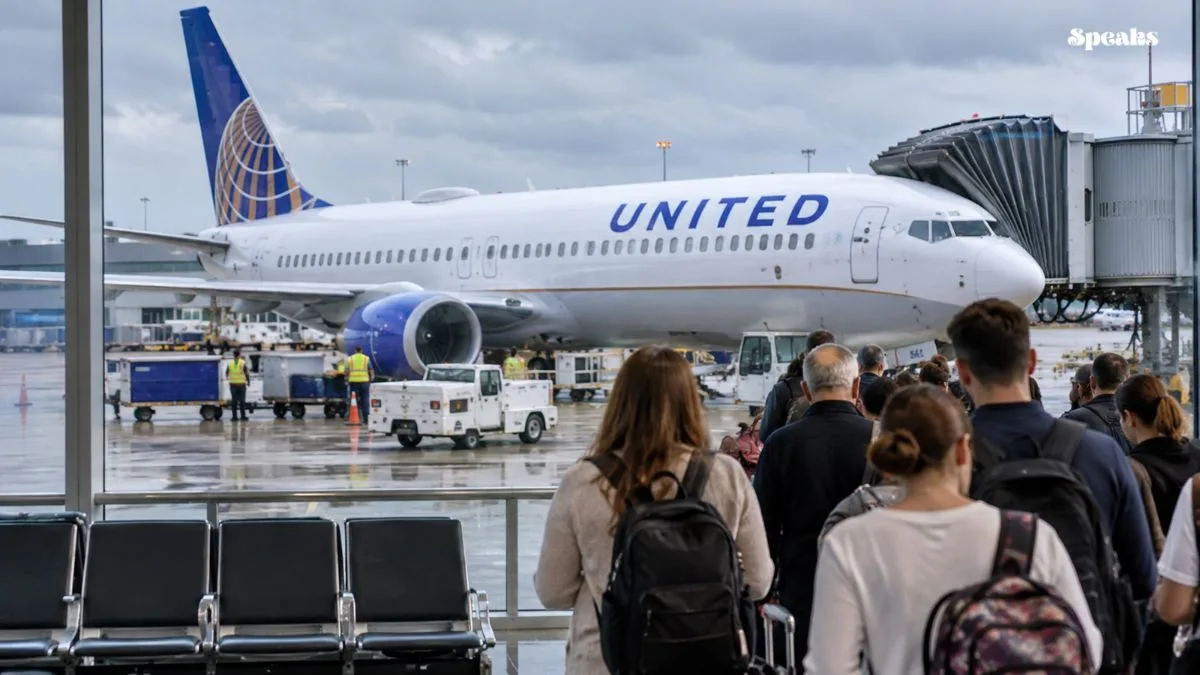
United Airlines resolved a widespread technology outage on Monday, November 16, after a computer system failure disrupted departing flights at airports across the United States. The disruption delayed passengers and prevented some aircraft from receiving critical information needed before takeoff.
The airline confirmed that its technical issue had been resolved, but some travelers continued facing delays as flight operations worked through the disruption. The incident came just days after a separate Federal Aviation Administration (FAA) system failure triggered a nationwide ground stop.
United Airlines Outage: What Happened on November 16?
United Airlines initially acknowledged the problem Monday afternoon after passengers and flight crews reported difficulties with departure operations.
The Chicago-based carrier said it was troubleshooting a widespread technology issue affecting departing flights. The airline also apologized to passengers and said its teams were working to restore normal operations as quickly as possible.
The company later confirmed that the issue had been resolved. United said the technical problem delayed some departures but did not affect aircraft already in the air or flights operated by United Express.
The outage lasted more than 90 minutes, according to reporting by The Associated Press, which said pilots began reporting problems to air traffic controllers before the airline restored the affected operations.
What Caused the United Airlines System Outage?
The precise technical cause had not been publicly confirmed. However, reports from pilots and information shared by the pilots’ union pointed to problems involving the airline’s aircraft weight and balance calculation system.
Before an aircraft takes off, pilots must have accurate information about its total weight, fuel load, passengers, baggage and cargo. These figures help determine whether the aircraft can safely operate under the existing runway and weather conditions.
The calculations are essential for establishing takeoff performance requirements. Without the necessary figures, flight crews cannot simply proceed with departure as normal.
Aviation safety experts have emphasized that accurate weight and balance information is critical throughout a flight. Delaying departures until the required calculations become available is an important safety precaution.
Why Were United Airlines Flights Delayed?
The technology disruption affected information and applications used by flight crews and airline operations teams.
Reports indicated that pilots experienced problems obtaining final aircraft weight information needed to complete preflight procedures. This left some aircraft waiting at airport gates rather than proceeding with scheduled departures.
Air traffic control audio also captured pilots reporting difficulties receiving final weight figures. One United flight crew operating a flight from El Paso to Denver reported that a company-wide system problem was preventing them from obtaining the required information.
The issue created additional pressure on departure schedules, particularly for passengers connecting through major United Airlines hubs.
Although the technology problem was resolved, delays can continue after an airline restores its systems because aircraft and crew schedules may need time to return to their planned positions.
Did United Airlines Confirm a Cyberattack?
United Airlines said there was no indication that the outage was related to a cybersecurity incident.
The company described the disruption as a technology issue affecting flight departures. It did not publicly identify a specific system failure or confirm whether the problem involved a particular software platform.
The Federal Aviation Administration also clarified that the incident was not caused by its equipment.
The distinction is important because the disruption occurred shortly after a separate nationwide aviation technology failure involving the FAA’s air traffic control network.
As of the airline’s public statements, there was no confirmed evidence linking the two incidents.
How Many United Airlines Flights Were Delayed?
Flight-tracking data showed a significant number of delayed United Airlines flights on Monday.
FlightAware reported approximately 600 delayed United flights by Monday evening. However, that figure represented the airline’s overall delays, and it was not clear how many were directly caused by the technology outage.
Other flight-tracking reports showed that delays were affecting a portion of the carrier’s scheduled operations during the disruption.
The outage itself was relatively short compared with a full-day operational shutdown. Nevertheless, even a temporary interruption can create scheduling challenges when aircraft, pilots and airport departure slots depend on interconnected systems.
United did not publicly attribute every reported delay or cancellation to the incident.
United Airlines Outage Comes Days After Nationwide FAA Ground Stop
The latest disruption followed another difficult period for the U.S. aviation industry.
On Friday, November 13, the FAA ordered a nationwide ground stop after a malfunction involving a newly installed router disrupted the agency’s air traffic control communications network.
The technical failure affected flight operations across the country and forced airlines to manage widespread delays and cancellations.
Although the FAA lifted the ground stop later that evening, airlines continued working to reposition aircraft, crews and baggage over the weekend.
United Airlines was among the carriers managing the operational effects of that disruption when its own technology problem emerged on Monday.
The two incidents involved separate systems, and there was no confirmed evidence that the United outage was connected to the FAA’s earlier network failure.
What Should United Airlines Passengers Do After the Outage?
Passengers scheduled to travel with United Airlines should check their flight status before leaving for the airport.
The airline directed customers to monitor updates through its official website and mobile application. Travelers should also pay attention to notifications about departure times, gate changes and potential schedule adjustments.
Passengers with connecting flights may want to confirm their onward flight details, particularly if an earlier departure delay affects their connection.
Travelers experiencing significant disruptions should contact United Airlines directly to discuss available rebooking options and applicable travel policies.
Even after a technical issue is resolved, individual flights may continue experiencing schedule changes while airline operations return to normal.
United Airlines Faces Fresh Technology Reliability Questions
The latest disruption has renewed attention on the technology systems that support modern airline operations.
Airlines rely on interconnected digital platforms for flight planning, crew scheduling, weather information, aircraft performance calculations and other essential operational tasks.
When one of these systems becomes unavailable, the effects can extend beyond the original technical problem. Flight crews may have to wait for information, dispatch teams may need alternative procedures, and departure schedules can quickly fall behind.
For United Airlines, the November 16 incident adds another operational challenge during an already difficult period for U.S. air travel.
The airline confirmed that the technology issue had been resolved, while the exact technical cause remained undisclosed.