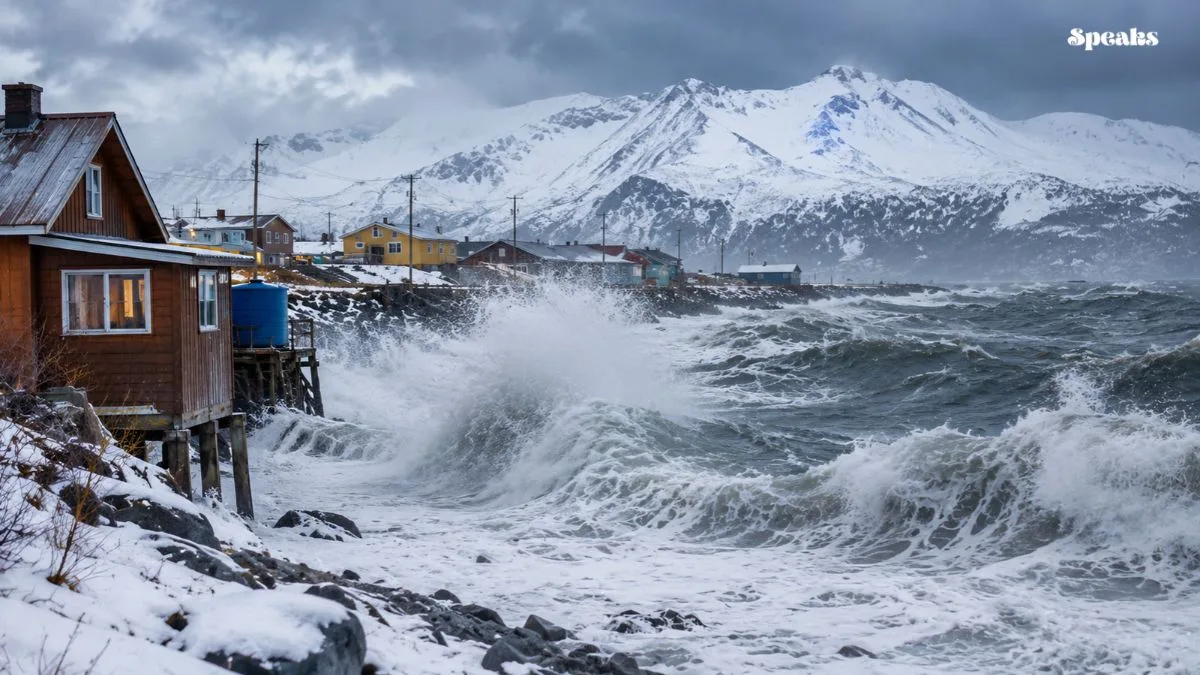
A powerful storm moving across the Bering Sea is raising the risk of coastal flooding in western Alaska, threatening low-lying communities just weeks after villages completed deliveries of fuel needed to survive the winter.
The National Weather Service has upgraded the coastal flood watch for the Yukon Delta Coast to a Coastal Flood Warning, with Hooper Bay facing the greatest risk. Water levels could rise several feet above normal high tide as strong southeast winds push water toward the coast.
The warning is scheduled to take effect at 3 a.m. Alaska time on Wednesday, November 18, and remain in place until 3 p.m. Thursday, November 19. Forecasters say the conditions could affect roads, homes, businesses and critical infrastructure.
Flood Watch Update: Hooper Bay Faces the Highest Coastal Flood Risk
The National Weather Service expects water levels in Hooper Bay to reach 4 to 6 feet above normal high tide. Other locations along the Yukon Delta Coast could see levels rise 2 to 4 feet above normal high tide.
Southeast winds could produce gusts of up to 55 mph, increasing the risk of coastal flooding and shoreline erosion. Hooper Bay is expected to experience two high tides on Wednesday, with the second potentially producing slightly higher water levels.
The weather service warned that moderate coastal flooding is likely in Hooper Bay. Low-lying homes, businesses and some critical infrastructure could be inundated.
Road closures are also possible, while access to the local airstrip could become limited. Residents and emergency officials will need to monitor changing conditions as the storm approaches.
Bering Sea Storm Brings Strong Winds, Snow and Difficult Travel
The coastal flooding threat is part of a broader storm system expected to affect western Alaska from Tuesday into Thursday.
The National Weather Service has also issued a Winter Storm Warning for the Yukon Delta Coast and Lower Yukon River region. The forecast includes 2 to 5 inches of snow, with southeast wind gusts reaching up to 55 mph.
Snow and blowing snow could reduce visibility to less than half a mile at times. Forecasters warned that periods of blizzard conditions may develop, making travel difficult across affected communities.
The storm is expected to bring a mix of rain and snow in some locations as warmer air moves north. Strong winds and changing precipitation could complicate transportation and local response operations.
Why Winter Fuel Supplies Are a Major Concern
The timing of the storm is particularly important for western Alaska because many remote villages depend on fuel delivered by barge during the warmer months.
Once sea ice and winter weather restrict marine transportation, communities have limited opportunities to receive additional supplies. Local utilities therefore need to store enough diesel to generate electricity and provide heat throughout the winter.
The Alaska Energy Authority says small coastal and river communities can require hundreds of thousands of gallons of fuel to meet annual demand. Many storage facilities were built during the 1950s and 1960s and do not meet modern infrastructure standards.
Alaska Village Electric Cooperative, which serves 58 communities, lists maximum fuel storage capacity of 212,000 gallons in Hooper Bay and 302,000 gallons in nearby Chevak.
A major flooding event could create additional risks for these facilities, particularly where storage tanks, fuel distribution systems and other essential infrastructure are located in vulnerable areas.
Alaska Villages Paid More for Fuel in 2026
The storm is also arriving after a costly fuel procurement season for rural Alaska communities.
Alaska Village Electric Cooperative reported in August that communities receiving fuel deliveries in 2026 paid approximately 35% to 40% more than the previous year. That represented an increase of roughly $2 to $3 per gallon.
The cooperative linked the higher costs to disruption in global fuel supplies following the conflict involving Iran and the closure of the Strait of Hormuz.
Fuel expenses are especially significant for communities that rely on diesel-powered electricity generation. AVEC reported that fuel alone accounted for more than 50 cents per kilowatt-hour of generation in most villages served by barge.
In May, Alaska lawmakers voted to double the cap on state bulk fuel loans to $1.5 million. The loans are designed to help communities manage the substantial upfront costs of purchasing and storing fuel before winter.
Memories of Typhoon Halong Add to Flooding Concerns
Western Alaska is still dealing with the consequences of the powerful storm system that affected the region in October 2025.
The remnants of Typhoon Halong caused extensive flooding and damage across several coastal communities. According to the Alaska Department of Environmental Conservation’s recovery plan, spill response teams visited 21 communities and confirmed fuel spills in nine.
In Nightmute, residents reported that 15 to 18 homes became unlivable because of vapors from spilled heating oil.
The state continued recovery work months after the storm. As of February 2026, approximately $1.2 million was still needed to complete the remaining work, according to the department’s report.
That experience has increased concerns about the vulnerability of fuel storage infrastructure in remote communities. Flooding can damage tanks, release heating oil and create environmental problems that take months to address.
A late-October storm this year also brought a coastal flood advisory from Hooper Bay to Kotlik and threatened a road connecting parts of Hooper Bay.
Nome Invests in a More Resilient Local Power System
While western Alaska prepares for another storm, communities are also working to strengthen the infrastructure they depend on during the winter.
The Nome Joint Utility System is upgrading its diesel-powered microgrid with a $398,918 award from the U.S. Department of Energy’s Community Microgrid Assistance Partnership.
The project includes improvements to system controls and relays. The Energy Department expects the upgrades to reduce energy costs by 20% to 30% and help prepare the system for additional local electricity generation.
The work reflects a wider effort to make isolated power networks more efficient and less dependent on expensive fuel deliveries.
However, infrastructure improvements cannot eliminate the immediate risks posed by coastal flooding, strong winds and winter storms. Communities still depend on secure fuel storage, reliable transportation access and emergency preparedness.
What Residents Should Know as the Storm Approaches
The National Weather Service advises residents in flood-prone areas to take precautions before water levels rise. Property owners should protect vulnerable equipment and avoid unnecessary travel through areas where flooding is expected.
Drivers should never pass road barricades or attempt to cross water of unknown depth. Flooded roads can hide damaged surfaces, strong currents and hazards that are difficult to see.
Residents should also follow local emergency announcements and updated National Weather Service forecasts. Warning areas and expected water levels may change as forecasters receive more information about the storm’s track.
For communities that depend on stored diesel for electricity and heating, protecting fuel infrastructure will remain a major concern as the region moves deeper into the winter season.