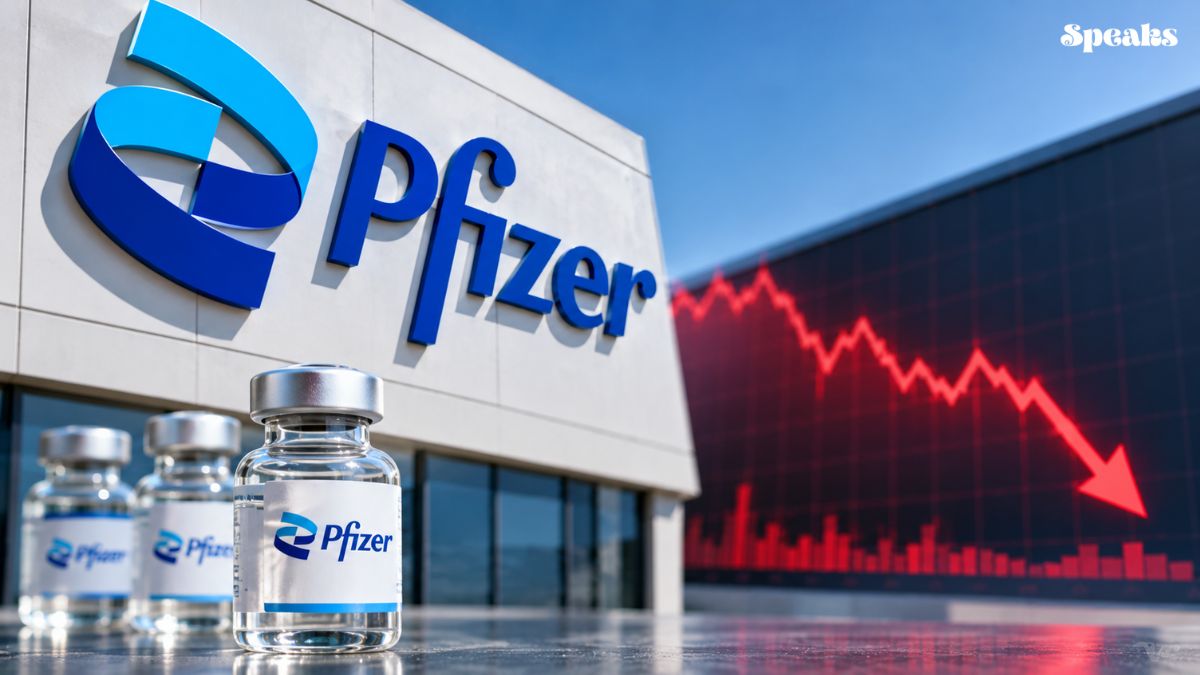
Pfizer stock is facing a significant recovery challenge as shares remain far below their December 2021 record, raising questions about whether the pharmaceutical giant can regain its previous market valuation.
Pfizer (NYSE: PFE) closed at $27.40 on November 20, 2026, compared with its previous high of $61.25 in December 2021. That represents a decline of approximately 55.3% from its earlier peak.
For PFE stock to return to that level, it would need to gain approximately 123.5% from its November 20 closing price. Even if the recovery happened over three years, the shares would require an annual return of roughly 30.8%.
Historical performance suggests that achieving such growth could be difficult. An analysis of rolling three-year periods over the past decade found that Pfizer stock had not recorded a gain of 123.5% across any comparable period.
The company’s financial performance also highlights why its previous valuation may be difficult to regain. Pfizer generated approximately $68.9 billion in revenue during the 12 months leading up to October 2021.
By comparison, its revenue for the 12 months ending September 27, 2026, stood at approximately $63.6 billion. This represents a decline of around 7.6% compared with the earlier period.
Profitability has weakened more significantly. Pfizer’s operating margin declined from 28.5% in 2021 to 26.1% in the latest comparison, while net income dropped from $19.4 billion to approximately $4.03 billion.
The latest 12-month period also included two quarterly net losses, including a $1.65 billion loss in the quarter ended December 2025. These figures indicate that Pfizer’s earnings position is considerably different from the period when its shares reached their previous high.
Investors who purchased Pfizer shares near the December 2021 peak have also experienced a substantial opportunity cost. Over the following 4.9 years, the stock declined 55.3%, excluding dividends.
During the same period, the S&P 500 gained approximately 48% before dividends. Including dividend payments, Pfizer remained down 41.4%, while an investment tracking the S&P 500 returned approximately 58%.
Pfizer’s business continues to generate substantial revenue through its pharmaceutical operations, including established medicines such as Eliquis and Padcev. However, restoring investor confidence will require stronger financial performance.
The comparison also raises an important valuation question. Pfizer’s business is currently valued at approximately 2.5 times its trailing 12-month sales, making future revenue growth and profitability important factors for investors to monitor.
Although Pfizer could recover over time, returning to its 2021 peak would require a considerable improvement in its share price. Its future performance will depend on business growth, earnings recovery and broader market conditions.