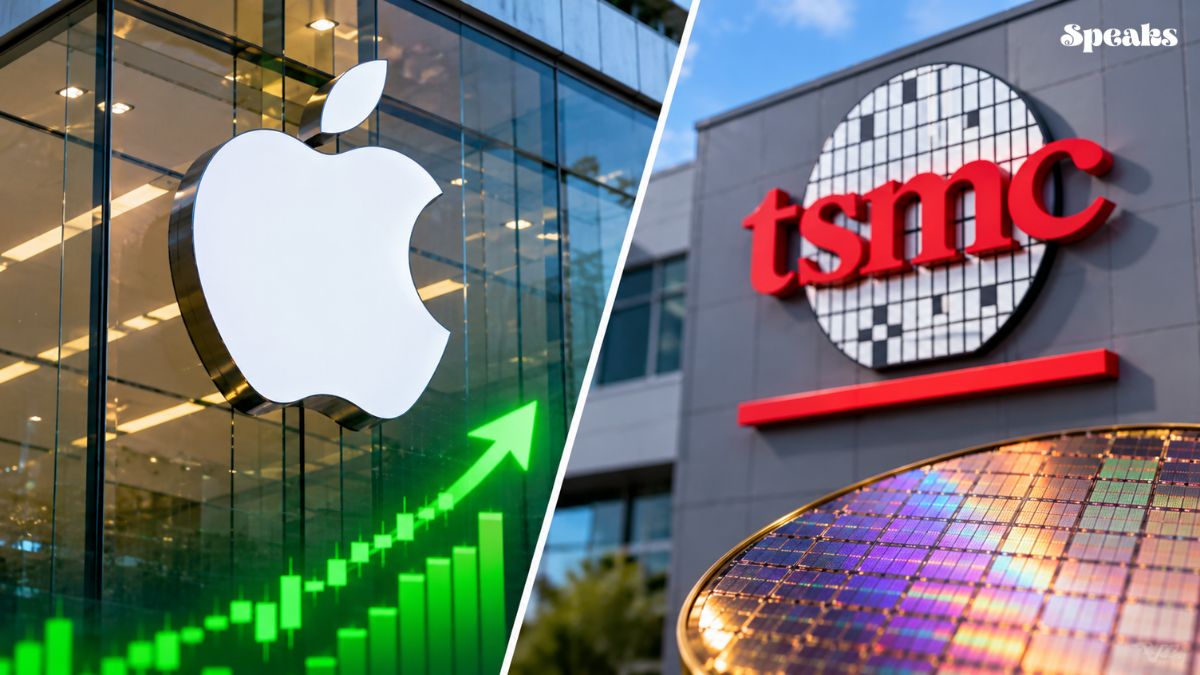
Apple stock has demonstrated unusual resilience during a recent technology market sell-off, reaching a new all-time high while several major artificial intelligence stocks faced renewed pressure. The performance has strengthened investor confidence in Apple’s relatively cautious AI spending strategy.
Apple shares traded at approximately $348.13 during the November 23, 2026, trading session, giving the company a market capitalization of nearly $4.98 trillion. The stock’s 52-week trading range stood between $243.42 and $360.83.
One factor supporting Apple’s performance is its approach to artificial intelligence. Unlike several major technology competitors investing heavily in AI infrastructure, Apple has largely avoided building massive data center operations of its own.
Instead, the iPhone maker has taken a different approach by integrating external AI models into its ecosystem. This strategy could reduce the immediate financial burden associated with developing and operating large-scale AI infrastructure.
The decision comes as companies such as Nvidia, Alphabet and Amazon continue investing heavily in AI-related technologies. Although these investments could create significant long-term opportunities, they also require substantial capital spending.
Apple’s more measured strategy appears to have attracted investors looking for technology exposure without the same level of AI infrastructure investment. Its ability to maintain strong market performance during recent volatility has highlighted that difference.
However, Apple stock’s impressive performance comes with a valuation concern. The shares are trading at approximately 33 times expected earnings for the next year, according to the analysis published by The Motley Fool.
That valuation represents a considerable premium compared with several major technology companies. Nvidia was cited at approximately 10 times forward earnings, while Alphabet traded at around 18 times expected earnings.
This difference raises questions about whether Apple’s current share price already reflects much of its future growth potential. Investors may need stronger earnings expansion to justify the premium valuation.
The analysis identifies Taiwan Semiconductor Manufacturing Company (TSMC) as a potentially more attractive investment among major technology companies. Its business benefits from manufacturing advanced semiconductors for multiple customers rather than depending on a single chip designer.
This position could give TSMC exposure to demand from different technology companies, including businesses developing artificial intelligence processors. Its manufacturing operations remain important to the broader semiconductor supply chain.
Alphabet is another company highlighted for its growth potential. Its AI investments and technology operations could offer opportunities as demand for artificial intelligence services continues developing.
Although Apple’s business remains supported by its established device ecosystem and services operations, investors must weigh those strengths against its expensive valuation. A strong company does not automatically represent an attractive investment at every price.
The broader technology market’s recent weakness also demonstrates how quickly investor sentiment can change around AI spending. Companies with significant infrastructure commitments may face pressure when markets question the returns on those investments.s