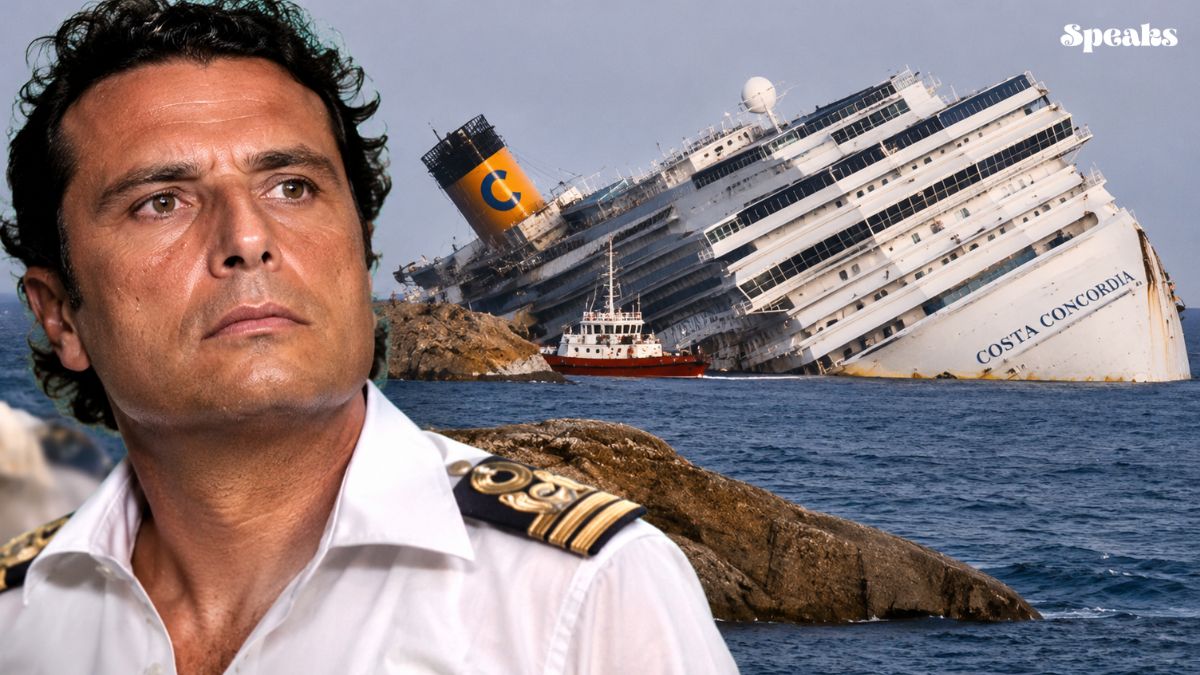
Francesco Schettino, the former captain of the Costa Concordia cruise ship, has been released from prison after serving approximately nine years of a 16-year sentence for his role in Italy’s deadly 2012 maritime disaster.
Schettino left Rome’s Rebibbia prison on Friday, November 20, after a court approved his request to complete the remainder of his sentence under supervised probation. The decision follows an assessment of his conduct and participation in rehabilitation programs.
His lawyer, Francesca Carnicelli, confirmed that Schettino would continue serving his sentence outside prison under specific restrictions. These include working as an office employee, remaining at home after 10 p.m. and staying within the province where he lives.
The release has renewed attention on one of Europe’s most infamous cruise ship disasters, which claimed 32 lives and left hundreds of passengers and crew members scrambling to escape.
The tragedy happened on January 13, 2012, when the Costa Concordia struck underwater rocks near Giglio Island off the coast of Tuscany, Italy. The enormous passenger vessel was carrying more than 4,200 people when it hit the rocks.
Investigators determined that Schettino had brought the ship dangerously close to the island’s coastline during a maneuver known as a sail-by salute. The impact tore open the vessel’s hull, causing water to flood the ship and leaving it heavily tilted.
As the situation deteriorated, passengers struggled to reach lifeboats while the ship began listing sharply. The evacuation became increasingly difficult as the vessel lost stability and darkness complicated rescue operations.
Schettino faced international criticism after leaving the sinking ship while passengers remained aboard. Italian prosecutors argued that he failed in his responsibilities as captain and ignored instructions from coast guard officials to return to the vessel.
The captain maintained that he had fallen into a lifeboat while attempting to assist with the evacuation. His explanation did little to reduce public anger following the disaster.
An Italian court convicted Schettino in 2015 of multiple offenses, including manslaughter, causing the shipwreck and abandoning passengers. He received a 16-year prison sentence, which was upheld by Italy’s highest court in 2017.
The decision to allow his early release has also prompted renewed discussion among survivors and families of those who died. Some question whether serving only part of the original prison term adequately reflects the scale of the disaster.
Nicholas Taliaferro, an American survivor of the tragedy, questioned whether the release represents justice for the victims and their families in comments to Fox News.
The disaster has recently returned to public attention through Netflix’s documentary, “Shipwrecked: Nightmare at Sea,” which revisits the events surrounding the sinking and the decisions made during the emergency.
Schettino’s conviction remains in place, and his release does not mean his sentence has been canceled. He will continue under judicial supervision while completing the remaining portion of his punishment.