U.S. stock markets futures moved sharply lower on Tuesday, November 24, as renewed weakness in major technology shares put pressure on Wall Street. The reversal came just one day after a powerful rally raised hopes that the recent market sell-off was beginning to ease.
The latest decline highlights a growing divide among investors. While some see opportunities in technology stocks following recent losses, others remain cautious about elevated valuations, artificial intelligence spending and uncertainty surrounding U.S. trade policy.
Wall Street Futures Turn Lower After Monday’s Powerful Rally
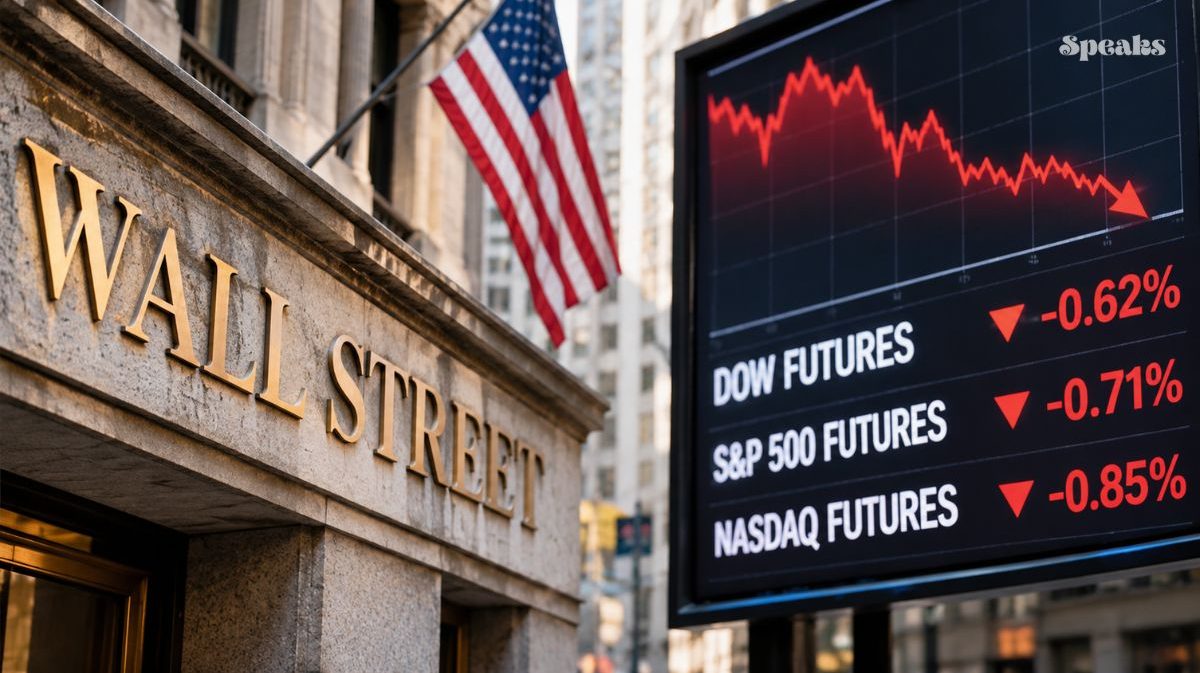
U.S. stock markets futures pointed toward a weaker opening on Tuesday. At 8:30 a.m. ET, Nasdaq 100 futures were down 2.2%, S&P 500 futures had declined 1.3%, and Dow Jones futures were trading 0.7% lower.
The movement was particularly notable because Monday had delivered Wall Street’s strongest daily gains since April 2025 for the S&P 500 and Nasdaq Composite. The S&P 500 had also ended a seven-session losing streak.
However, Tuesday’s weakness suggests that investors are not yet convinced the broader market correction has ended. A single strong session may improve sentiment, but sustained buying requires greater confidence in corporate earnings and economic conditions.
Nvidia Shares Fall Nearly 6% After Historic Rally
Nvidia emerged as one of the biggest sources of pressure during premarket trading. Its shares dropped nearly 6%, reversing part of Monday’s extraordinary 31.5% advance, which pushed the stock to $165.05.
Monday’s rally was particularly significant because it marked Nvidia’s largest single-day percentage gain since 2003. The move also added more than $950 billion to the company’s market capitalization.
The sharp reversal highlights how quickly sentiment can change around high-profile artificial intelligence stocks. Investors appear increasingly sensitive to large price movements, especially when valuations already reflect substantial expectations for future growth.
AI Spending Concerns Continue to Weigh on Technology Stocks
The broader artificial intelligence investment cycle remains a major concern for Wall Street. Large technology companies are spending heavily on data centers, advanced chips and computing infrastructure to expand their AI capabilities.
Although these investments have supported semiconductor demand, investors increasingly want evidence that the spending will translate into sustainable revenue and profits.
In my assessment, this is one of the most important factors behind the market’s current volatility. Investors are no longer evaluating technology companies solely on their AI potential; they are also examining whether their valuations are justified by actual business performance.
US Tariff Uncertainty Adds Pressure to Investor Sentiment

Trade policy developments are creating another source of uncertainty. A Wall Street Journal report, citing people familiar with the matter, indicated that the United States was preparing to increase tariffs on China and dozens of other countries.
Potential tariff increases could affect international supply chains, import costs and corporate profit margins. Technology companies with global manufacturing and distribution networks could face additional uncertainty if trade restrictions expand.
For investors, the concern is not limited to the immediate impact of tariffs. Changes in trade policy could also influence inflation expectations and complicate the outlook for businesses operating across international markets.
Federal Reserve Rate Decision and Inflation Data in Focus
Interest rate expectations remain another important driver of stock markets futures. According to the CME FedWatch Tool, financial markets were pricing in approximately a 96% probability of a 25-basis-point Federal Reserve rate increase in December.
That expectation adds to the uncertainty surrounding equity valuations, particularly for growth-oriented technology companies. Higher interest rates can increase financing costs and make future corporate earnings less attractive to investors.
Market participants are now looking toward Wednesday’s Personal Consumption Expenditures (PCE) price index report. The inflation reading is particularly important because the Federal Reserve uses PCE inflation as a key measure when assessing price stability.
What Tuesday’s Market Decline Could Mean for Investors
Tuesday’s reversal does not automatically mean that Wall Street’s recovery has failed. However, the sharp movement in technology shares highlights how sensitive the market remains to corporate developments, monetary policy and changing investor expectations.
The next direction for major US indexes will likely depend on whether technology stocks regain buying interest and whether upcoming economic data provide greater clarity about inflation and Federal Reserve policy.
Nvidia’s share-price movement, artificial intelligence investment concerns and December interest rate expectations remain important developments to watch as investors assess the sustainability of Wall Street’s latest recovery.