
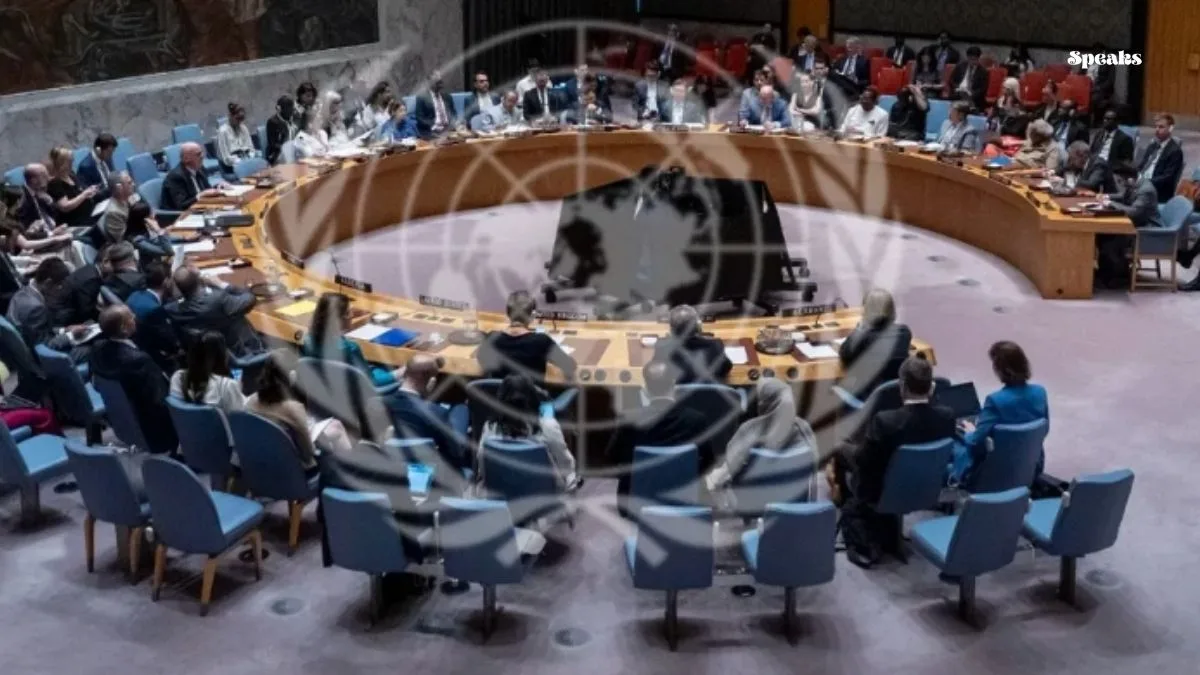
The United Nations Security Council (UNSC) system is once again under question. Turkish President Recep Tayyip Erdogan has demanded the abolition of the veto rights of the five permanent members (the US, Russia, China, Britain and France). He argues that the system created almost 80 years ago does not reflect the reality of today’s world. According to him, the wishes of more than 190 countries of the world should not depend on the decisions of only 5 countries.
What is a veto after all?
The UNSC has a total of 15 members. Out of which 5 are permanent and 10 are temporary. Current permanent members include the US, Russia, China, Britain and France. The United Nations General Assembly elects 10 non-permanent members for two years. A minimum of 9 votes is required to pass any resolution in the Security Council. But if one of the five permanent countries vetoes an important proposal, the proposal stalls. That is, even if 14 countries are in favor of the proposal, the opposition of even one permanent member can stop it.
This system has become a major source of debate in cases such as Gaza and Ukraine. According to Al Jazeera, in the past three years, the US has vetoed 7 Israeli-Palestinian resolutions, including 5 calling for a ceasefire in Gaza. Russia’s veto of resolutions related to the Ukraine war has also led to deadlock in the council.
What is Erdogan’s full proposal?
Erdogan’s demands are not limited to simply ending the veto. He is also talking about scrapping the existing system of permanent membership. According to his proposal, all members of the UNSC should be elected by the United Nations General Assembly and be entrusted with responsibility for a fixed period of time. In this model no single country will get special rights forever. Erdogan says the UNSC should be a system in which more countries participate and no single country has the power to block the entire process.
But why is it so difficult to override a veto?
The biggest obstacle lies in the UN Charter itself. The UN Charter will have to be amended to change the veto system. Under Article 108 of the Charter, amendments require the support of two-thirds of the members in the General Assembly and the approval of two-thirds of the member states. Most importantly, this also requires the approval of all the five permanent members.
That means America, Russia, China, Britain and France themselves have to agree to eliminate their special powers. This is why, after Erdogan’s proposal emerged, Russia has made it clear that it is in favor of retaining permanent members and their veto rights. However, Russia supports increasing the number of permanent members in the UNSC.
What is the alternative to repealing the veto?
Instead of abolishing the veto altogether, efforts are being made to limit it to certain circumstances. France and Mexico launched an initiative in 2015. It has appealed to permanent members to voluntarily stop using the veto in cases such as genocide, crimes against humanity and large-scale war crimes.
The initiative has received support from 128 countries till September 2026. Recently 21 more countries have joined it. It includes Britain, a permanent member of the UNSC. However, this initiative is not legally binding.
Why is this debate important for India?
The debate on UNSC reform is also important for India. India, Japan, Germany and Brazil, the G4, have long been demanding reform of the council and increased permanent membership. India’s contention is related to a comprehensive reform of the UNSC and greater representation. Russia has supported the permanent membership of India and Brazil while Germany and Japan have opposed it.
So two different models emerge here. On the one hand is Erdogan’s proposal, which calls for the abolition of both permanent membership and the veto. On the other hand, there is a model for expanding the UNSC to give more representation to countries like India, Japan, Germany, Brazil and African countries. Britain and France also supported the expansion of the council with permanent seats for India, Japan, Germany, Brazil and African countries.
Can the veto really end?
The biggest challenge now is that the change requires the consent of the five permanent countries. Russia has spoken of maintaining the existing veto system, and the US and China have also defended their veto rights in the past. Therefore, the immediate impact of the debate can be seen as increased pressure on UNSC reform, but P5 consent to change the Charter remains the biggest hurdle.


