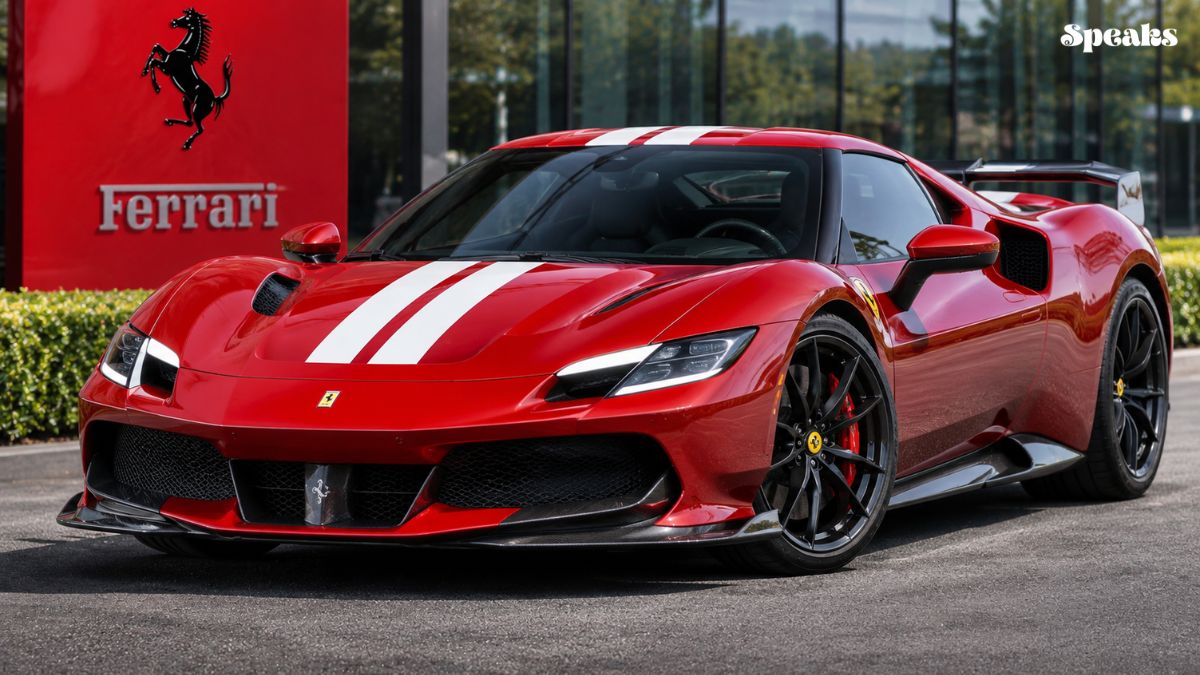
Ferrari is expanding its high-performance lineup with a new supercar that takes a different approach to modern performance. The 296 Challenge Stradale combines a powerful twin-turbo V6 engine with a lighter construction and track-inspired aerodynamics, without relying on hybrid assistance.
The new model is particularly interesting because it brings technology and engineering previously associated with track-only versions of the 296 to a road-legal production car. It also signals that the Italian automaker is continuing to explore different directions for its combustion-engine lineup.
At the heart of the 296 Challenge Stradale is a 3.0-liter twin-turbocharged V6 engine. Unlike the standard 296 GTB, the new version removes the plug-in hybrid system and delivers power exclusively through its combustion engine.
The road-going supercar produces 661 horsepower, placing its performance focus on reduced weight, responsive driving characteristics and aerodynamic efficiency rather than simply chasing the highest possible power figure.
For comparison, the standard 296 GTB produces 819 horsepower through its hybrid powertrain. The difference highlights how Ferrari has developed the new model around a different performance philosophy instead of attempting to outperform the regular car through horsepower alone.
Weight reduction is one of the most important engineering changes. The 296 Challenge Stradale has a claimed dry weight of 1,330 kilograms (2,932 pounds), approximately 140 kilograms (309 pounds) less than the standard 296 GTB.
That reduction could make a significant difference during aggressive cornering, acceleration and braking. A lighter vehicle also places less demand on its tires and braking components during demanding driving conditions.
Aerodynamics play an equally important role in the new model. Ferrari has equipped the car with an extended front splitter, an enclosed underbody, vortex generators and a fixed rear wing to improve stability and generate additional downforce.
The company claims the 296 Challenge Stradale produces 617 kilograms (1,360 pounds) of downforce at 250 km/h (155 mph). That figure underlines the importance of aerodynamic grip in a car designed to deliver a more focused driving experience.
Ferrari has also shared an important performance benchmark from its Fiorano test circuit in Italy. The new road-going model reportedly completes a lap in 1 minute and 18.5 seconds, approximately 2.5 seconds quicker than the 296 GTB.
The introduction of this model follows the development of the 296 GT3 and 296 Challenge, both of which demonstrated how the V6 platform could be adapted for motorsport without the standard hybrid arrangement.
However, those earlier versions were designed exclusively for track use. The Stradale changes that equation by offering enthusiasts a road-legal alternative with similar performance priorities.
Ferrari is also introducing the 296 Challenge Evo, a separate track-only machine aimed at drivers seeking an even closer connection to the brand’s GT3 racing technology.
The Challenge Evo produces 690 horsepower, compared with 661 horsepower in the road-going Stradale. Its revised aerodynamic package increases maximum downforce by 12%, alongside updated electronic driving assistance and improved braking performance.
Ferrari says the Challenge Evo can complete a lap of the Mugello Circuit 0.8 seconds faster than the previous 296 Challenge. Unlike the Stradale, however, it is not approved for public-road use.
Pricing will place the new road car firmly in the high-end supercar market. According to reported Italian pricing, the 296 Challenge Stradale starts at approximately €291,000, equivalent to around $319,000.
US deliveries are reportedly expected to begin in late 2027. The final American-market pricing and availability details remain important factors for prospective buyers waiting for the car to reach dealerships.
The launch also comes as Ferrari adjusts its long-term product strategy. Under its revised 2030 plan, the company expects its future lineup to consist of 40% combustion-engine vehicles, 40% hybrids and 20% fully electric models.
That represents a notable change from its previous electrification targets, which placed a greater emphasis on fully electric vehicles and a smaller share on combustion-only models.
The company’s broader product expansion includes new vehicles such as the Amalfi Spider and its first fully electric model, the Luce. The 296 Challenge Stradale demonstrates that traditional combustion power remains part of its future product development.
For supercar enthusiasts, the arrival of a road-legal, non-hybrid V6 model offers another option in a market increasingly shaped by electrification. Its combination of lower weight, substantial downforce and track-derived engineering gives the latest 296 a distinct identity.