
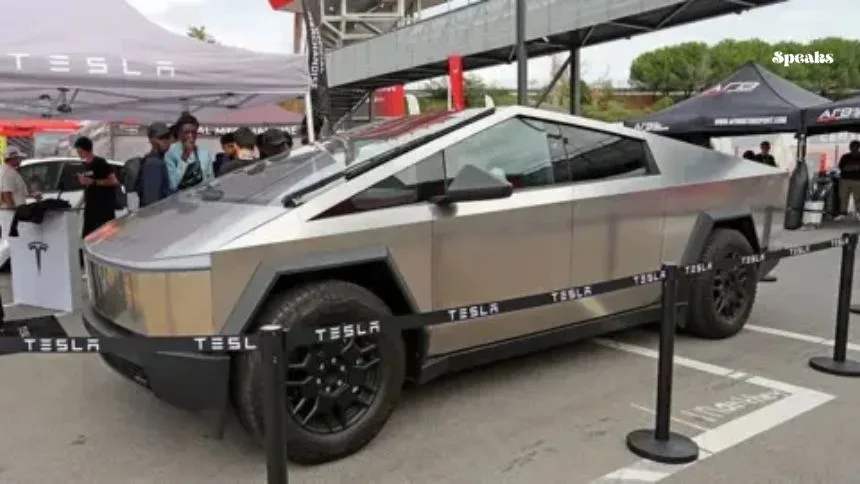
Tesla is preparing to wind down production of its futuristic Cybertruck pickup at its Texas factory around mid-2027, marking a major shift in the electric vehicle maker’s product strategy. CEO Elon Musk confirmed the plan in a post on X on November 6, 2026.
The decision comes after the electric pickup struggled to maintain sales momentum despite attracting significant attention before and after its launch. Tesla now plans to use the factory capacity for increased production of its Cybercab autonomous taxi.
The announcement raises fresh questions about the future of one of Tesla’s most ambitious vehicle projects, which was originally expected to become a major competitor in the American electric pickup market.
Tesla Cybertruck Production to Wind Down Around Mid-2027
Elon Musk confirmed that Tesla intends to reduce and eventually wind down Cybertruck production at Gigafactory Texas around the middle of 2027. The company plans to redirect the manufacturing capacity toward its growing Cybercab program.
In his November 6 post on X, Musk said Tesla would be winding down Cybertruck production at the Texas facility to make room for increased Cybercab output.
However, the announcement does not clearly establish whether the electric pickup will disappear from Tesla’s entire product lineup. Musk has not provided details about a possible production transfer to another factory or a final shutdown date.
Gigafactory Texas is currently the only known manufacturing facility equipped to produce the Cybertruck and its specialized components. This makes the production decision particularly significant for the model’s future.
Why Is Tesla Ending Cybertruck Production?
The Cybertruck initially generated considerable excitement because of its unusual design, stainless-steel exterior and ambitious performance claims. However, several challenges have affected its commercial performance since deliveries began in 2023.
1. Cybertruck Sales Fell Short of Expectations
One of the biggest challenges has been the difference between Tesla’s original sales ambitions and the vehicle’s actual market performance.
Before the Cybertruck entered production, Musk had predicted annual sales of around 250,000 units. However, the pickup has sold an estimated 63,000 units cumulatively, significantly below that early target.
US sales also weakened after the initial launch period. According to industry estimates, Tesla sold 20,237 Cybertrucks in the United States in 2025, representing a 48% decline compared with 2024.
The sales figures indicate how difficult it has been for Tesla to turn the Cybertruck’s early popularity into sustained demand.
2. Higher Prices Changed Customer Expectations
Pricing has also been a major challenge for the electric pickup. When Tesla introduced the Cybertruck concept in 2019, it promised a much lower starting price than the vehicle eventually carried into production.
By the time deliveries began in 2023, the pricing structure had changed considerably. The difference between the original announcement and the final market offering affected customer expectations.
The Cybertruck was positioned as a futuristic alternative to conventional pickup trucks, but its higher-than-expected cost made it harder to reach a broader group of buyers.
3. Unconventional Design Limited Its Market Appeal
The Cybertruck’s angular body and stainless-steel exterior made it one of the most recognizable electric vehicles in the industry.
However, its distinctive appearance also divided potential customers. While some buyers appreciated its unconventional styling, others preferred the familiar design and practicality of established pickup trucks.
Its stainless-steel construction and sharp exterior design also created additional engineering and regulatory challenges.
4. European Safety Regulations Restricted Expansion
Tesla’s international expansion plans also faced regulatory obstacles. The Cybertruck’s design did not meet certain European vehicle safety requirements, particularly those concerning pedestrian protection.
As a result, the pickup was unable to enter the European market through normal vehicle approval processes.
This restricted Tesla’s potential customer base and prevented the company from accessing one of the world’s major automotive markets.
Tesla Cybercab to Get More Production Capacity
The Cybercab is expected to become a major part of Tesla’s autonomous transportation strategy. Unlike conventional passenger vehicles, the two-seat electric taxi has been designed specifically for driverless ride-hailing services.
The vehicle features a futuristic exterior, butterfly-style doors and a cabin designed around autonomous transportation. It does not include conventional driving controls such as a steering wheel and pedals.
Tesla wants to expand Cybercab manufacturing at Gigafactory Texas, and the planned reduction in Cybertruck production will free up valuable factory space for that purpose.
The company has already begun offering limited paid Cybercab rides in Austin, Texas. However, expanding the service will depend on manufacturing capacity, regulatory approval and the development of its autonomous driving technology.
The shift suggests that Tesla is placing greater emphasis on robotaxis and autonomous mobility rather than expanding its traditional passenger vehicle lineup.
What Happens to Existing Tesla Cybertruck Owners?
The planned production wind-down may raise concerns among existing owners and customers who have placed orders for the electric pickup.
However, stopping or reducing vehicle production does not automatically mean that maintenance and customer support will end.
Tesla has not provided a complete public explanation of its long-term Cybertruck ownership support arrangements as part of the production announcement.
Customers should monitor official Tesla communications for information about existing orders, replacement parts, servicing and warranty coverage.
The distinction between ending production at one factory and discontinuing all customer support is important for current and future owners.
Tesla Cybertruck: From 2019 Concept to 2027 Production Wind-Down
The Cybertruck has followed an unusual journey from its public unveiling to its planned manufacturing wind-down.
Tesla first revealed the electric pickup as a concept in November 2019. The vehicle was originally expected to enter production in 2021, but development and manufacturing challenges delayed its arrival.
The company eventually began production at Gigafactory Texas, with the first customer deliveries taking place in November 2023.
Its stainless-steel body, distinctive design and ambitious specifications attracted worldwide attention. However, production delays, changing prices and weaker-than-expected demand affected its commercial progress.
If the current plan proceeds, the Cybertruck’s production at Gigafactory Texas will wind down around mid-2027, only a few years after its market launch.
Which Tesla Vehicles Will Remain After the Cybertruck Production Wind-Down?
Tesla’s product strategy is increasingly focused on its higher-volume electric vehicles, autonomous transportation and robotics.
The Model 3 and Model Y remain central to the company’s passenger vehicle business. Tesla has also announced plans to expand its Cybercab program and continue developing other future products.
The company has previously moved away from its premium Model S and Model X production plans as it reassessed factory priorities.
The next-generation Roadster is another anticipated project, with deliveries previously promised for 2028. However, its production timeline and commercial impact remain important questions for Tesla’s future vehicle lineup.
The Cybertruck decision reflects a wider change in how the company plans to allocate manufacturing resources across its automotive and autonomous mobility projects.
Frequently Asked Questions About Tesla Cybertruck Production
1. Is Tesla Cybertruck production ending in 2027?
Tesla CEO Elon Musk has confirmed plans to wind down Cybertruck production at Gigafactory Texas around mid-2027. However, the announcement does not fully clarify whether production will end at every possible location.
2. When will Tesla stop making the Cybertruck?
The planned production wind-down is expected around the middle of 2027. Tesla has not announced an exact final manufacturing date.
3. Why is Tesla discontinuing Cybertruck production?
The decision follows weaker-than-expected sales, higher-than-originally-promised pricing and challenges in expanding the pickup’s market reach. Tesla also wants to free up manufacturing capacity for its Cybercab robotaxi.
4. What is Tesla Cybercab?
The Cybercab is a two-seat autonomous electric vehicle designed for Tesla’s planned robotaxi service. It does not have conventional driving controls such as a steering wheel or pedals.
5. Will Tesla Cybertruck owners still receive service after production ends?
The production announcement does not establish that customer support will end. Existing owners should follow Tesla’s official communications regarding servicing, replacement parts and warranty arrangements.
6. How many Tesla Cybertrucks have been sold?
Industry estimates put cumulative Cybertruck sales at more than 63,000 units. Tesla does not regularly publish a separate official sales total for the model.
7. When was the Tesla Cybertruck first unveiled?
Tesla introduced the Cybertruck concept in November 2019. After several production delays, the company began customer deliveries in November 2023.
8. Will Tesla replace the Cybertruck with the Cybercab?
The Cybercab is not a direct replacement for the Cybertruck in terms of vehicle category. However, Tesla plans to use the manufacturing capacity freed up by the pickup’s production wind-down to increase Cybercab output.


