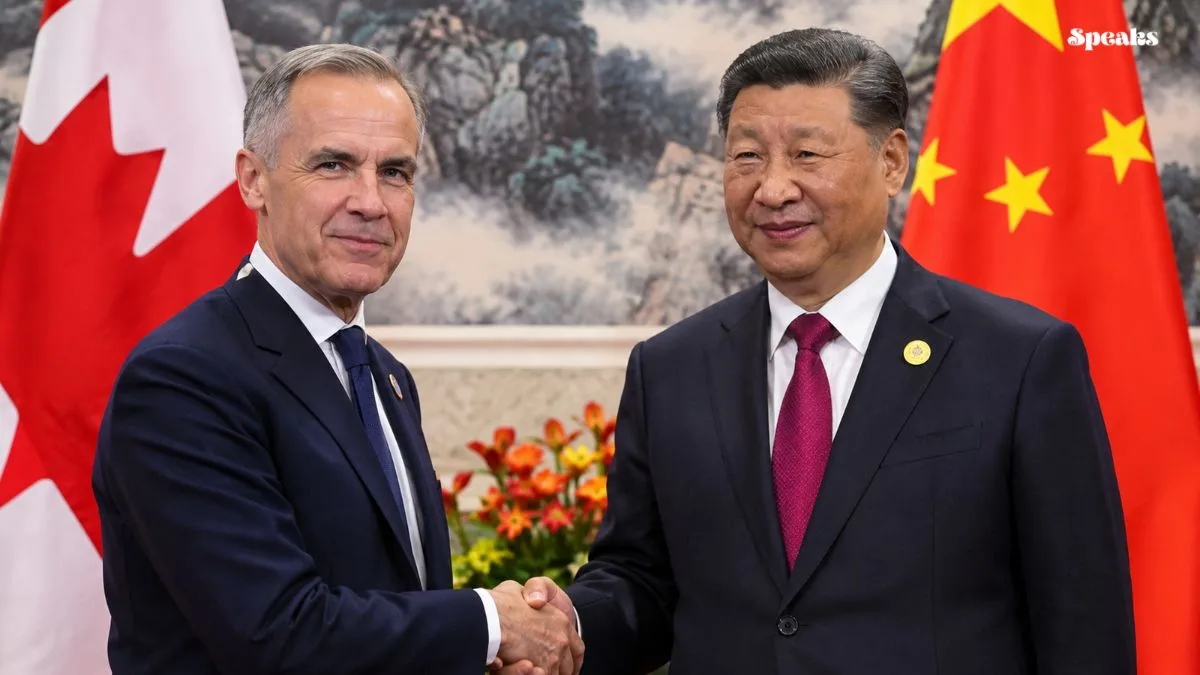
Canada and China have agreed to expand tariff relief on selected goods, marking another step toward improving trade relations as Prime Minister Mark Carney meets Chinese President Xi Jinping in Shenzhen ahead of the Asia-Pacific Economic Cooperation (APEC) Economic Leaders’ Meeting.
The agreement, announced on November 17, will provide additional tariff relief for approximately C$400 million in Canadian exports to China. The measures are expected to benefit Canadian pork producers, fishing businesses and seafood exporters.
In exchange, Canada will extend existing tariff-remission measures for certain Chinese steel and aluminum products for another two years. The arrangement also expands the list of eligible imports where Canadian domestic supply is insufficient or unavailable.
The announcement reflects a broader effort by both governments to stabilize their economic relationship after years of trade disputes, diplomatic tensions and retaliatory tariffs.
Canada Secures More Access to China’s Agricultural and Seafood Markets
The latest agreement expands the preliminary trade arrangement between the two countries and is designed to improve access for Canadian producers selling into the Chinese market.
According to the Canadian government’s announcement, the additional tariff relief covers approximately C$400 million in exports. This includes around C$116 million worth of frozen pork cuts and C$285 million in fish and seafood products.
The seafood categories include certain frozen cold-water shrimp and prawns, Pacific spot prawns, selected molluscs such as geoduck, sea cucumber and Greenland halibut.
These changes could provide greater certainty for Canadian exporters that depend on international buyers. China is an important market for Canadian agricultural and seafood businesses, making improved access commercially significant.
The agreement builds on earlier tariff measures covering Canadian canola meal, peas, lobster and crab. Those measures were extended for another two years as part of the broader trade discussions.
What Canada Agreed to in Return
The tariff arrangements also include commitments from Ottawa. Canada has agreed to extend existing remission measures for certain Chinese steel and aluminum products that were scheduled to expire at the end of 2026.
The new arrangement extends those measures through December 31, 2028. Canada will also expand the coverage to an additional 32 tariff items, including 23 steel products and nine aluminum products.
The additional coverage applies to products for which Canadian supply is insufficient or unavailable. This allows businesses to continue accessing certain imported materials under the specified remission arrangements.
The agreement is therefore not a complete removal of tariffs between the two countries. Instead, it is a targeted adjustment designed to address selected trade barriers while protecting specific domestic economic interests.
Mark Carney and Xi Jinping Push for More Stable Trade Relations
Carney and Xi discussed the latest measures during their meeting in Shenzhen on Tuesday. Both leaders have been working to improve bilateral relations following a period marked by trade restrictions and diplomatic disagreements.
Xi described the improvement in relations as a positive development, emphasizing mutual respect, equality and shared economic interests.
Carney’s government has presented the renewed partnership as part of a strategy to strengthen Canada’s international trade relationships and reduce excessive dependence on any single market.
The Canadian prime minister said the country was ahead of schedule in its ambition to increase exports to China by 50% by the end of the decade.
The latest agreement also follows a broader strategic partnership launched during Carney’s January visit to Beijing, which focused on trade, energy, clean technology and economic cooperation.
Why the Canada-China Agreement Matters for APEC
The announcement comes as regional leaders gather for the APEC Economic Leaders’ Meeting in Shenzhen. The discussions place trade, investment and economic cooperation among Asia-Pacific economies at the center of international attention.
For Canada, stronger commercial ties with China could create additional opportunities for farmers, seafood exporters, manufacturers and businesses seeking access to Asian markets.
The timing is also significant because global trade relationships have become more uncertain amid tariff disputes and changing economic policies.
Canada has faced trade pressure from the United States, its largest trading partner. Ottawa’s efforts to expand commercial relationships in Asia are intended to give Canadian exporters more options and strengthen the country’s position in international markets.
The latest agreement does not mean Canada is abandoning its North American trade relationships. Instead, it highlights the government’s effort to diversify export destinations while maintaining important commercial links with the United States.
Canada Says More Than 90% of Previously Affected Trade Has Regained Market Access
The Canadian government said it has restored market access for more than 90% of trade previously affected by tariff measures between the two countries.
That represents nearly C$7.5 billion worth of Canadian exports, according to the announcement from Carney’s office.
The progress is particularly important for agricultural producers and seafood businesses that faced uncertainty during the period of trade restrictions.
In 2025, bilateral merchandise trade between Canada and China reached C$125.6 billion, an increase of 5.6% compared with 2024.
China accounted for C$35.1 billion in Canadian merchandise exports during that year, making it a major destination for Canadian businesses.
The latest tariff arrangements could help maintain that commercial momentum by improving access for selected products and creating more predictable conditions for exporters.
Trade Relations Still Face Economic and Political Challenges
Despite the latest progress, Canada and China continue to face sensitive issues involving trade policy, national security and diplomatic relations.
Their economic relationship has been affected by disagreements over tariffs, electric vehicles, agricultural products and broader geopolitical concerns.
The January 2026 agreement addressed some of those differences, including Canada’s decision to allow an annual quota of 49,000 Chinese electric vehicles at a 6.1% most-favored-nation tariff rate.
In return, China agreed to reduce tariffs on Canadian canola seed and provide relief for selected agricultural and seafood exports.
The November announcement builds on that framework, but it does not resolve every outstanding trade issue. Both governments have indicated that further work will be needed to reduce barriers and expand economic cooperation.
For businesses watching the APEC discussions, the latest agreement provides another indication that Canada and China are seeking a more stable commercial relationship while navigating a complicated global trade environment.