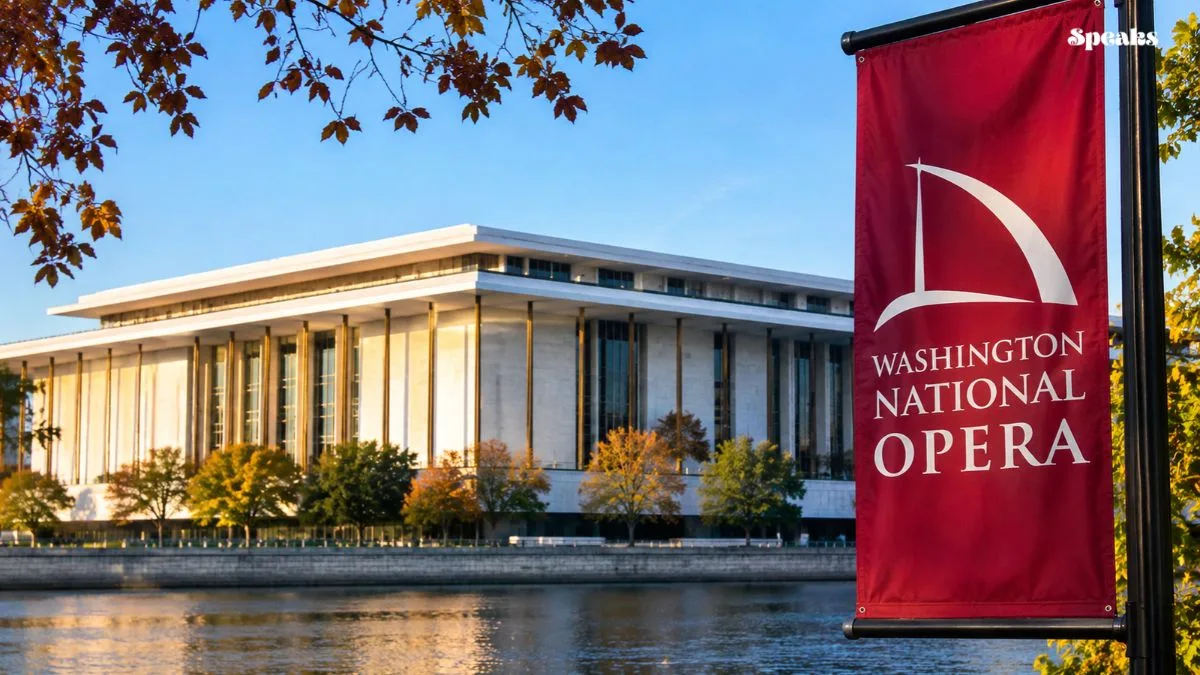
The Washington National Opera has entered a new chapter after ending its long-standing relationship with the Kennedy Center in Washington, D.C. The company has moved its performances to other venues and is now operating as an independent nonprofit organization.
The decision followed major changes at the Kennedy Center under President Donald Trump’s leadership, growing financial concerns and disagreements over how opera productions should be funded. The departure also came amid wider changes across the performing arts institution.
Nearly a year after the separation began, the opera company is working to establish a new identity outside its former home. Its recent productions show how it is adapting its performances to different venues while trying to maintain its artistic ambitions.
Why Did Washington National Opera Leave the Kennedy Center?
The Washington National Opera announced its decision to seek an end to its affiliation agreement with the Kennedy Center on January 9, 2026. The organization said it wanted to return to operating as a fully independent nonprofit entity.
One of the central reasons was a change in the Kennedy Center’s financial model. Under the new approach, productions were expected to have their full costs covered through anticipated ticket sales and secured financial support before receiving approval.
The opera company argued that this requirement did not match the way nonprofit opera organizations typically operate. Productions often take years to plan, while donations, grants and sponsorship commitments may not be available that far in advance.
The organization also said ticket sales generally cover only 30% to 60% of an opera company’s operating costs. Contributions from individual donors, grants and corporate sponsors provide much of the remaining financial support.
How the Kennedy Center’s New Funding Rules Created Problems
Opera productions require extensive planning, large creative teams and significant financial commitments. A major production can involve musicians, singers, costume designers, lighting specialists, stage crews and administrative staff.
Washington National Opera said productions such as Macbeth and Aida can involve nearly 200 people. Companies of its scale may begin developing a production two years or more before it reaches the stage.
That makes it difficult to guarantee every dollar of funding before a production receives approval. Donors and corporate sponsors may be willing to contribute, but they are not always prepared to make commitments several years ahead.
The opera also raised concerns about the impact on its artistic programming. Its traditional model uses revenue from popular productions to help support lesser-known works and more experimental performances.
Under a requirement that every individual production cover its own costs, that balance becomes harder to maintain. The company argued that such restrictions could limit artistic choices and make it more difficult to serve different audiences.
Political Changes at the Kennedy Center Added to the Tensions
The departure also took place during a period of significant political and organizational changes at the Kennedy Center.
After returning to the White House in 2025, Trump moved to replace the center’s board leadership and became its chairman. The institution subsequently underwent changes that attracted national attention and criticism from parts of the arts community.
The board’s decision to add Trump’s name to the venue in December 2025 became another major point of controversy. The change followed a period of artist cancellations, staff departures and concerns about audience support.
The opera’s decision came against this wider backdrop. However, its official transition announcement focused primarily on the new financial model, reduced institutional support and operational challenges.
The company described its departure as an effort to establish separate operational paths rather than continue under an arrangement it considered unsustainable.
Where Does Washington National Opera Perform Now?
Washington National Opera initially moved its spring 2026 performances to Lisner Auditorium at George Washington University. The venue was particularly significant because the company gave its first performances there in 1956.
Its productions of Scott Joplin’s Treemonisha and Robert Ward’s The Crucible were scheduled at Lisner Auditorium in March. The move marked the company’s first major performances after announcing its separation from the Kennedy Center.
The company later expanded its use of venues across the Washington region. For its 2026-27 season, it adapted DAR Constitution Hall in Washington, D.C., into a new performance space for opera.
The November 2026 productions include Puccini’s Madama Butterfly and John Adams’s Nixon in China. The venue has been reconfigured with a thrust stage and cabaret-style seating, allowing performers and audiences to experience opera in a different setting.
The orchestra performs visibly behind the stage, creating a presentation that differs from the traditional arrangement at the Kennedy Center’s Opera House.
Washington National Opera’s New Home at DAR Constitution Hall
Moving into Constitution Hall presented a different challenge from simply transferring performances to another theater. The venue was originally designed as a concert hall, not as a conventional opera house.
To accommodate the productions, the performance area was redesigned with a large thrust stage extending into the audience. Seating was also rearranged to create a more intimate arrangement around the performers.
This setup changes the relationship between the audience, singers and orchestra. Rather than watching a production from a traditional theater layout, visitors experience the performance from a space designed around the stage.
The adaptation reflects the company’s effort to build a new performance model while working with the limitations of an existing venue.
Its recent productions also demonstrate that leaving the Kennedy Center has not meant abandoning large-scale opera. The company continues to stage established works while exploring different ways to present them.
How Washington National Opera Is Rebuilding After the Split
The transition has required the organization to operate with greater independence. At the Kennedy Center, several important functions, including marketing, communications, fundraising, education, finance, legal services and human resources, had been centralized.
Washington National Opera said changes to those services and positions increased the workload for its own staff. Moving away from the affiliation therefore required the organization to rethink how it manages its operations.
The company also had to secure performance venues, maintain relationships with artists and communicate changes to ticket holders. These responsibilities became especially important as it prepared to continue its season outside the Kennedy Center.
Audience support has been another significant part of the transition. When the company opened Treemonisha at Lisner Auditorium in March, the production welcomed two sold-out audiences, according to local reporting.
That response offered an early indication that the organization could attract interest beyond its traditional performance location.
What the Kennedy Center Split Means for Washington’s Arts Scene
The separation highlights a broader challenge facing nonprofit performing arts organizations. Opera, theater and orchestral productions often depend on a combination of ticket revenue, donations, grants and institutional support.
A funding structure that requires each production to cover its costs independently can make it harder to stage less commercially familiar works. It may also reduce opportunities for companies to experiment with new productions or support emerging artists.
Washington National Opera’s experience has therefore become part of a wider discussion about the relationship between cultural institutions, financial sustainability and artistic independence.
The Kennedy Center and the opera company have also presented different explanations of the separation. While the opera emphasized its concerns about the new business model and institutional support, Kennedy Center leadership described the relationship as financially challenging.
The departure does not mean the opera has stopped performing in Washington. Instead, the organization is building a new operating structure and presenting productions at venues beyond its former home.
For audiences, the change means that performances are now taking place in different locations and in a format that can vary from one production to another.
The company’s current season at Constitution Hall represents its latest effort to establish a sustainable future while preserving its place in the region’s cultural life.