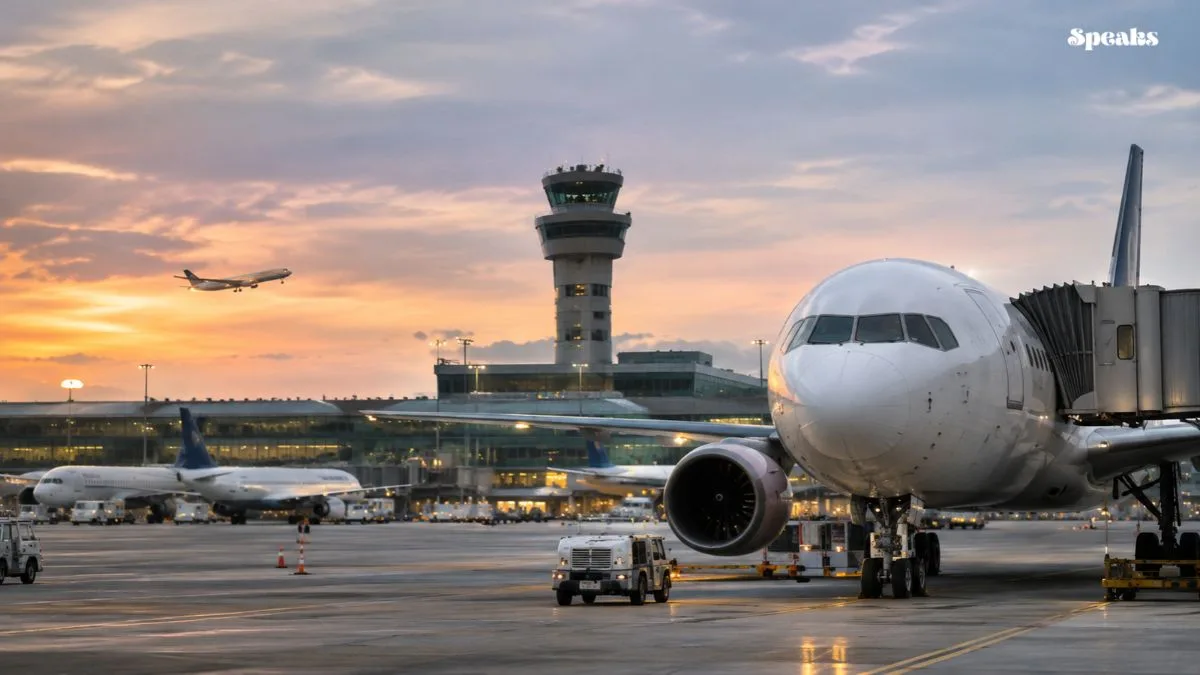
Washington, D.C.: The Federal Aviation Administration has lifted a nationwide ground stop that disrupted U.S. air travel, triggering thousands of flight delays and cancellations after a telecommunications outage affected aviation operations.
Federal airspace reopened at 8:15 p.m. Eastern time Friday, Transportation Secretary Sean Duffy announced during a news briefing. However, officials warned that restoring normal flight schedules would take time.
The FAA ground stop affected all departing flights across the United States and lasted approximately five hours. The agency ordered the suspension because of extraordinary circumstances and safety concerns.
According to FlightAware, more than 10,000 flight delays and over 4,000 cancellations were recorded Friday. The disruption continued Saturday morning, with more than 3,500 additional cancellations reported across the country.
Delta Air Lines reported 640 cancellations, followed by United Airlines with 530 and American Airlines with 488, according to FlightAware figures reported Saturday morning.
The preliminary investigation points to an equipment-related telecommunications failure involving routers that became overwhelmed with data. Transportation officials said the malfunction caused inconsistent information to reach the air traffic control system.
Homeland Security Secretary Markwayne Mullin said newly introduced security patches appeared to overwhelm routers operating within the older infrastructure. Preliminary findings pointed to Cisco 600 series routers manufactured between 2001 and 2006.
Senior government sources told CBS News that the faulty equipment had been identified and isolated. The malfunction reportedly caused out-of-sync data packets, creating communication interference and disruptions to air traffic control screens.
Officials said there was no indication that the incident involved a cyberattack or deliberate threat against the United States. Mullin also ruled out a connection to the massive Microsoft outage.
The FAA Telecommunications Infrastructure, operated by L3Harris, provides essential communications between air traffic control centers and other agency facilities. A November 2023 safety review had already described the network as obsolete and warned about potential failures.
Duffy renewed his call for emergency congressional funding to modernize the nation’s air traffic control infrastructure. Mullin said the administration supports replacing the existing system entirely, with the proposed modernization estimated to cost $50 billion.
Although federal airspace was operating normally Saturday morning, airlines continued dealing with cancellations and scheduling disruptions as they worked to reposition aircraft and restore regular operations.