A new Federal Aviation Administration (FAA) rule took effect across US air traffic control facilities on November 24, 2026, introducing stricter supervision requirements for certain runway operations. The change comes just as millions of Americans begin traveling for Thanksgiving.
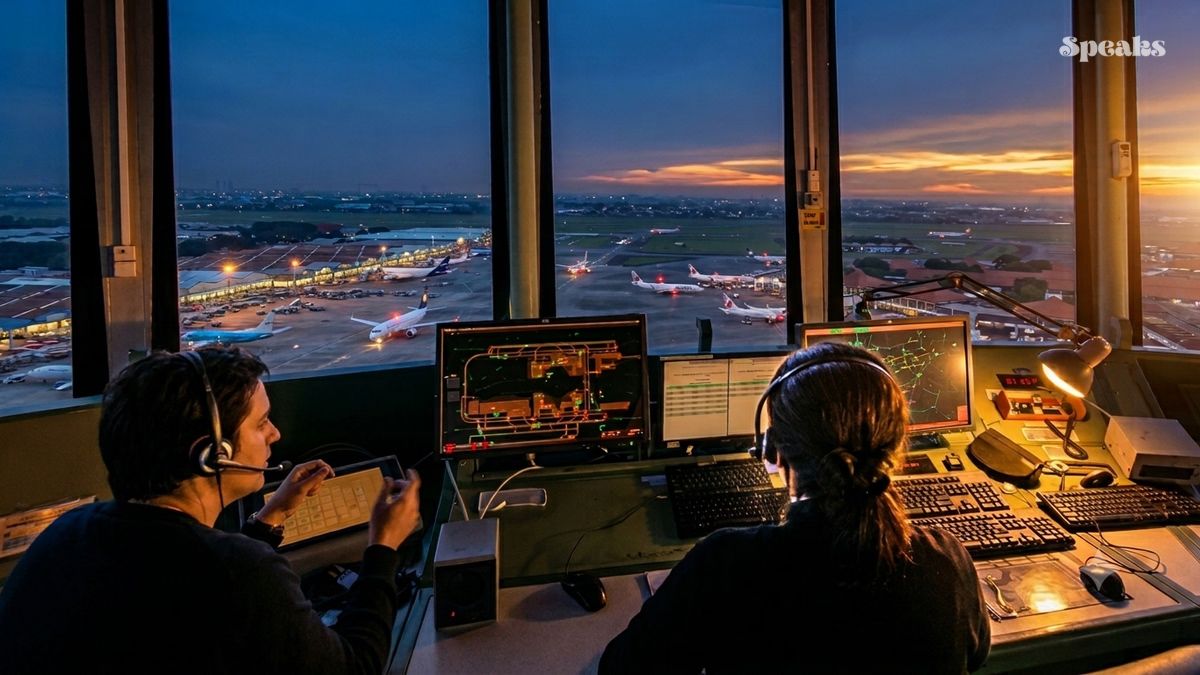
The new FAA rule, officially identified as Notice JO 7210.979, focuses on a procedure known as “Line Up and Wait” (LUAW). It allows air traffic controllers to instruct pilots to enter a runway and wait for clearance before taking off.
Under the updated requirements, a dedicated watch supervisor must be available whenever controllers conduct these operations. The supervisor cannot simultaneously handle other operational responsibilities that could distract from monitoring runway safety.
The FAA introduced the change to strengthen oversight and reduce ambiguity surrounding responsibilities inside airport control towers. The requirement makes dedicated supervision mandatory rather than simply recommending it.
However, the new policy does not mean every US airport will automatically experience flight delays or cancellations. Its impact will depend on staffing availability, airport traffic levels and whether controllers need to use the affected runway procedure.
Air traffic controllers have raised concerns that the additional staffing requirement could make runway operations more difficult during busy periods. At airports already experiencing staffing shortages, finding a dedicated supervisor could reduce the availability of certain departure procedures.
The timing is particularly significant because November 24 is expected to be one of the busiest days of the Thanksgiving travel season. The FAA forecasts more than 417,000 flights during the nine-day holiday period, with approximately 52,000 flights expected on Tuesday alone. Federal Aviation Administration+1
The United States is also dealing with the effects of earlier aviation disruptions. On November 13, a telecommunications problem affecting FAA air traffic control facilities triggered a nationwide ground stop that disrupted thousands of flights.
The agency subsequently identified instability involving its telecommunications network and said it had disabled certain router functions to prevent another incident. Although flights resumed, passengers experienced continuing delays and cancellations during the recovery period. Federal Aviation Administration+1
Another disruption affected Chicago O’Hare International Airport on November 24, when a ground surveillance radar problem delayed arriving aircraft. The FAA temporarily restricted incoming flights while technicians worked to resolve the equipment issue. Reuters
For travelers, the most important distinction is that the new FAA requirement is a runway-safety measure, not a nationwide flight shutdown order. Individual airports could experience operational slowdowns, but widespread disruptions are not guaranteed.
Passengers flying during Thanksgiving week should monitor airline notifications, check departure and arrival updates before leaving home, and allow additional time for connecting flights. The FAA also provides real-time airport delay information through its National Airspace System Status website.
The new supervision requirement is scheduled to remain in effect until June 9, 2027, unless the FAA changes or replaces the notice before that date. FAA+1