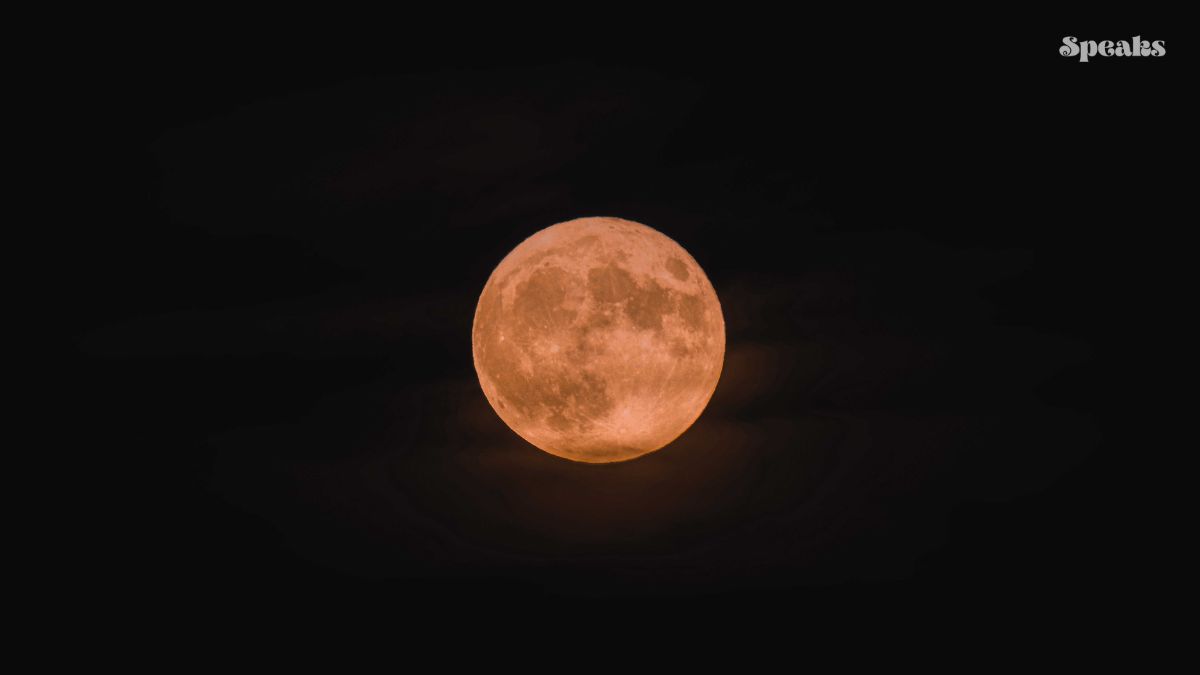
Skywatchers across the United States are getting ready for November’s full moon, which will bring a special celestial event on Tuesday, November 24. Known as the Beaver Moon, this month’s lunar display will also qualify as a supermoon, making it one of the notable astronomy events of late 2026.
The full moon will reach peak illumination at 9:53 a.m. EST on November 24, according to astronomical calculations. Although the exact moment occurs during daylight hours in North America, the Moon will remain nearly full on the evenings surrounding the event.
For the best viewing opportunity, observers should look toward the eastern horizon after sunset on Monday, November 23, and Tuesday, November 24. The Moon will rise around sunset, creating an especially striking view when it appears close to the horizon.
November’s full moon is traditionally called the Beaver Moon, a name connected to seasonal changes in North America. The name reflects the time of year when beavers prepare their winter shelters and historical trapping activities took place before freezing conditions arrived.
What makes the November 2026 full moon particularly interesting is its position along the Moon’s elliptical orbit. The lunar body will be relatively close to Earth, allowing it to appear slightly larger and brighter than an average full moon.
A supermoon occurs when a full moon happens near perigee, the point in the Moon’s orbit when it comes closest to Earth. Because the Moon’s orbit is not perfectly circular, its distance from our planet changes throughout the month.
According to astronomical estimates, the November supermoon will be approximately 224,171 miles (360,768 kilometers) from Earth when it reaches its full phase. Its apparent size and brightness will be greater than those of an average full moon, although the difference may not be immediately noticeable to casual observers.
The Moon will also appear in the constellation Taurus, close to the Pleiades star cluster. This positioning adds another point of interest for people interested in observing the night sky, although visibility will depend on local weather and viewing conditions.
No expensive equipment is necessary to enjoy the full moon supermoon. A location with an unobstructed view of the eastern horizon can provide an excellent viewing opportunity, while binoculars may help observers explore additional lunar details.
Photographers hoping to capture the event should consider taking pictures shortly after moonrise. When the Moon appears near buildings, trees or distant landscapes, the surrounding scenery can create an interesting composition.
The November event also marks the beginning of another supermoon opportunity before the end of the year. The next full moon, known as the Cold Moon, is expected on December 24, 2026, providing another opportunity for skywatchers to observe a relatively close lunar display.
For those planning to watch November’s full moon, the evenings of November 23 and 24 offer the most convenient opportunities. Exact moonrise times will vary depending on the observer’s location, so checking a local moonrise calendar can help determine when the Moon will appear above the horizon.