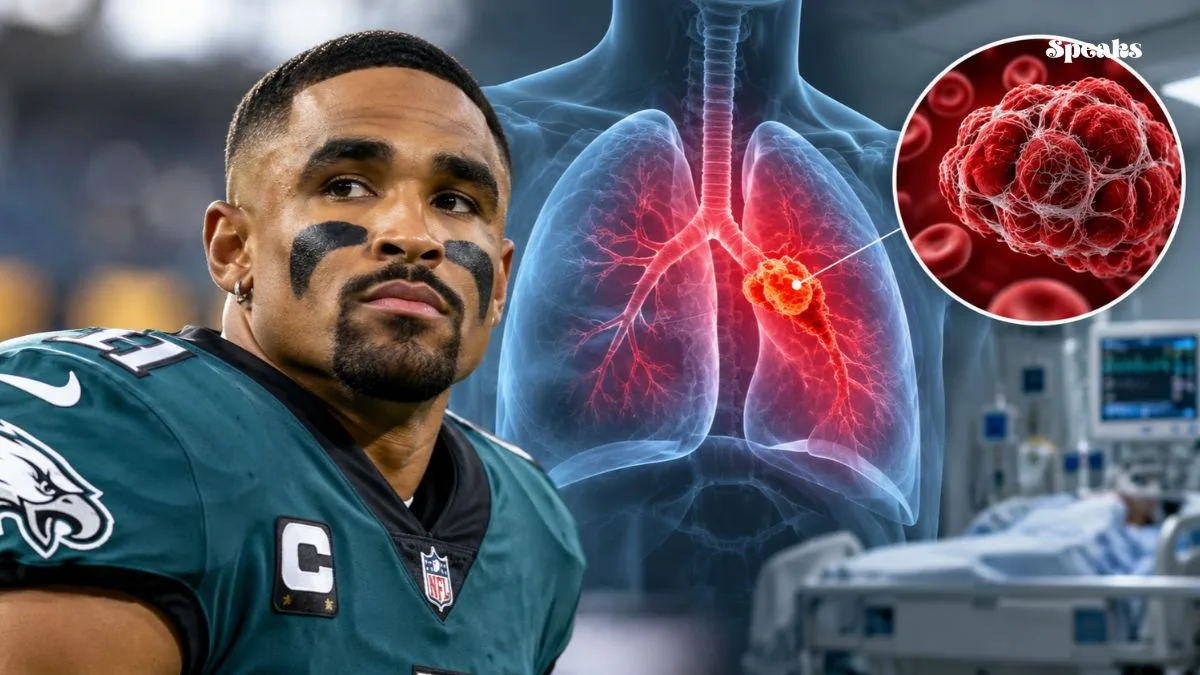
Philadelphia Eagles quarterback Jalen Hurts has been diagnosed with blood clots in both lungs, a serious medical condition that will keep him out of football for the remainder of the 2026 season, according to reports.
The 28-year-old quarterback has been diagnosed with deep vein thrombosis (DVT) and bilateral pulmonary emboli. His medical team has prescribed blood-thinning medication, and he will not participate in contact sports while undergoing treatment.
The Eagles and Hurts’ agent, Nicole Lynn, said he is clinically stable and expected to make a full recovery, with no long-term effects anticipated. The diagnosis has also drawn attention to a condition that can affect people regardless of their fitness level.
What Are Blood Clots in Lungs?
Blood clots in lungs, medically known as pulmonary embolism (PE), occur when a clot blocks an artery in the lungs. These clots often develop in deep veins, usually in the legs, before traveling through the bloodstream to the lungs.
Deep vein thrombosis can cause swelling, pain or tenderness in the affected leg. If part of the clot breaks away and travels to the lungs, it can restrict blood flow and reduce the body’s ability to deliver oxygen.
Pulmonary embolism can be life-threatening, depending on the size and location of the clot and its effect on the heart and lungs. Prompt medical assessment and treatment are essential.
Why Can a Pulmonary Embolism Be Dangerous?
A clot in a lung artery can reduce the amount of blood reaching parts of the lungs. This can lower oxygen levels and place additional strain on the heart as it works to maintain circulation.
In severe cases, pulmonary embolism can cause a sudden drop in blood pressure, damage to vital organs or cardiac arrest. However, the severity varies, and many patients recover with appropriate treatment.
The condition may not always produce obvious warning signs in its early stages. That is why recognizing symptoms and seeking medical care quickly can make a critical difference.
Symptoms of Blood Clots in Lungs to Watch For
Symptoms of pulmonary embolism can appear suddenly and may vary from person to person. Common warning signs include:
- Sudden shortness of breath
- Chest pain that may worsen with a deep breath or coughing
- A rapid or irregular heartbeat
- Coughing up blood
- Lightheadedness or fainting
Pain, swelling, warmth or redness in one leg may indicate deep vein thrombosis, which can lead to a pulmonary embolism.
Sudden breathing difficulties, chest pain, fainting or coughing up blood require emergency medical attention. In the United States, call 911 if pulmonary embolism is suspected.
What Increases the Risk of Blood Clots?
Blood clots can develop for several reasons, including prolonged immobility, recent surgery, injury, hospitalization, certain medical conditions and inherited clotting disorders.
Long-distance travel can also increase the risk when a person remains seated for extended periods. Other risk factors include pregnancy, estrogen-containing medications, cancer and a previous history of blood clots.
Being young, physically active or an elite athlete does not eliminate the possibility of developing a clot. The specific factors behind Hurts’ diagnosis have not been fully established publicly.
How Is Pulmonary Embolism Treated?
Doctors commonly treat pulmonary embolism with anticoagulants, often called blood thinners. These medications reduce the blood’s ability to form new clots and help prevent existing clots from growing while the body gradually breaks them down.
More severe cases may require hospital treatment and, in selected situations, medications or procedures to remove or dissolve clots. Treatment depends on the patient’s condition, the severity of the blockage and the risk of bleeding.
Hurts’ announced treatment involves anticoagulation. Because blood thinners increase the risk of serious bleeding, contact sports are not permitted during treatment.
Can People Recover From Blood Clots in Lungs?
Many people recover from pulmonary embolism with timely diagnosis, appropriate medication and medical follow-up. Recovery time depends on the severity of the clot, the patient’s overall health and whether complications develop.
Some patients may experience persistent breathlessness or other symptoms and require further evaluation. Doctors also assess whether treatment should continue beyond the initial course to reduce the risk of another clot.
In Hurts’ case, his representatives have said his prognosis is very good and that a full recovery is expected. His return to football will depend on his medical progress and when he can safely stop taking blood thinners.