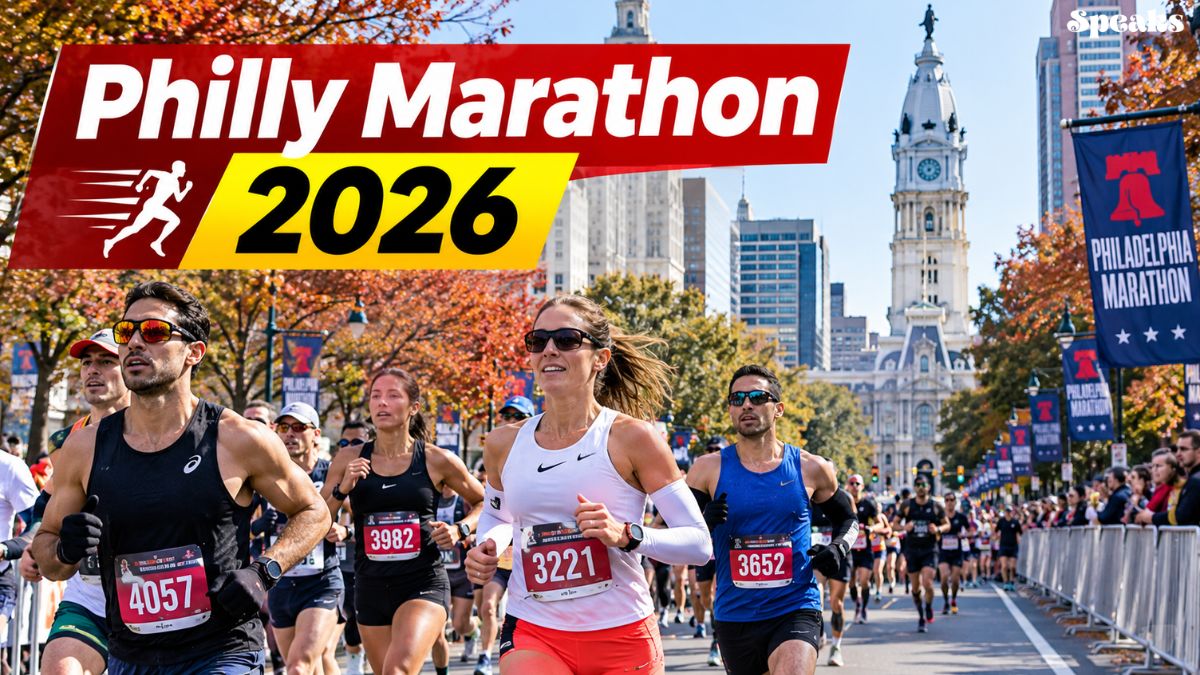
Philadelphia is welcoming thousands of runners for one of the city’s biggest annual sporting events as the 2026 TIAA Philadelphia Marathon takes place on Sunday, November 22.
The 26.2-mile race brings participants through historic neighborhoods, major city landmarks, scenic parks and stretches along the Schuylkill River.
The race begins near the Philadelphia Museum of Art and finishes at the same iconic location. Its route combines busy downtown streets, parkland and a riverside return, giving runners a challenging but scenic tour of Philadelphia.
For residents and visitors, the event also means significant traffic restrictions across several neighborhoods. Drivers are being advised to check road closures and plan alternative routes before traveling through affected areas.
Start Time and Finish Line Location
The 2026 TIAA Philadelphia Marathon is scheduled for November 22, with the starting area located at 22nd Street and Benjamin Franklin Parkway, close to the Philadelphia Museum of Art.
Push-rim wheelchair participants are scheduled to start at 6:55 a.m. ET, followed by runners and walkers at 7:00 a.m. ET.
The Philadelphia Museum of Art serves as the central landmark for the start and finish arrangements. The location also gives spectators a recognizable meeting point to watch participants begin and complete the race.
The marathon is part of Philadelphia Marathon Weekend, which also features the Dietz & Watson Philadelphia Half Marathon, Rothman Orthopaedics 8K and Philadelphia Kids Run.
Philly Marathon 2026 Route
The course takes runners through several distinct sections of Philadelphia. The opening miles cover Center City and historic districts, while the later stages move through Fairmount Park, East Falls and Manayunk.
Miles 1–5: Center City, Old City and Delaware Riverfront
The opening section takes runners east from Benjamin Franklin Parkway toward Arch Street and Race Street. Participants then move toward Christopher Columbus Boulevard, where the route follows the Delaware River waterfront.
Around the third mile, runners reach the 5K checkpoint before heading west along Washington Avenue. The course continues north on Front Street and turns toward South Street and Sixth Street.
This section gives participants an early look at Philadelphia’s historic streets and waterfront surroundings. It also offers spectators several opportunities to watch the race close to the city center.
Miles 6–9: Midtown and University City
After passing through the historic district, runners move west along Chestnut Street before heading south on 15th Street.
The course then follows Walnut Street toward University City, an area known for its universities, cultural institutions and busy streets.
At approximately Mile 8, runners reach 34th Street before heading toward the Philadelphia Zoo and Girard Avenue. This stretch marks the transition from the dense urban section toward the city’s parkland.
Miles 10–13.1: West Fairmount Park and Half-Marathon Point
The route enters West Fairmount Park, giving runners a change of scenery after the earlier city streets.
Participants travel along Lansdowne Drive, Avenue of the Republic and States Drive before returning toward the Girard Avenue Bridge.
The 20K checkpoint comes during this section, followed by the route toward 33rd Street and Reservoir Drive. Runners reach the halfway point at 13.1 miles after completing the first half of the marathon.
Miles 14–18: East Fairmount Park and East Falls
The second half begins with another scenic section through East Fairmount Park.
Runners follow Reservoir Drive, Mount Pleasant Drive and Edgley Drive before reaching Fountain Green Drive. The route then connects with Kelly Drive, a well-known road running alongside the Schuylkill River.
At approximately Mile 16, participants begin following the river northwest toward East Falls. The landscape offers a different experience from the earlier downtown streets, although runners must still manage their pace as the distance increases.
Miles 19–21: Manayunk and the Turnaround Point
One of the most recognizable sections of the course takes runners into Manayunk, a Philadelphia neighborhood popular for its restaurants, local businesses and lively atmosphere.
The marathon route reaches Ridge Avenue before continuing along Main Street. The 30K checkpoint falls around Mile 19, with the turnaround point located near Mile 20.
After reaching the designated turnaround, runners reverse direction and begin heading southeast. The return section brings them back toward Kelly Drive as they approach the final stage of the race.
Miles 22–26.2: Kelly Drive and the Finish at the Art Museum
The closing miles follow Kelly Drive alongside the Schuylkill River.
This relatively flat riverside stretch gives runners a final opportunity to maintain their pace and work toward the finish. The 40K checkpoint comes during the closing section, around Mile 24.9.
Participants continue south toward the Philadelphia Museum of Art, where the marathon concludes near the Benjamin Franklin Parkway.
For runners approaching the final stretch, the familiar museum setting provides a memorable finish to the 26.2-mile challenge.
Major Philadelphia Landmarks Along the Marathon Route
The course passes several well-known locations that help make the Philadelphia Marathon a major attraction for runners and spectators.
Some of the notable places along or near the route include:
- Philadelphia Museum of Art: The central start and finish landmark.
- Benjamin Franklin Parkway: A major ceremonial boulevard hosting the race’s starting area.
- Old City: A historic district included in the opening miles.
- Delaware River Waterfront: A scenic stretch near the early part of the course.
- University City: A prominent neighborhood along the western section.
- Philadelphia Zoo: Located near the course around the eighth mile.
- Fairmount Park: Provides extensive green surroundings during the middle miles.
- Schuylkill River: Runs alongside much of the later course.
- Manayunk: A popular neighborhood around the 20-mile turnaround.
These locations also offer spectators different places to experience the race, although access depends on temporary traffic restrictions and pedestrian arrangements.
Philly Marathon 2026 Road Closures
The marathon is expected to affect traffic across Center City, University City, Fairmount Park and Manayunk.
The City of Philadelphia announced that closures would operate on a rolling basis, with roads reopening as runners pass and event-related operations finish.
Benjamin Franklin Parkway is closed from Friday, November 20, through Sunday, November 22. Several nearby streets and highway ramps also face restrictions during the event.
Major Road Closures on Sunday, November 22
The following locations are among those affected by race-day restrictions:
- Benjamin Franklin Parkway, including the section between 16th and 20th Streets.
- Arch Street between 3rd and 16th Streets.
- Race Street between 6th Street and Columbus Boulevard.
- Columbus Boulevard in designated northbound and southbound sections.
- Washington Avenue between Columbus Boulevard and Front Street.
- Front Street between Washington Avenue and South Street.
- South Street between Front Street and 7th Street.
- Chestnut Street and Walnut Street along the race route.
- 34th Street between Chestnut Street and Girard Avenue.
- Reservoir Drive and surrounding Fairmount Park roads.
- Kelly Drive and the Falls Bridge.
- Ridge Avenue and Main Street in the Manayunk area.
The westbound I-676 off-ramp at 22nd Street and eastbound I-76 off-ramp at Spring Garden Street are also subject to early-morning restrictions.
When Will Philadelphia Marathon Roads Reopen?
Most affected streets are scheduled to reopen by 3 p.m. on Sunday, November 22, as race operations and road-clearing work are completed.
However, Eakins Oval, Benjamin Franklin Parkway and Kelly Drive have separate reopening arrangements. Their outer lanes are expected to reopen by approximately 5 p.m.
All affected roads are expected to return to normal by 8 a.m. on Monday, November 23, according to the event’s published road-closure information.
Drivers should not assume that every street will reopen at the same time. Police and traffic officials will manage access depending on the movement of runners and the safety requirements of the event.
How to Watch the Philly Marathon 2026
Spectators planning to watch the race can use the official Philadelphia Marathon Weekend app to follow participants and receive event information.
The app allows users to add runners to their favorites and check updates throughout race weekend. It can be particularly useful for families and friends who want to coordinate their arrival at different points along the course.
The official course map and elevation map are also available through the Philadelphia Marathon website. Spectators should check these resources before choosing a viewing location.
Philadelphia Marathon Hydration Stations and Runner Support
Hydration support is positioned at several points along the course to help participants manage the physical demands of the 26.2-mile distance.
Officially listed water and fluid stations include Columbus Boulevard near Mile 2.9, Sixth Street around Mile 5.1, Walnut Street near Mile 7.1 and Avenue of the Republic around Mile 10.2.
Additional stations are located around Fairmount Park, Kelly Drive, Ridge Avenue and Main Street in Manayunk.
The event also provides electrolyte drinks and energy gels at designated points. These facilities are important for runners managing hydration and energy levels during the later miles.
What Makes the Philadelphia Marathon Course Different?
The Philadelphia Marathon combines an urban running experience with long stretches of green space and riverside scenery.
Unlike courses that remain concentrated in a single downtown area, this route takes participants through multiple neighborhoods and park systems before bringing them back toward the Art Museum.
The combination of historic streets, cheering neighborhood crowds and the Schuylkill River makes the race appealing to both experienced marathon runners and first-time participants.
The course is USATF-sanctioned and course-certified, with official checkpoints positioned throughout the distance.
For Philadelphia residents, the event is also a major weekend attraction, although the road closures and transportation changes require advance planning.