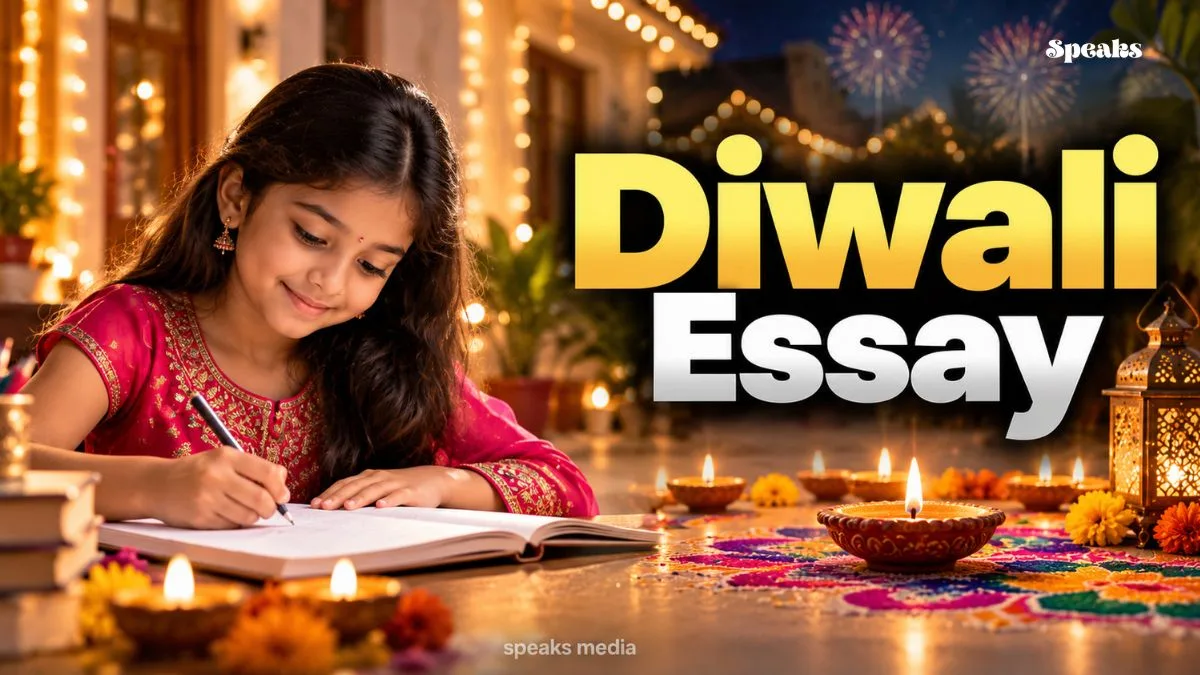
Diwali, also known as Deepavali, is one of the most widely celebrated festivals in India. Known as the Festival of Lights, it brings families together through traditional prayers, colorful decorations, delicious sweets and joyful celebrations. Students looking for a Diwali essay in English can use these simple examples for homework, school assignments and essay-writing competitions.
Diwali Essay 10 Lines
- Diwali is known as the Festival of Lights.
- It is one of the most popular festivals in India.
- People clean and decorate their homes before Diwali.
- We light diyas and decorate our homes with colorful lights.
- Many families make beautiful rangoli designs.
- People worship Goddess Lakshmi and Lord Ganesha.
- Families share sweets, gifts and festive meals.
- Diwali celebrates the victory of good over evil.
- We should celebrate safely and avoid unnecessary pollution.
- Diwali spreads happiness, hope and love among everyone.
Diwali Essay in English for Class 1
Diwali is my favorite festival. It is called the Festival of Lights. People clean their homes and decorate them with lights and flowers. We light diyas and make colorful rangoli. My family worships Goddess Lakshmi and Lord Ganesha. We wear new clothes and eat tasty sweets. I enjoy celebrating Diwali with my family. Diwali teaches us to be kind and happy.
Diwali Essay in 100 Words
Diwali, or Deepavali, is a famous festival celebrated with great joy in India and many other countries. It is called the Festival of Lights because people decorate their homes with diyas, candles and colorful lights. Families clean their houses, create beautiful rangoli designs and prepare delicious sweets. Many people worship Goddess Lakshmi and Lord Ganesha for prosperity and good fortune.
In the Hindu tradition, Diwali is associated with Lord Rama’s return to Ayodhya after fourteen years of exile. People celebrate by exchanging gifts, visiting relatives and sharing happiness. Diwali reminds us of the victory of good over evil and the importance of kindness.
Diwali Essay in English: 150 Words
Diwali, also called Deepavali, is one of the most important festivals celebrated in India. It is known as the Festival of Lights and symbolizes hope, happiness and the victory of good over evil. The festival is observed by millions of people in India and communities around the world.
Before Diwali, families clean their homes, shop for festive items and decorate their doorways with colorful rangoli. In the evening, people light traditional clay lamps called diyas and decorate their homes with beautiful lights. Many families perform Lakshmi Puja and pray for happiness, health and prosperity.
Diwali is also a time for sharing. Friends and relatives exchange sweets and gifts, enjoy special meals and spend quality time together. In many Hindu traditions, the festival celebrates Lord Rama’s return to Ayodhya after fourteen years of exile.
People can make their celebrations more environmentally friendly by choosing traditional lamps, reducing firecracker use and avoiding litter. Diwali encourages us to share happiness, help others and welcome new beginnings.
Diwali Essay for Class 3
Diwali is one of the happiest festivals of the year. It is also called Deepavali, which means a row of lights. People celebrate Diwali by decorating their homes with diyas, candles and colorful electric lights.
Before the festival, families clean their houses and make rangoli at their entrances. On Diwali evening, many people perform Lakshmi Puja and pray for prosperity. Children enjoy wearing new clothes, eating sweets and receiving gifts from family members.
In many Hindu traditions, Diwali celebrates the return of Lord Rama to Ayodhya after fourteen years of exile. People welcomed him by lighting lamps, and this story continues to be an important part of the festival.
We should celebrate Diwali responsibly by being careful with lamps and avoiding dangerous fireworks. The festival teaches us to spread love, respect others and share our happiness with people in need.
Diwali Essay for Class 6
Diwali is a major Indian festival celebrated with enthusiasm by people in India and across the world. Also known as Deepavali, the festival is associated with light, hope, prosperity and the victory of good over evil. Although customs vary across regions and communities, family gatherings, prayers and festive decorations are common features.
Preparations begin several days before the festival. People clean their homes, decorate entrances with rangoli and flowers, and arrange diyas and decorative lights. Many families perform Lakshmi Puja and seek blessings for prosperity. Traditional sweets and snacks are prepared, while relatives and friends exchange gifts and greetings.
Diwali has different religious and cultural meanings. In many parts of India, it commemorates Lord Rama’s return to Ayodhya after fourteen years of exile. Jain communities observe the festival in connection with Lord Mahavira’s nirvana, while Sikhs celebrate Bandi Chhor Divas around the same time.
Modern celebrations can also include environmental responsibility. Excessive fireworks may contribute to air and noise pollution, affecting people, animals and the environment. Choosing safer celebrations, reducing waste and sharing with those in need can help preserve the festival’s joyful spirit.
Eco-Friendly Diwali Essay
Diwali is a festival of lights, happiness and togetherness. However, celebrations involving excessive firecrackers can create air and noise pollution. An eco-friendly Diwali allows families to enjoy traditional customs while being more considerate of their surroundings.
We can decorate our homes with clay diyas, reusable lights, flowers and natural rangoli materials. Instead of buying unnecessary plastic decorations, families can reuse items from previous celebrations. Sharing homemade sweets, donating food and helping people in need are also meaningful ways to celebrate.
Fireworks can frighten pets and wildlife and disturb young children and older adults. Reducing their use, following local safety rules and keeping public spaces clean can make the festival safer for everyone.
An environmentally conscious Diwali does not mean giving up the fun. It means celebrating thoughtfully, respecting others and making choices that protect the places we live in.
Why Is Diwali Celebrated?
Diwali has several religious and cultural meanings, depending on the community and region. In many Hindu traditions, it celebrates Lord Rama’s return to Ayodhya after defeating Ravana and completing fourteen years of exile. In other traditions, the festival is associated with Goddess Lakshmi, prosperity and spiritual renewal.
For Jains, Diwali commemorates the nirvana of Lord Mahavira. Sikhs observe Bandi Chhor Divas, which remembers Guru Hargobind’s release from imprisonment and his return to Amritsar. These different traditions give the festival significance beyond a single story.
The lighting of diyas represents hope and the movement from darkness toward light. Families also use the occasion to reconnect with relatives, share food and welcome fresh beginnings.
Frequently Asked Questions
What is Diwali in simple English?
Diwali is a festival of lights celebrated by millions of people. Families decorate their homes, light diyas, pray, exchange sweets and spend time together.
How do you write a Diwali essay in 10 lines?
Write ten short sentences about the festival’s meaning, home decorations, diyas, rangoli, prayers, sweets, gifts and the message of goodness. Use simple words and keep each sentence focused on one idea.
How many words should a Diwali essay have?
The required length depends on the assignment. Young students may be asked to write ten lines or around 100 words, while older students may need 150, 200 or 500 words.
How can students celebrate an eco-friendly Diwali?
Students can use reusable decorations, choose traditional lamps safely, reduce firecracker use, avoid plastic waste and share food or gifts with people who need support.
Is Diwali celebrated outside India?
Yes. Diwali is celebrated by Indian communities in countries such as the United States, the United Kingdom, Canada, Singapore and Australia. Public events, temple gatherings and cultural programs help keep traditions alive around the world.