Thousands of customers across the United States reported problems accessing online banking services on Monday, November 16, after a technical issue at JPMorgan Chase disrupted transactions involving several major financial institutions.
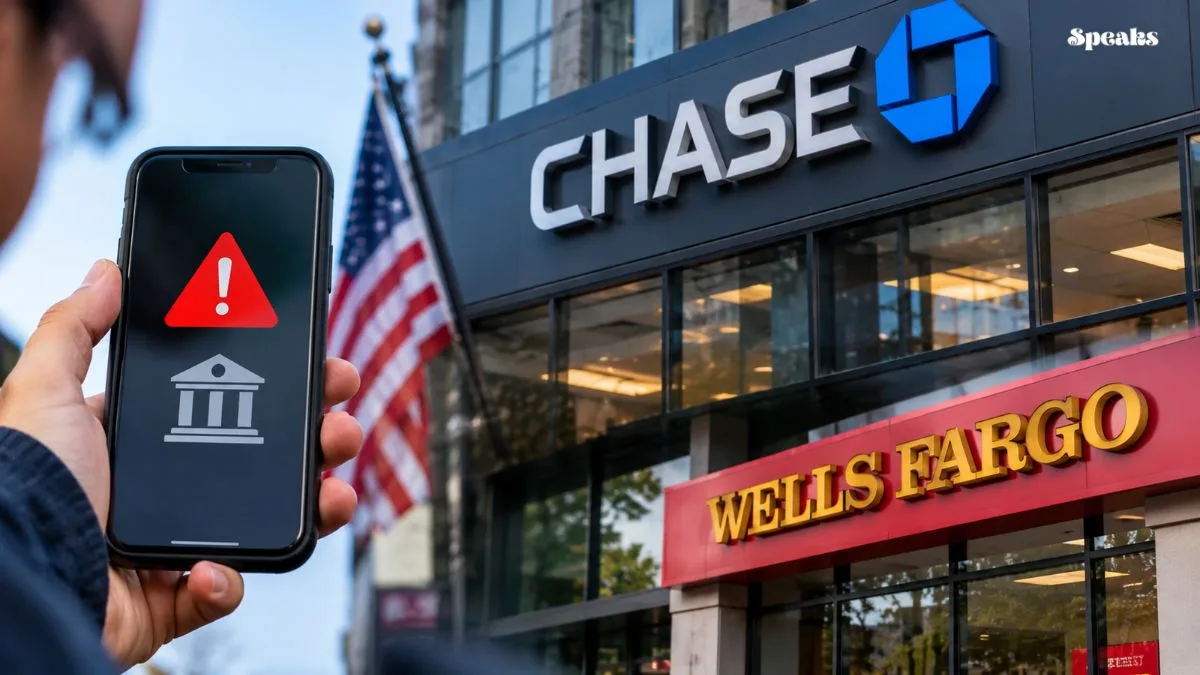
Customers reported difficulties involving Chase, Bank of America, Wells Fargo, U.S. Bank and other banking services. The disruption also affected some payments involving Zelle, raising concerns among customers trying to transfer money or access their accounts.
JPMorgan Chase attributed the problem to a temporary software bug affecting its internal hardware systems. The bank said customers could still access their accounts and funds, while some transactions were taking longer than usual to process.
The company also stressed that there was no evidence of a cyberattack or a wider systemic failure. By Monday evening, Chase said transactions were posting normally again.
Bank Outage: What Happened to Chase, Bank of America and Wells Fargo?
The disruption began on Monday morning in the United States, with customers reporting problems accessing online banking platforms and completing financial transactions.
Reports on Downdetector increased as customers experienced login difficulties, error messages and delays. Chase received particularly high volumes of complaints, while customers of other financial institutions also reported problems.
Some Chase customers encountered messages indicating that certain services were temporarily unavailable. Others reported difficulties checking balances, transferring money and completing payments.
The disruption was not necessarily caused by separate failures at every bank mentioned in the reports. Chase explained that other institutions could experience delays when processing transactions involving its systems.
Chase Identifies Software Bug as Cause of Banking Disruption
JPMorgan Chase said a software bug affecting its on-premise hardware systems was responsible for the technical problem.
The bank explained that the issue was temporary and that some transactions were taking longer than usual to complete. It also confirmed that customers retained access to their accounts and funds.
The distinction is important because the disruption did not mean customer deposits had disappeared or that the entire banking system had stopped operating.
Chase said it was working to restore normal service and expected the issue to be resolved by the end of Monday.
By approximately 6:30 p.m. Eastern Time, a Chase spokesperson told NBC News that transactions were posting normally again.
Why Were Bank of America and Wells Fargo Customers Also Affected?
Customers of Bank of America, Wells Fargo and other financial institutions also reported problems during the disruption.
However, Chase said those banks were not necessarily experiencing independent outages. Some transactions involving other institutions could be delayed because they depended on Chase’s systems.
This type of disruption can create problems across multiple financial institutions even when the underlying technical failure is concentrated within one bank.
U.S. Bank said its systems were not directly affected. However, customers attempting to send or receive Zelle payments involving another financial institution could experience delays.
Reports involving Bank of America and Wells Fargo also appeared on outage-tracking platforms, although the number of reports did not establish that both banks had experienced full system failures.
Was the Bank Outage a Cyberattack? Chase Responds
Concerns about a possible cyberattack emerged as customers experienced problems accessing financial services.
Chase directly addressed those concerns, saying there was no evidence that the disruption was cyber-related. The bank described the incident as a temporary technical issue caused by a software bug.
There was also no confirmation that hackers had accessed customer accounts or stolen banking information as part of the incident.
The explanation matters because a technical failure and a cybersecurity breach require different responses. A software malfunction can delay transactions without necessarily exposing customer information or compromising account security.
Chase characterized the incident as isolated rather than a systemic problem affecting the broader financial system.
Was Zelle Down During the Banking Disruption?
Zelle also attracted attention as customers reported problems sending and receiving money.
The digital payment network said its systems were fully operational. However, payments involving Chase customers could still experience delays because of the bank’s technical problems.
Zelle operates through participating financial institutions rather than functioning independently of the banks that support its transactions.
This means a problem at one participating bank can affect individual transfers even when the payment network itself remains operational.
Customers waiting for transfers were advised to check their banking applications for updated transaction information rather than repeatedly submitting the same payment.
Did the Federal Reserve Banking System Stop Working?
The reported problems raised wider questions about whether the disruption had affected the US banking infrastructure.
However, the available reporting did not establish that the Federal Reserve’s payment systems had stopped operating.
The Federal Reserve’s payment infrastructure supports transfers between financial institutions, including important settlement services. A technical issue at one commercial bank does not automatically mean these national systems have failed.
The reported disruption was centered on Chase’s internal hardware systems and transactions involving the bank.
There was no confirmed evidence that the incident represented a nationwide shutdown of the US financial system.
Bank Outage Comes After Recent Microsoft and Airline Disruptions
The banking disruption occurred after several other major technology-related problems affected businesses and consumers in the United States.
Microsoft recently experienced a major outage that disrupted services including Outlook, Teams and other Microsoft 365 products. Separately, technical problems involving the US air traffic control system disrupted flights.
The timing prompted questions about whether the incidents were connected.
However, available information indicated that the problems had separate technical causes. Microsoft attributed its disruption to an issue during a network upgrade, while the air traffic control incident involved a malfunctioning router.
There was no confirmed evidence connecting those incidents to the Chase banking problem.
What Should Customers Do If Their Bank App Is Not Working?
Customers experiencing banking problems should avoid assuming that an unavailable application means their money has been lost.
A few practical steps can help prevent additional problems during a temporary service disruption:
- Check official bank updates: Use the bank’s website or verified social media accounts for service announcements.
- Check transaction history: Review whether a payment is pending, completed or declined before attempting it again.
- Avoid duplicate transfers: Repeatedly submitting the same payment could create multiple transactions once services recover.
- Contact the bank through official channels: Never share passwords, PINs or one-time verification codes with anyone claiming to offer outage assistance.
- Keep payment records: Save confirmation messages and transaction details for payments that remain pending.
- Use alternative payment methods carefully: If an urgent payment is necessary, confirm the original transaction status before choosing another method.
Customers should also be cautious about fraudulent messages that exploit banking disruptions. Scammers may impersonate bank support teams and send fake links claiming that customers must verify their accounts.
Are US Banks Working Again After the November 16 Outage?
The situation began improving on Monday evening after Chase worked to address the software issue.
A bank spokesperson confirmed that transactions were posting normally by approximately 6:30 p.m. ET. The improvement followed several hours of customer complaints and reports of delayed services.
However, the restoration of normal transaction processing does not automatically confirm that every customer experienced an identical recovery timeline.
Customers who still have pending payments or account access problems should check directly with their financial institutions for transaction-specific updates.
The incident highlighted how a technical failure within one major financial institution can create delays for customers and payment partners across the wider banking network.