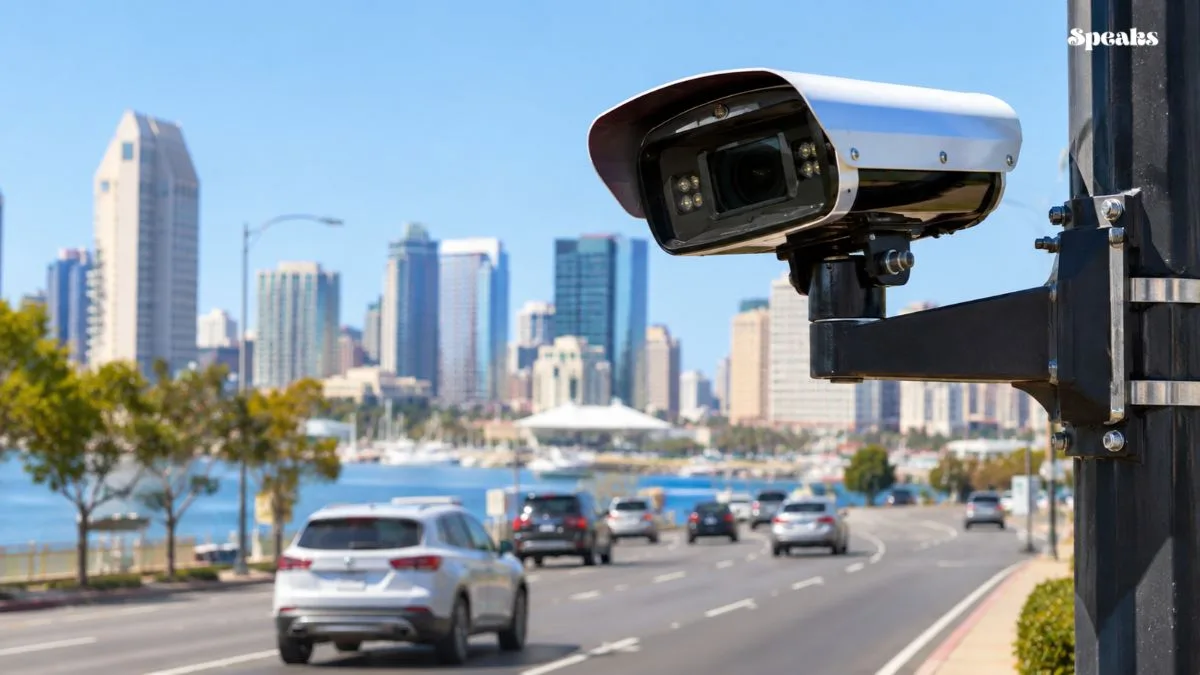
The San Diego City Council has voted to suspend the city’s use of automated license plate reader cameras operated through Flock Safety, marking a major shift in the debate over police surveillance and public privacy.
The decision followed growing concerns about how the technology was used by the San Diego Police Department, including reports that officers accessed camera data while investigating alleged misconduct involving a fellow officer and a domestic violence victim.
The council also rejected the city’s Smart Streetlights surveillance policy, putting more than 500 camera-equipped streetlight devices at the center of a wider review of public surveillance technology.
San Diego Council Rejects ALPR and Smart Streetlight Policies
During its Nov. 16 meeting, the City Council voted 7-0 against continuing the Automated License Plate Reader (ALPR) policy. Council members also voted 5-2 to reject the Smart Streetlights use policy, according to local reporting.
The decisions significantly weaken the legal and administrative basis for the city’s continued use of the systems. However, the votes did not automatically terminate the existing contract with Flock Safety and technology partner Ubicquia.
City officials said the administration would move to shut down the systems and direct the police department to begin the process of removing the cameras. A plan outlining the next steps was expected to be presented to the council later in the week.
The contract, valued at nearly $12 million, remains an important part of the next phase of the dispute. Officials could pursue cancellation or renegotiation, while the city also faces a reported $2 million payment deadline in December for services covering the following year.
Police Use of Cameras Raises Serious Privacy Questions
The controversy intensified after reports revealed that San Diego police investigators had used ALPR technology during internal affairs investigations involving alleged misconduct by an officer.
According to information provided by the police department, Internal Affairs used the system in six administrative investigations involving specific allegations of employee misconduct.
One investigation involved an officer and a domestic violence victim. Investigators reportedly used license plate data to examine whether the officer’s vehicle and the woman’s vehicle had been at the same location.
The department maintained that its policies allow ALPR searches for legitimate law enforcement purposes and official investigations. Police officials also said the technology can help locate missing people, respond to emergencies and establish timelines during investigations.
However, critics questioned whether using a citywide vehicle tracking network in internal personnel investigations was consistent with the safeguards presented when the program was approved.
The issue became a turning point for several council members who had previously supported the technology.
Councilmember Raul Campillo withdrew his support after learning about the reported use of the cameras to track the victim and an officer. He called for the program to be suspended and for an audit examining how the department had used the system.
What Are Flock Safety ALPR Cameras?
Automated License Plate Readers are camera systems designed to capture vehicle license plates and record information such as the time and location of a vehicle’s appearance.
Police departments can use searchable databases of these records to identify vehicles connected to investigations, locate missing people and follow leads involving stolen vehicles or other reported crimes.
Flock Safety is among the companies providing this technology to law enforcement agencies. Its systems can help investigators search historical vehicle sightings rather than relying only on direct observations or witness accounts.
Supporters argue that these tools can save investigative time and help police respond to serious crimes. Privacy advocates, however, warn that collecting large amounts of vehicle location data can create detailed records of people’s daily movements.
Repeated sightings may reveal where someone lives, works, receives medical care, attends religious services or participates in public events. That possibility has become a central concern in the debate over widespread automated surveillance.
ACLU Lawsuit Adds Pressure on the City
The council’s decision also comes as San Diego faces a legal challenge over its use of license plate reader technology.
The ACLU Foundation of San Diego and Imperial Counties filed a lawsuit on Sept. 29, 2026, on behalf of the Partnership for the Advancement of New Americans.
The lawsuit alleges that the city’s ALPR program violates privacy protections under the California Constitution. It argues that collecting and retaining large volumes of vehicle location information can expose sensitive details about residents’ movements and personal associations.
The legal action seeks to stop the city’s use of ALPR technology, remove the cameras and associated equipment, and delete information collected through the system.
The lawsuit’s allegations have not been established as court findings. However, the case has added another layer of scrutiny to the city’s surveillance program as elected officials reconsider its future.
Mayor Todd Gloria Says He Will Respect the Council’s Decision
Mayor Todd Gloria had previously supported the use of automated license plate readers, describing them as an important resource for police investigations.
Before the Nov. 16 meeting, however, Gloria announced that he would not use his veto authority if the council voted to end the program.
He acknowledged that the technology had lost public trust, saying that safeguards alone were not enough to justify continued use when residents questioned how the system was being operated.
After the vote, Gloria said his administration would follow the council’s direction while continuing to pursue public safety measures that respect the law, protect privacy and maintain transparency.
His position marked a significant change from his earlier public defense of the program during the city’s budget discussions.
What Happens to the Cameras and Existing Data?
The next stage will involve turning off the systems, determining how the existing contract will be handled and establishing what happens to information already collected.
The city will also need to address the removal or continued status of the camera equipment installed across the community. The reported plan involves more than 500 camera devices.
Data retention is another important issue. Under the San Diego Police Department’s stated policy, ALPR information is retained for 30 days, a shorter period than the one-year retention policies reported for several other cities in the county.
The council’s decision to reject the surveillance policies does not, by itself, answer every question about previously collected information, access to historical records or the precise timetable for removing equipment.
Those details will matter as the city moves from a policy vote to implementation.
A Wider Debate Over Public Safety and Surveillance
The dispute highlights a challenge facing local governments across the United States: how to use technology that may help solve crimes without creating systems that monitor ordinary residents on a large scale.
Police departments argue that automated license plate readers can provide valuable investigative leads. Civil liberties groups say broad data collection creates risks when access, retention and oversight are not sufficiently limited.
For residents, the issue is not only whether cameras can help identify suspects. It is also who can search the records, what qualifies as an authorized search and how the public can hold agencies accountable when the technology is misused.
The latest council action places those questions at the center of the city’s public safety policy as officials determine the future of its surveillance contracts.