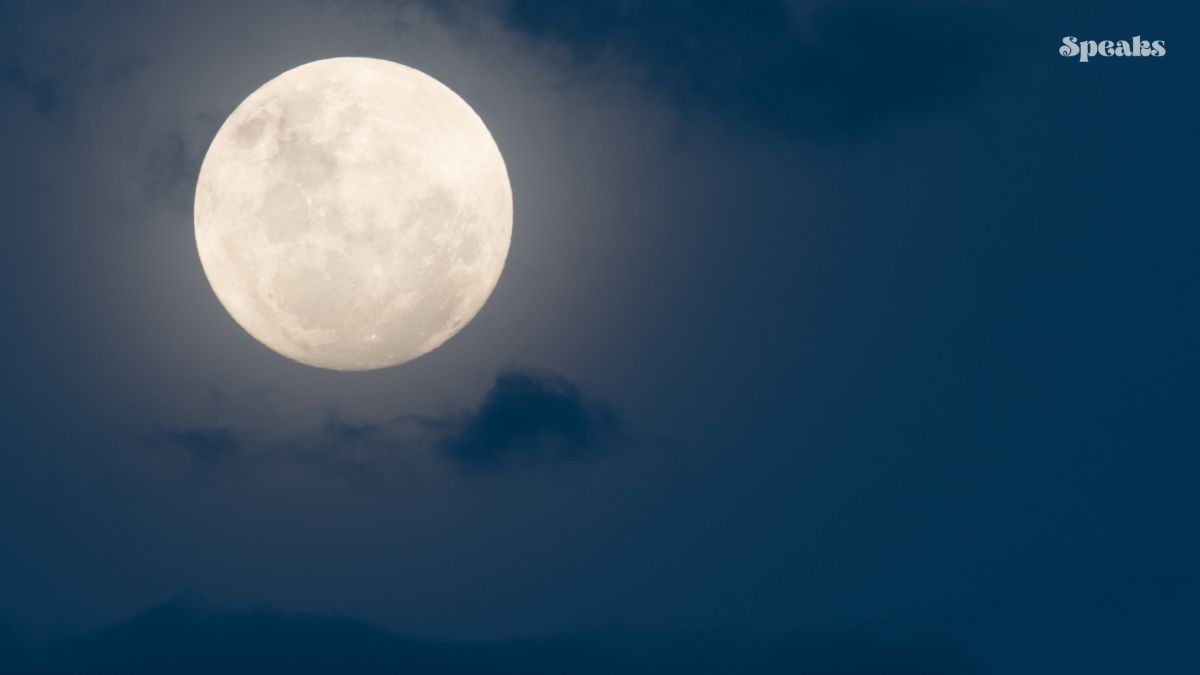
The Beaver Moon supermoon November 2026 brought a spectacular display to skies around the world, with photographers capturing the glowing full Moon above famous landmarks, city skylines and coastal landscapes.
The November full Moon reached peak illumination on Tuesday, November 24, at 9:53 a.m. EST. Its appearance near the closest point in its orbit around Earth made it a supermoon.
Photographs taken across the United States, Europe, Asia and the Middle East showed the bright lunar display against some of the world’s most recognizable locations.
Beaver Moon Supermoon 2026
The November supermoon created striking scenes as it rose above major cities and historic landmarks.
In New York, photographers captured the glowing Moon above Manhattan’s skyline, including views near the Chrysler Building and other iconic skyscrapers.
In Rome, the lunar display appeared alongside historic architecture, including the Tower of Milizie. Another photograph captured an aircraft passing in front of the rising Moon.
Images from Kuwait City showed the bright lunar disk above the coastline, while photographs from Beirut captured it shining over an illuminated cross.
The Moon was also photographed rising above locations in Israel and other parts of the world, creating a collection of memorable night-sky images.
Why Is November’s Full Moon Called the Beaver Moon?
The name Beaver Moon comes from traditional seasonal references associated with November in North America.
Historically, this was the time when beavers prepared their lodges for winter and trappers set beaver traps before waterways froze.
The name became associated with November’s full Moon through traditional North American seasonal and lunar naming practices.
Other traditional names for November’s full Moon include the Frost Moon, reflecting the colder conditions that arrive during late autumn.
Why Was the November 2026 Beaver Moon a Supermoon?
A supermoon occurs when a full Moon happens close to perigee, the point in the Moon’s elliptical orbit when it is nearest to Earth.
For the November 2026 event, the Moon was approximately 360,768 kilometers (224,171 miles) from Earth at full phase.
This relatively short distance made it appear approximately 6.5% larger in diameter and 13.5% brighter than an average full Moon.
Although the difference is not always obvious to the naked eye, the effect can make the lunar display particularly impressive when photographed near the horizon.
When Did the Beaver Moon Reach Peak Illumination?
The Beaver Moon reached its exact full phase on November 24, 2026, at 9:53 a.m. Eastern Time, equivalent to 2:53 p.m. GMT.
Because the peak occurred during daylight hours in much of the United States, the best viewing opportunity came after sunset on November 24.
The Moon also appeared nearly full on November 23 and November 25, giving skywatchers additional opportunities to observe it.
Its position near the eastern horizon during moonrise created particularly attractive photographic opportunities, especially when buildings and other landmarks appeared in the foreground.
How to Photograph a Supermoon
Photographers often prefer capturing a supermoon shortly after moonrise, when it appears close to buildings, mountains, trees or other recognizable objects.
A telephoto lens can help capture lunar details while making distant landmarks appear closer to the Moon.
A tripod and manual camera settings can also improve image sharpness and exposure. Smartphone users can try a stable support and lower exposure settings to preserve details on the bright lunar surface.
The Moon does not require a telescope for basic viewing, although binoculars can reveal additional surface features.
When Is the Next Supermoon After November 2026?
Skywatchers will not have to wait long for another major lunar event. The next full Moon arrives on December 24, 2026, and will also qualify as a supermoon.
It is expected to be closer to Earth than November’s full Moon, making it the largest full Moon of 2026 by apparent size.
The December event is traditionally known as the Cold Moon, reflecting the winter season in the Northern Hemisphere.