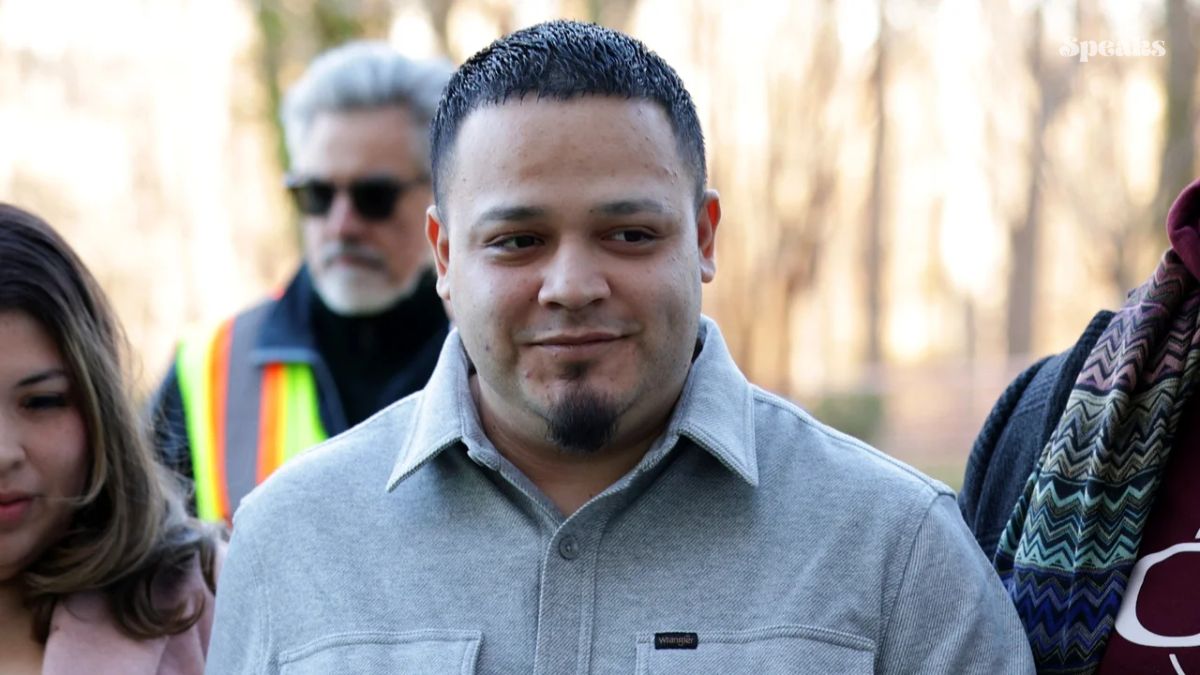
Kilmar Ábrego García has left the United States for Spain, bringing a major development in a prolonged immigration dispute that became one of the most closely watched legal battles surrounding President Donald Trump’s deportation policies.
The 31-year-old Salvadoran national departed on Tuesday, November 24, 2026, following an agreement that allowed him to leave voluntarily rather than face deportation to Liberia, which the Trump administration had been pursuing.
His departure marks a significant turning point in a case that began in March 2025, when U.S. immigration authorities mistakenly deported him to El Salvador despite an existing court order preventing his removal to that country.
Ábrego García was subsequently detained at El Salvador’s notorious Terrorism Confinement Center, known as CECOT. His deportation triggered legal challenges and widespread criticism over the government’s handling of immigration proceedings.
In 2019, an immigration judge had ruled that Ábrego García could not be returned to El Salvador because he faced potential persecution from a gang that had threatened his family. Although he was permitted to live and work in the United States under immigration supervision, he did not receive permanent residency status.
Following legal challenges and public pressure, the Trump administration brought him back to the United States in June 2025. However, his return was accompanied by federal human-smuggling charges stemming from a separate investigation in Tennessee.
Ábrego García pleaded not guilty to those charges. In May 2026, a federal judge dismissed the criminal case, finding that the prosecution was vindictive and connected to his efforts to challenge the deportation. The Justice Department has appealed that decision.
His immigration troubles continued after his return. Federal authorities explored sending him to several African countries, including Uganda, Eswatini, Ghana and Liberia, despite his legal team’s objections.
His attorneys had argued that Costa Rica was a suitable alternative because the country had previously indicated its willingness to accept him. However, the administration continued pursuing Liberia as his proposed destination.
The latest agreement allows Ábrego García to travel to Spain instead. His departure was confirmed by his legal representatives, while U.S. authorities also acknowledged that he was leaving the country.
Ábrego García has an American wife and child in Maryland. His attorney has described the move as temporary, with the possibility of exploring ways for him to reunite with his family in the future.
The case has attracted national attention because of the legal questions surrounding mistaken deportations, immigration enforcement and the government’s obligation to follow federal court orders.