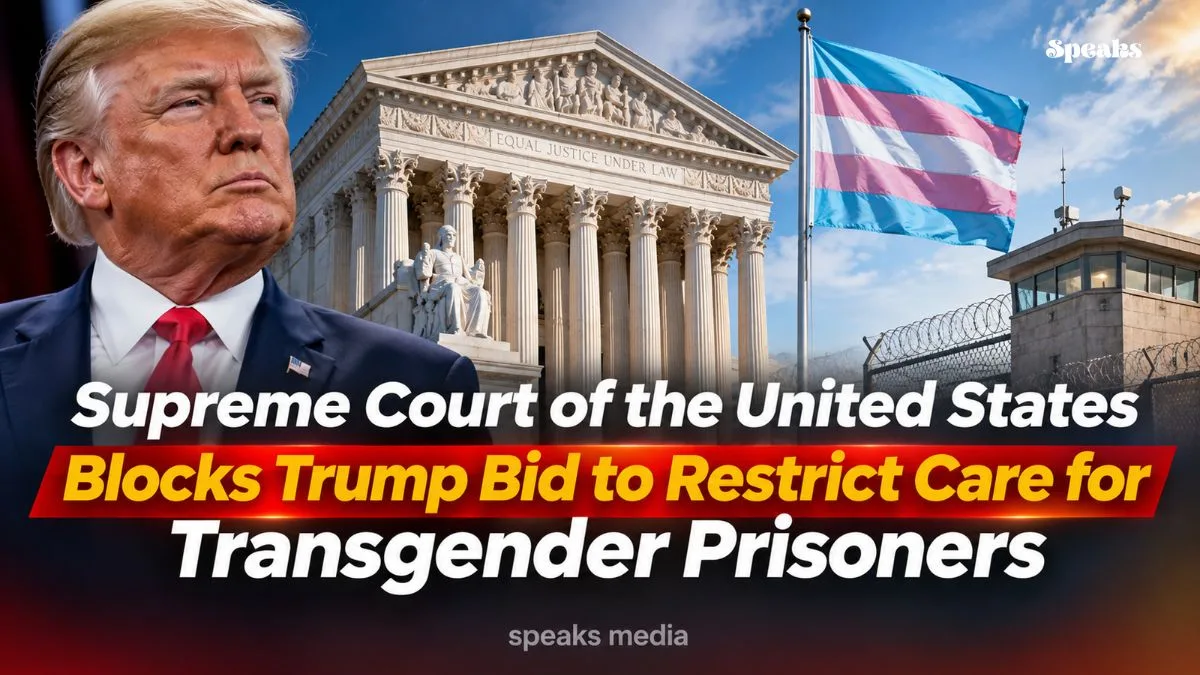
The Supreme Court of the United States on October 21 rejected the Trump administration’s emergency request to immediately enforce restrictions on gender-affirming medical care for transgender people in federal prisons.
The decision keeps a lower court’s order in place, requiring the Federal Bureau of Prisons to continue providing covered treatments while the legal challenge proceeds. The justices did not explain their reasoning in the brief order.
Supreme Court of the United States Keeps Existing Protections in Place
The administration had asked the justices to pause a federal court ruling that blocked a Bureau of Prisons policy adopted in February 2026. The policy sought to end hormone therapy, gender-affirming surgeries and certain accommodations for transgender inmates diagnosed with gender dysphoria.
The Supreme Court denied the request without a detailed explanation. Justices Clarence Thomas and Samuel Alito indicated that they would have granted the administration’s application, allowing the restrictions to take effect during the ongoing litigation.
The decision does not resolve the underlying legal dispute. Instead, it leaves the lower court’s injunction in place as the case continues through the federal courts.
What Trump’s Prison Policy Would Change
The policy followed President Donald Trump’s broader effort to change federal rules concerning gender identity. His administration argued that the restrictions were justified by concerns about prison safety, fairness and the appropriate use of government resources.
The Justice Department also questioned the basis for providing gender-affirming treatments to incarcerated people. Lawyers representing the prisoners disputed that position, arguing that the policy would cut off medically necessary care without adequate evidence supporting the change.
Gender-affirming care can include hormone therapy and, in some cases, surgery. Social accommodations may also include clothing and personal-care items that allow transgender people to express their gender identity.
Legal Challenge Centers on Medical Care for Inmates
The case, Kingdom v. Trump, involves a class-action lawsuit brought on behalf of transgender federal prisoners. Their lawyers argue that abruptly ending established treatments could cause serious physical and psychological harm.
The American Civil Liberties Union, which represents the prisoners in the litigation, estimates that more than 2,000 transgender people are in federal custody. The organization has also said that many inmates have received hormone therapy or other forms of gender-affirming care.
A federal district judge, Royce Lamberth, blocked the administration’s policy, finding that the government had not adequately justified the change. The U.S. Court of Appeals for the District of Columbia Circuit declined to suspend that ruling before the administration appealed to the Supreme Court.
The latest order preserves the existing arrangement while the broader legal questions remain unresolved.
Decision Comes Amid Wider Disputes Over Transgender Rights
The ruling is a setback for the administration’s effort to restrict gender-affirming care in federal prisons. It also comes amid other major legal disputes over transgender rights, including policies affecting military service, school sports and medical treatment for minors.
The Supreme Court has previously allowed some other restrictions affecting transgender people to take effect while related cases continue. The latest decision does not determine how those separate disputes will be resolved.
For now, federal prison officials must continue complying with the lower court’s order in the case. The administration can continue contesting the policy through the legal process, but the Supreme Court’s emergency ruling does not permit the restrictions to take effect immediately.