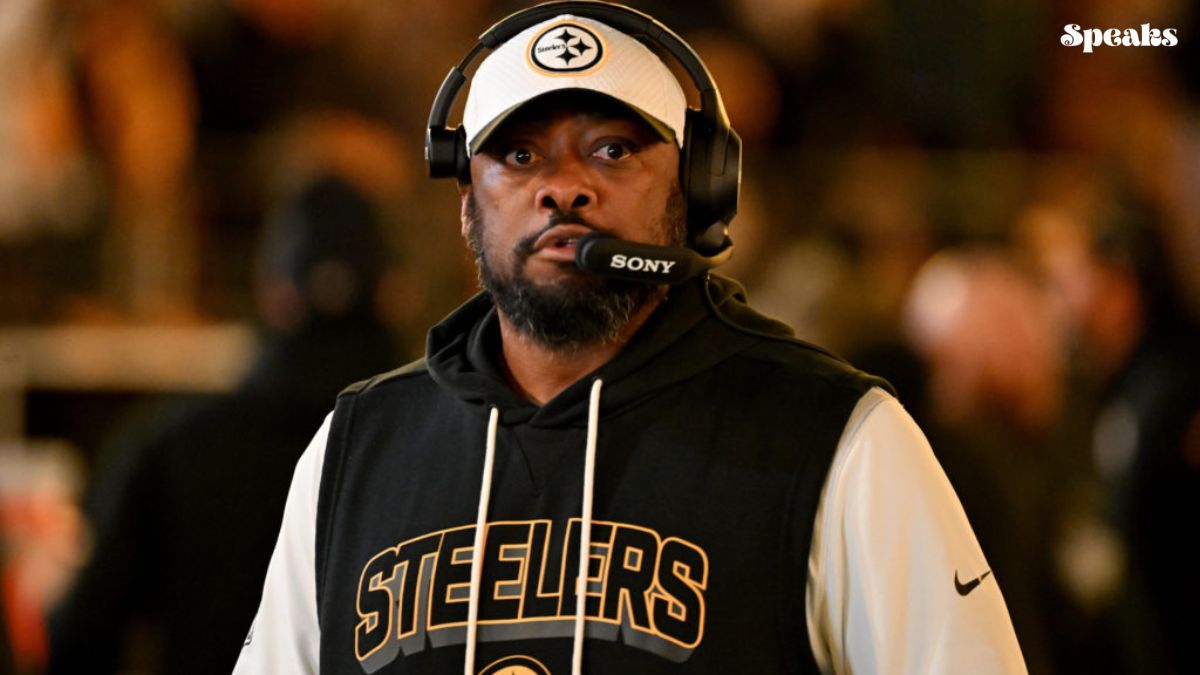
The Pittsburgh Steelers are facing growing questions about their offensive consistency after consecutive defeats exposed a major weakness in their performances. Former head coach Mike Tomlin believes the team’s inability to start games strongly is creating problems that become increasingly difficult to overcome.
Speaking on NBC’s Football Night in America on November 22, Tomlin highlighted Pittsburgh’s habit of falling behind early. He identified the issue as a major reason the Steelers have struggled to maintain offensive balance during their recent losing streak.
Tomlin specifically pointed to Pittsburgh’s 13-point deficit against the Philadelphia Eagles, explaining how early setbacks force the offense to move away from its preferred approach. Falling behind changes the team’s play-calling options and makes it harder to establish a productive rushing attack.
The Steelers entered their matchup against Philadelphia looking to recover from an earlier defeat against Cincinnati. Instead, they found themselves trailing 13-0 after the opening quarter, putting additional pressure on an offense that has struggled to generate consistent scoring opportunities.
Philadelphia benefited from an early Pittsburgh possession that ended without points after the Steelers failed to convert on fourth down. The Eagles capitalized on the favorable field position, adding scoring opportunities before running back Saquon Barkley delivered a 38-yard touchdown.
Pittsburgh’s recent struggles have become particularly noticeable in the first half. The Steelers have not held a lead at any point during their last two games, allowing their opponents to dictate the pace and forcing the offense into uncomfortable situations.
The problem has also affected the team’s ability to use running back Jaylen Warren effectively. During Pittsburgh’s earlier four-game winning streak, Warren played an important role in the offense, providing the team with a reliable rushing option.
However, his production has dropped sharply during the latest two-game stretch. Warren recorded fewer than 30 rushing yards in each contest, averaging approximately three yards per carry as Pittsburgh struggled to create consistent running lanes.
The decline should not necessarily be viewed as an individual failure by Warren. Pittsburgh’s offensive line has struggled to generate the necessary space, with the absence of Mason McCormick adding another challenge to an already inconsistent blocking unit.
Tomlin’s comments suggest that the Steelers’ offensive problems extend beyond individual performances. When the team falls behind early, opponents can focus on defending the passing game, reducing the opportunities available for Warren and the rushing attack.
That situation creates a difficult cycle for Pittsburgh. The offense becomes more predictable, the running game loses its influence, and the team has fewer opportunities to control possession through a balanced approach.
The scoring trend during the losing streak has added to the concern. Pittsburgh has struggled to reach the end zone before the fourth quarter, leaving the offense with limited time to recover from early deficits.
Against Philadelphia, the late offensive response was not enough to change the result. The Steelers needed a stronger opening performance rather than another attempt to recover after allowing their opponents to build an advantage.
The timing is also concerning because Pittsburgh faces another difficult challenge against the Denver Broncos. Denver has demonstrated an ability to establish early advantages, holding a first-quarter lead in three of its previous four games.
For Pittsburgh, improving its opening-quarter execution will be particularly important in that matchup. Allowing Denver to build an early lead could create the same offensive limitations that affected the Steelers against Cincinnati and Philadelphia.
Tomlin’s assessment carries additional significance because he previously spent years emphasizing the importance of finishing games rather than focusing exclusively on their opening stages. His latest analysis indicates that Pittsburgh’s current circumstances have made early execution a much bigger concern.
The Steelers now need to find a way to establish offensive rhythm from the opening possession. Better protection, more effective rushing lanes and improved first-quarter decision-making could help restore the balance that made their four-game winning streak successful.