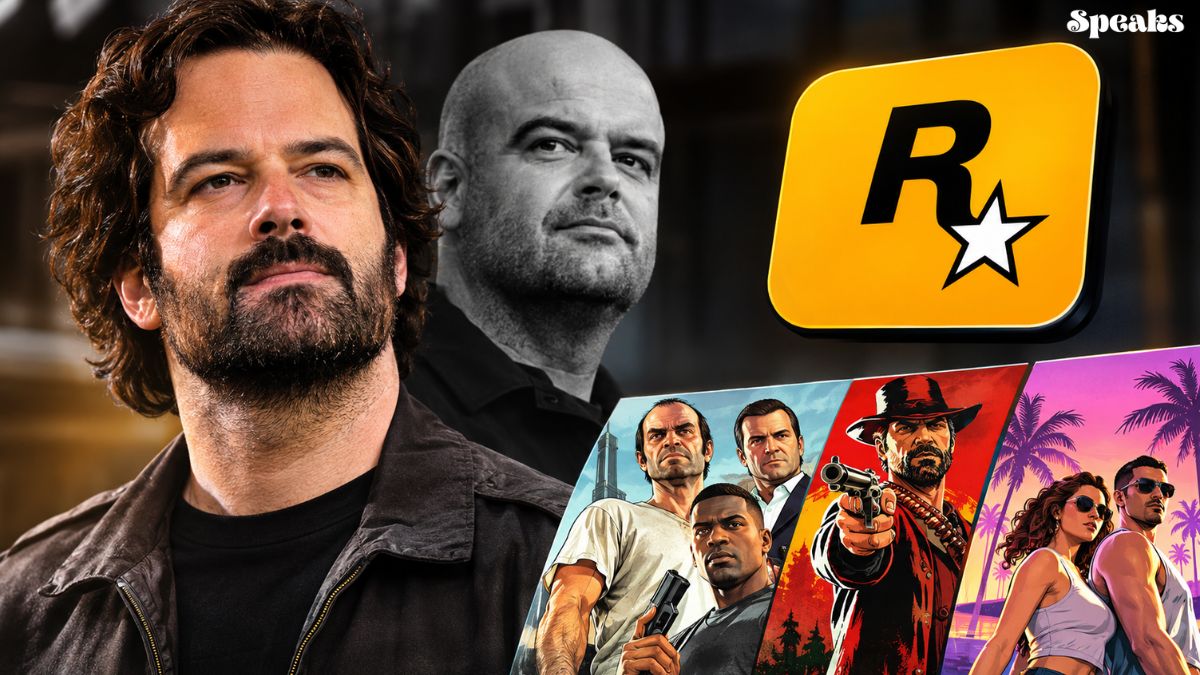
Sam Houser did not set out to build one of the biggest names in the video game industry. His journey began in the music business, where an interest in entertainment, popular culture and creative storytelling eventually led him toward a project that would change gaming forever.
Today, Houser is widely recognised as one of the key figures behind Rockstar Games, the studio responsible for the Grand Theft Auto and Red Dead Redemption franchises. His career reflects how an unconventional idea, combined with creative ambition and commercial vision, can transform an entire entertainment industry.
Sam Houser’s Early Career and Interest in Entertainment
Born in London in November 1971, Sam Houser grew up in an environment influenced by music, film and popular culture. Unlike many executives who entered the gaming industry through software development, his professional journey started in the entertainment business.
Houser joined Bertelsmann Music Group (BMG) in 1990. He initially worked within the company’s music operations before moving into positions that involved artist promotion, creative development and music-related projects.
His experience in the music industry helped him understand how entertainment products could connect with audiences. That background would later influence Rockstar’s approach to game soundtracks, cultural references and storytelling.
By the mid-1990s, Houser had moved into BMG Interactive, the company’s video game division. His responsibilities included identifying gaming projects and finding opportunities to bring new titles to the market.
The Grand Theft Auto Opportunity That Changed Everything
One of the most important moments in Sam Houser’s career came in 1996, when he encountered an early version of a game being developed by Scottish studio DMA Design.
The project was initially known as Race’n’Chase. It featured an open city environment where players could drive vehicles, interact with the streets and experience police pursuits.
Rather than treating it as another conventional racing game, Houser recognised the potential of its unusual gameplay. The freedom to explore a city and create unpredictable situations offered something different from many games available at the time.
BMG Interactive supported the project, which was eventually renamed Grand Theft Auto. The original game arrived in 1997 and introduced players to a crime-based open-world experience that would become the foundation of a major entertainment franchise.
The game’s controversial subject matter attracted attention, but its freedom of movement and distinctive gameplay helped it establish an identity in a competitive market.
How Sam and Dan Houser Created Rockstar Games
The success of the original Grand Theft Auto helped establish the foundation for a much bigger ambition.
In 1998, Take-Two Interactive acquired the assets of BMG Interactive, bringing the GTA franchise and several industry figures into its business. Sam Houser moved to New York as part of the transition.
Rather than simply continuing under an existing publishing structure, Sam and his younger brother Dan Houser wanted to build a company with a distinctive creative identity.
Rockstar Games was established in 1998, with Sam Houser, Dan Houser, Terry Donovan, Jamie King and Gary Foreman among its founding figures.
The brothers brought different strengths to the business. Sam focused heavily on the company’s overall direction and production ambitions, while Dan became particularly influential in writing, narrative development and creative storytelling.
Their shared vision was to create games that felt different from traditional entertainment products. They wanted modern settings, memorable characters, strong soundtracks and experiences that allowed players to make their own decisions.
Grand Theft Auto III Established Rockstar’s Identity
Although the original Grand Theft Auto introduced the franchise, the arrival of Grand Theft Auto III in 2001 marked a major turning point.
The game moved the series into a fully realised 3D environment, giving players the opportunity to explore Liberty City from a third-person perspective.
Its detailed urban setting, open-ended gameplay and crime-focused storyline created a new level of immersion. Players were no longer limited to completing a sequence of missions in a relatively restricted environment.
The release also demonstrated Rockstar’s ability to turn a controversial concept into a commercially successful entertainment experience.
Grand Theft Auto III received widespread industry recognition and helped establish the open-world format as an important part of modern video game development.
For Sam Houser, the game’s success reinforced the company’s commitment to ambitious projects rather than simply following established industry trends.
From Vice City to Grand Theft Auto V
Following GTA III, Rockstar continued expanding the franchise through new locations, characters and storytelling approaches.
Grand Theft Auto: Vice City, released in 2002, introduced a colourful 1980s-inspired setting influenced by the music, fashion and crime dramas of that period.
Grand Theft Auto: San Andreas followed in 2004, offering a considerably larger world and a story centred on Carl Johnson and his return to Los Santos.
The series continued evolving with Grand Theft Auto IV in 2008 before reaching another commercial milestone with Grand Theft Auto V in 2013.
GTA V combined a large open world with three playable protagonists, allowing players to experience the story through different perspectives.
Its online component, GTA Online, also extended the game’s commercial life well beyond its original release.
The franchise’s ability to attract players across multiple console generations demonstrated the strength of Rockstar’s long-term development strategy.
Sam Houser’s Role in Red Dead Redemption
Rockstar’s ambitions were never limited to Grand Theft Auto.
The company expanded into different genres and historical settings, with Red Dead Redemption becoming one of its most important franchises.
Released in 2010, the original Red Dead Redemption presented players with a detailed Western world and a story centred on former outlaw John Marston.
Its sequel, Red Dead Redemption 2, arrived in 2018 and received widespread recognition for its detailed environment, character development and storytelling.
Sam Houser served as an executive producer on major Rockstar projects, including titles from both the Grand Theft Auto and Red Dead Redemption franchises.
The success of these games demonstrated that Rockstar could build major entertainment experiences beyond contemporary crime settings.
Dan Houser’s Departure and Sam Houser’s Continuing Leadership
Another important chapter in Rockstar’s history began in 2020, when Dan Houser announced his departure from the company.
Dan had played a significant role in shaping the writing and creative direction of several major Rockstar releases. His departure marked the end of an important period for the studio.
However, Sam Houser remained with Rockstar Games as its president.
His continuing leadership became particularly significant as the company moved into its next major development phase. Rockstar’s future projects would need to maintain the creative standards and audience expectations established by earlier releases.
The separation of the brothers’ professional paths did not change Sam’s position at the company, which continued operating under the wider Take-Two Interactive business structure.
Why Sam Houser’s Rockstar Story Matters Ahead of GTA 6
The development of Grand Theft Auto VI represents another major moment in Rockstar’s history.
The franchise has grown considerably since its 1997 debut, becoming one of the most recognised names in global gaming. Expectations surrounding the next instalment reflect the enormous audience built by previous releases.
Sam Houser’s contribution to that journey extends beyond his association with individual games. His early decision to support an unconventional project at BMG Interactive helped create the conditions for Rockstar’s emergence.
The company’s approach to world-building, music, humour and player freedom became a recognisable part of its identity.
As Rockstar moves into its next chapter, the foundations established by Sam and Dan Houser continue to influence how the studio approaches large-scale video game production.