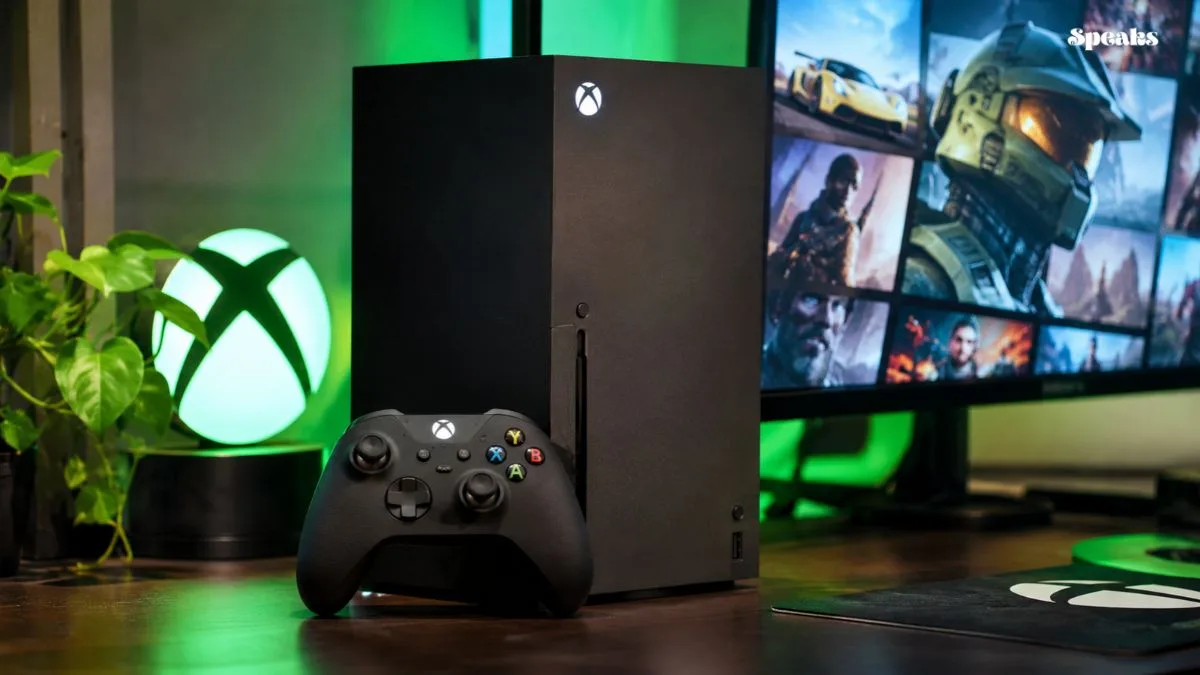
Microsoft has revealed more details about Project Helix, its upcoming next-generation Xbox console, confirming that the system will be designed to play PC games while maintaining a traditional console experience. The announcement offers a clearer picture of Microsoft’s future gaming strategy.
The latest information was shared through a special Xbox 25th Anniversary Magazine published on November 15, 2026. Jason Ronald, Microsoft’s Vice President of Next Generation, explained the company’s vision for the upcoming hardware and how it will bring console and PC gaming closer together.
Project Helix Xbox Console Will Play PC Games
One of the biggest questions surrounding Microsoft’s next-generation hardware has been whether Project Helix would function more like a gaming PC or a traditional Xbox console.
Jason Ronald addressed that question directly, explaining that the company wants to build a console capable of playing games from a player’s PC library. However, Microsoft does not intend to turn its next Xbox into a conventional PC.
According to Ronald, the main objective is to make accessing games easy, intuitive and instant. Players should be able to launch their games without dealing with the complicated setup and maintenance often associated with PC gaming.
The company also plans to offer additional customization options for experienced players. Those who want greater control over graphics settings, performance options and other technical features will still have the flexibility to explore them.
This approach could make the next Xbox appealing to both traditional console players and PC gaming enthusiasts.
Xbox Wants to Bring Console and PC Gaming Together
For years, console and PC gaming have operated as two largely separate ecosystems. Players often had to purchase games on different platforms, manage separate libraries and deal with different hardware requirements.
Microsoft now wants to reduce those barriers through Project Helix. The company is working toward an experience where players can access more of their gaming collection through a single platform.
However, Microsoft has not yet explained exactly how PC game compatibility will work. It has also not confirmed which third-party PC storefronts, including Steam, will be supported.
The distinction is important because playing PC games does not automatically mean every PC title or digital storefront will be available on the new console.
Project Helix Will Support Four Generations of Xbox Games
Backward compatibility is another major part of Microsoft’s next-generation plans. The company wants players to carry their existing Xbox gaming experiences into the next hardware generation.
Ronald explained that players should be able to bring their gaming libraries and progression from four generations of Xbox hardware to Project Helix.
This means Microsoft is looking beyond simply offering better graphics and faster hardware. The company also wants players to retain access to the games and progress they have built over the years.
Game preservation has become an increasingly important issue for the gaming industry, particularly as digital libraries continue to grow.
For existing Xbox owners, the ability to access older games without losing their progress could become one of the console’s most valuable features.
Project Helix Hardware Will Focus on Advanced Graphics Technology
Microsoft has also discussed the hardware technology behind its upcoming console. Project Helix is being developed in partnership with AMD and will use a custom system-on-chip designed for next-generation gaming.
The company previously confirmed that the hardware is being developed around the next generation of DirectX and AMD’s FidelityFX Super Resolution technology.
Microsoft is targeting a major improvement in ray tracing performance, which could help developers create more realistic lighting, reflections and detailed gaming environments.
Another technology highlighted by Ronald is neural rendering. This approach uses artificial intelligence techniques to improve visual quality and rendering efficiency.
Rather than focusing only on higher resolutions or faster refresh rates, Microsoft wants the next generation to introduce meaningful improvements to how games look, perform and respond to players.
The company believes these technologies could give developers new opportunities to create more detailed and immersive gaming experiences.
ROG Xbox Ally Influenced Microsoft’s Project Helix Plans
Microsoft’s experience with the ROG Xbox Ally has also influenced the development of its next-generation gaming platform.
The handheld device brought together different gaming libraries and introduced players to a more unified gaming experience across platforms.
Ronald described the Ally as a precursor to Project Helix, explaining that player feedback has fundamentally influenced Microsoft’s plans for its future hardware.
The company has learned from how players interact with different game libraries, controls and software interfaces.
Project Helix will have its own dedicated interface rather than simply copying the existing Xbox experience on Windows devices. Microsoft wants the interface to feel familiar to Xbox players while offering the flexibility needed for a wider gaming ecosystem.
This suggests that software design and ease of use will be just as important as hardware performance.
When Will Project Helix Launch?
Microsoft has not announced an official consumer release date for Project Helix. The company has confirmed that it plans to send early versions of the next-generation hardware to developers beginning in 2027.
These early hardware versions will allow game developers to begin working with the new platform and prepare titles for its capabilities.
Microsoft has also not revealed the final specifications, retail price or complete list of supported PC games.
The company has acknowledged that developing advanced gaming hardware while keeping it accessible and affordable remains a challenge, particularly amid rising component costs.
More information about the console’s performance, compatibility and pricing is expected as development progresses.