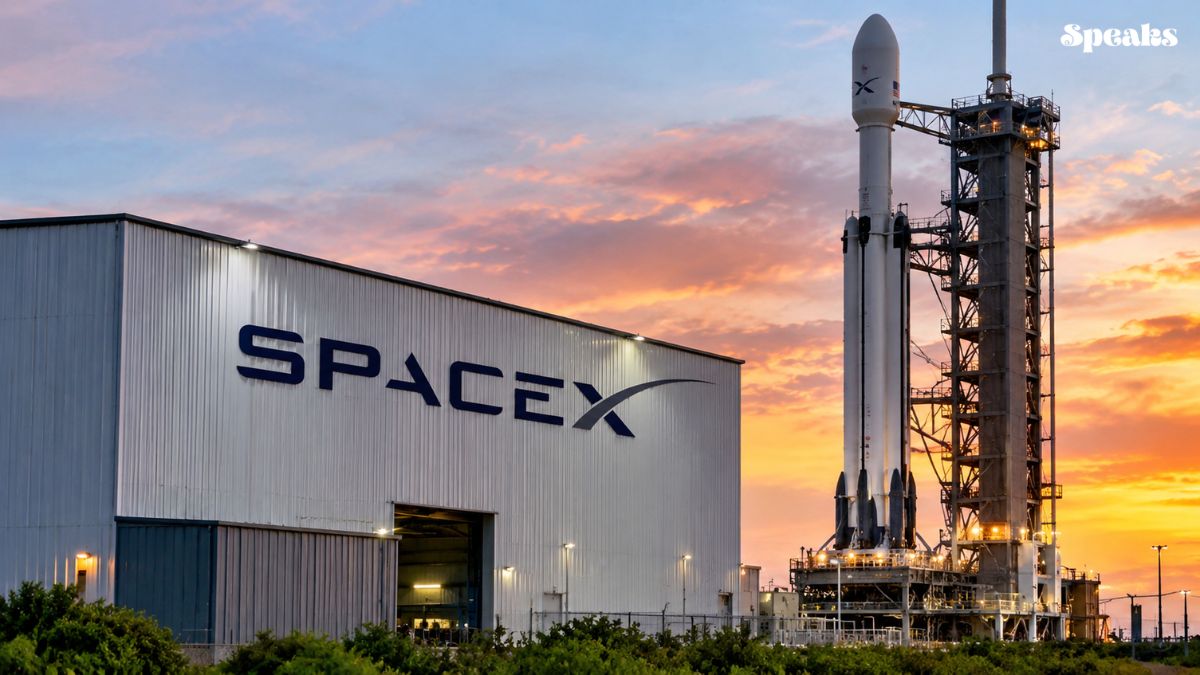
SpaceX has received approval from US regulators to deploy up to one million satellites designed to operate as data centers in orbit, advancing Elon Musk’s ambitious plans to expand artificial intelligence infrastructure beyond Earth.
The Federal Communications Commission (FCC) announced the authorization on Wednesday, November 25, describing the decision as a significant development in America’s competition to lead the global artificial intelligence industry.
The proposed satellite network, called Starmind, would consist of millions of computing capabilities distributed across orbiting spacecraft. SpaceX intends to use solar energy to power these orbital data centers and process information for applications on Earth.
FCC Chairman Brendan Carr described the approval as an important step toward expanding America’s technological capabilities. He said the decision opens new opportunities for combining space technology with advanced computing.
Musk welcomed the regulatory decision, expressing appreciation for the approval and describing the project as a valuable asset for America and the wider world.
The concept behind the project is to move some of the computing infrastructure required for artificial intelligence away from traditional data centers on Earth.
AI development increasingly requires enormous computing capacity, placing pressure on electricity networks, cooling systems and water resources. SpaceX believes solar-powered infrastructure in orbit could help address some of these challenges.
However, the ambitious proposal faces significant technical and financial questions. Scientists have raised concerns about whether operating such an enormous network of computing satellites would be practical.
Astrophysicist and author Adam Becker questioned the feasibility of launching one million satellites for orbital data centers, describing the proposal as unrealistic.
One major challenge involves managing heat. Although space is extremely cold, its vacuum environment makes removing heat from operating computer equipment particularly difficult.
Experts have also warned about potential environmental consequences associated with launching and eventually disposing of such large numbers of satellites.
Another concern involves orbital collisions. A major accident could generate debris that threatens other spacecraft, including satellites supporting telecommunications and weather forecasting.
The American Astronomical Society also opposed the proposal, warning that numerous large and bright satellites could interfere with astronomical observations and affect people’s ability to enjoy the night sky.
Satellite communications companies Viasat and Amazon’s Kuiper Systems also challenged SpaceX’s application, raising concerns about orbital safety, interference and long-term satellite disposal.
The FCC maintained that the proposed constellation meets its applicable orbital debris requirements and serves the public interest. It also acknowledged receiving substantial opposition before approving the application.
Under the authorization, SpaceX must deploy at least one authorized space station by November 2033, with the wider deployment expected to continue through 2040.
The decision does not mean that one million satellites are ready for launch. SpaceX must still overcome substantial engineering, manufacturing, operational and financial challenges before achieving its proposed scale.