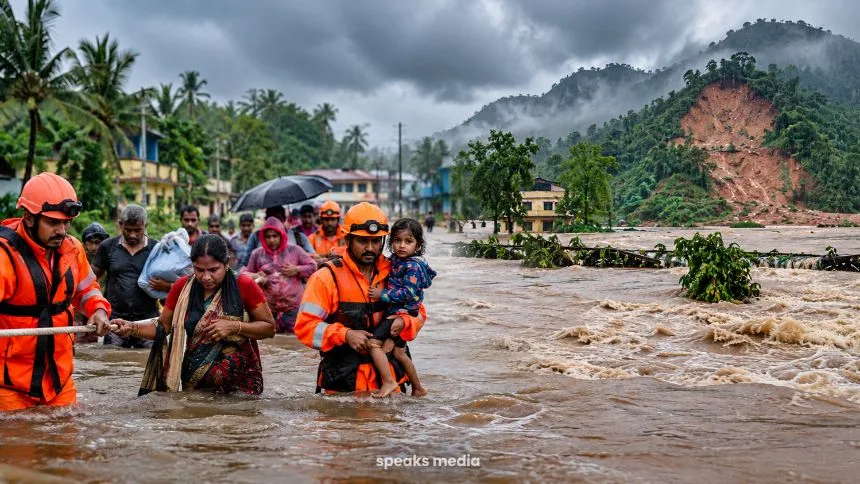
Climate change is affecting everyone in the world, but the responsibility and burden of the damage is not equal on everyone. In some places extreme heat is killing people, while in other places floods are destroying homes and farms. Crops are failing in many countries due to drought and food prices are rising. In such a situation, the biggest question is who has contributed the most to this crisis?
Recently, a report has come out, in which there has been a big revelation about climate change. The report says that the world’s richest people have a greater stake in climate change. The report of the international organization Oxfam has expressed serious concern about this. According to the report, the carbon emissions of the richest 0.1% of the world’s population are greater than the total emissions of the poorest 44% of the world’s population.
80 lakh people are causing pollution
The pollution of about 8 million super-rich people is more than the emissions of about 350 million people combined. These data show that the climate crisis is not only an environmental problem but is also related to growing inequality between rich and poor. Its effect is not limited to wind and temperature. Poor families often don’t have enough money, insurance or a safe home after damage from floods, heat or drought. At the same time, according to the report, the world’s richest 0.1% own 19% of the world’s total wealth.
How are rich people responsible for climate change?
On the other hand, the very rich have private jets, big houses and energy-intensive lifestyles as well as investments in polluting industries. The report shows that the people most affected by the climate crisis are those who have contributed the least to causing it. The report also warns that damage from climate disasters can make poor communities more vulnerable.
- Rich people emit more: The world’s richest 0.1% emit more carbon pollution than the poorest 44% of the population.
- Burden of Disasters on the Poor: Floods, droughts and extreme heat have a greater impact on the livelihoods, food and homes of poor families.
- Question of profit from pollution: According to the report, some companies also make money from polluting industries and benefit from reconstruction after disasters.
How is carbon pollution increasing because of the lifestyles of the rich?
According to the report, the carbon emissions of the world’s richest people are linked to both their lifestyles and investments. Private planes, big cars, luxury homes and energy-intensive facilities add to their carbon footprint. Additionally, investments in polluting industries such as oil, gas and coal also contribute to the climate crisis.
The report says that the world’s private planes emit as much carbon dioxide in just two seconds as the world’s poorest population emits in an entire year. In the year 2025, about 16 million tons of carbon dioxide will be emitted from private planes. Only 2.50 lakh people use private jets in the world.
This does not mean that only the lifestyles of the rich are causing climate change. Many activities emit greenhouse gases, including power generation, industry, transportation and agriculture. But the report stresses that it is important to hold people and companies responsible for causing more pollution.
How are rich people responsible for climate change?
The world’s rich people emit more carbon through their lifestyles and investments. Traveling in expensive cars, using private planes and frequent air travel are the main reasons for this. Petrol-diesel and jet fuel are burnt in these mediums, due to which carbon dioxide is released. Apart from this, the activities of oil, gas and coal companies funded by the rich also increase the emissions. On the other hand, poor populations have fewer resources and means of consumption, so their emissions are also lower.
Why are the poor paying the greatest price for the climate crisis?
Climate change affects poor households more because they have limited resources to recover from the damage. The impact of the pollution of the richest people is not limited to their immediate surroundings, but contributes to global warming.
The report estimates that each richest 0.1%’s annual carbon emissions could lead to 1.9 million more heat-related deaths in the future. According to the report, the number of people who die from floods in countries with high inequality is seven times higher than in countries with low inequality.
The report also warns that nearly one billion people around the world could be forced to leave their homes by 2050 due to climate change. That means one in 10 people worldwide could be homeless. A large number of these may be people living in countries of the Global South.
Climate change also affects food supplies. Crops are affected by changing rainfall patterns, droughts and rising temperatures. When production declines, food prices may rise. Poor families spend a large portion of their income on food, so when inflation rises, they have less money left over for medical care, education, and household expenses.
Profit from disasters after pollution?
According to Oxfam’s report, some companies and investors also profit from businesses that contribute to climate change and can even benefit from reconstruction after disasters. The report’s new Destroy and Rebuild Index has identified 217 companies whose businesses are related to polluting industries as well as disaster prevention, relief and reconstruction.
According to the report, investors investing in polluting industries such as oil, gas and coal can also benefit from increased business after disasters. At the same time, it can take years for poor families affected by floods or other disasters to rebuild their homes and jobs. Many families also struggle with debt burdens during this time.
Oxfam estimates that the global market for disaster recovery and reconstruction could grow to $92 billion annually by 2029. One of the reasons is the increase in severe weather events related to climate change. According to the report, the 217 companies included in this index earned an average of $1.8 billion in 2025 and paid out an average of more than $1 billion to their shareholders.