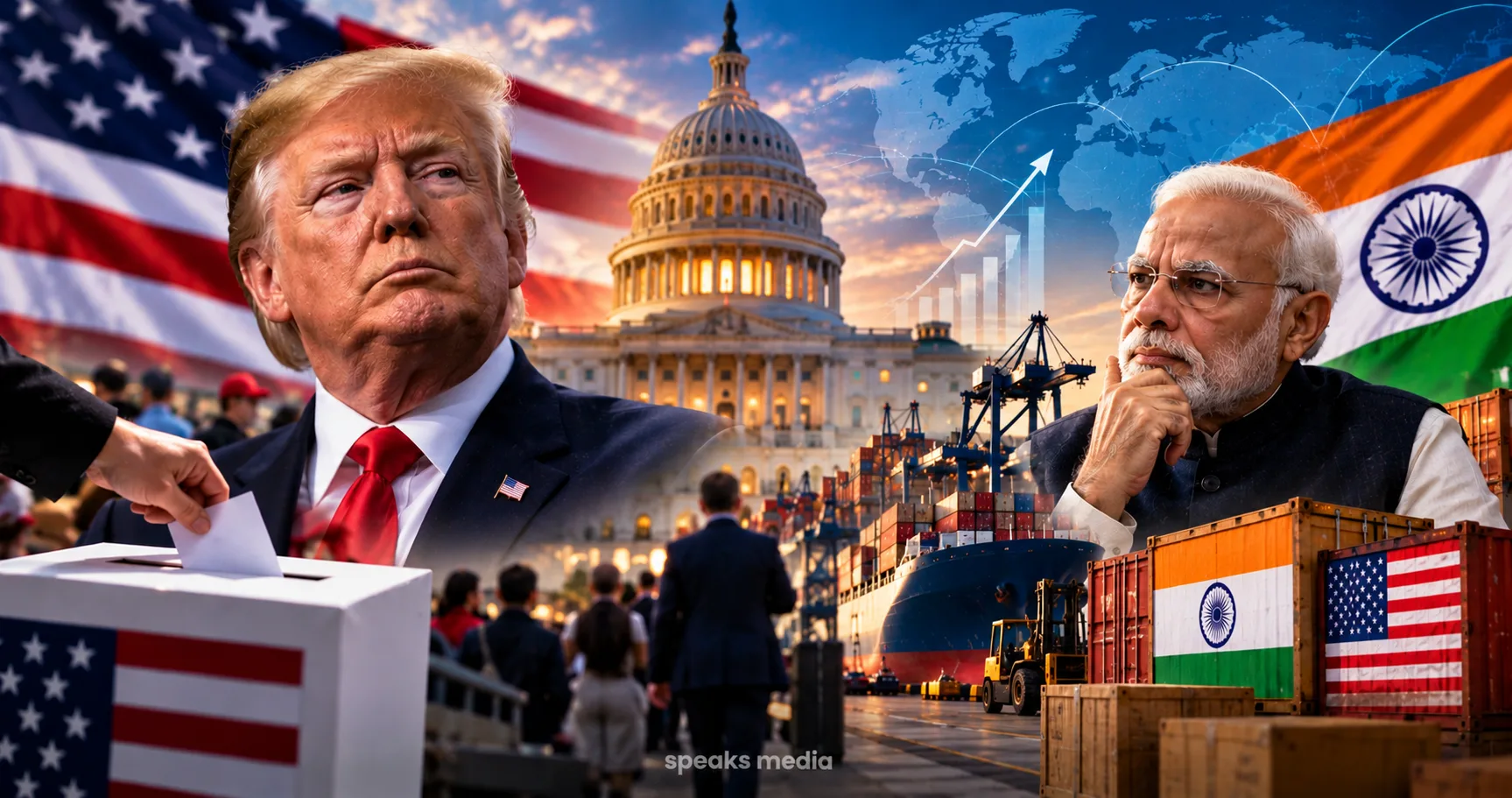
The United States will hold its midterm elections on November 3, 2026, in a vote that could reshape President Donald Trump’s final two years in office and influence key issues in US-India relations. Control of Congress will determine how much room lawmakers have to challenge the administration’s policies on trade, foreign affairs and technology.
All 435 seats in the House of Representatives and 35 Senate seats are up for election. Republicans currently control both chambers, but forecasts point to a competitive race, with Democrats seen as having a stronger chance of winning the House than the Senate.
For India, the outcome matters because congressional oversight can affect Washington’s approach to Pakistan, the conflict involving Iran, tariffs and access to advanced artificial intelligence technology.
What Are the 2026 US Midterms?
The midterm elections take place halfway through a US president’s four-year term. Voters elect every member of the House of Representatives and roughly one-third of the Senate, determining which party controls the two chambers of Congress.
The House plays a central role in approving federal spending and launching investigations into the administration. The Senate considers legislation and confirms many senior government officials, including federal judges and key executive-branch nominees.
A change in congressional control would not automatically remove Trump from office or reverse his policies. However, it could make it harder for the president to advance his legislative agenda and give opposition lawmakers greater power to investigate administration decisions.
Could a Democratic House Change US Policy Toward India?
A Democratic victory in the House could increase scrutiny of the Trump administration’s foreign policy, including its approach to South Asia. Senior Democratic lawmakers have supported closer US-India ties, although some have also criticized aspects of the Indian government’s domestic and foreign policies.
Control of the House would give Democrats leadership positions on influential committees, including the House Foreign Affairs Committee. Those committees can hold hearings, request documents and question administration officials about diplomatic decisions and relationships with foreign governments.
For New Delhi, the key issue would be whether that oversight leads to greater pressure on Washington to explain its policies toward India and neighboring countries. Congressional investigations can shape political debate, but they do not automatically change the president’s authority to conduct diplomacy.
US-Pakistan Relations Could Face Greater Congressional Scrutiny
The Trump administration’s warmer engagement with Pakistan has attracted attention in New Delhi. Democratic lawmakers have also raised questions about business relationships involving Pakistani entities and companies linked to Trump’s family and associates.
One area of scrutiny involves World Liberty Financial, a cryptocurrency company backed by the Trump family, and a proposed arrangement involving Pakistan. Democratic lawmakers have raised concerns about potential conflicts of interest in the administration’s dealings with foreign governments.
If Democrats gain control of the House, they would have greater authority to investigate such relationships through congressional hearings and document requests. Pakistan-related dealings could become part of a broader examination of ethics, foreign influence and potential conflicts of interest.
For India, increased scrutiny could provide more information about Washington’s engagement with Islamabad. However, an investigation alone would not necessarily lead to a change in US policy or a deterioration in American-Pakistani relations.
Iran Conflict and Energy Prices Remain Important for India
The conflict involving Iran has become a major political issue in the United States, with rising energy costs and disruption to regional shipping contributing to public concern. Democrats have called for greater scrutiny of the administration’s military actions and spending.
A Democratic-controlled House could use budget negotiations and oversight hearings to challenge the administration’s handling of the conflict. However, blocking military operations would be more difficult because legislation would also face the Senate and potentially a presidential veto.
India has a direct interest in developments in the region because instability can disrupt shipping routes, increase energy costs and threaten the safety of Indian nationals and seafarers. Any change in Washington’s approach to the conflict could therefore have consequences beyond the United States.
Even if Democrats win both chambers, major changes would not be guaranteed. Existing military funding, Senate procedures and the president’s veto power would limit Congress’s ability to force an immediate shift in policy.
Trade, Tariffs and Technology Are Also at Stake
Trade policy is another important issue for India. Trump’s tariff measures have affected international trade relations, and a change in Congress could increase pressure for greater transparency and debate over their economic impact.
However, congressional control alone would not automatically eliminate tariffs. The president has authorities under several trade laws, and the extent of congressional influence would depend on the legal basis for particular measures and whether lawmakers could assemble sufficient support for legislation.
Technology policy is also relevant to India’s ambitions in artificial intelligence and semiconductor manufacturing. US decisions on advanced-chip exports, data center development and AI regulation can influence Indian companies, researchers and infrastructure investment.
A Democratic-led House could push for stricter oversight of AI companies and export controls. Yet major legislation would face additional hurdles in the Senate, especially if Republicans retain control of that chamber.
What Happens if Republicans Retain Control of Congress?
If Republicans retain both chambers, Trump would have a clearer path to advancing his legislative priorities and confirming nominees. The result could also strengthen his argument that voters support his approach to tariffs, immigration, foreign policy and government spending.
For India, continued Republican control would not necessarily mean uninterrupted policy alignment. Trade disputes, immigration restrictions and disagreements over regional security could remain important issues in the bilateral relationship.
If Democrats take the House but Republicans retain the Senate, Washington could face more investigations and legislative conflict without a major shift in the balance of power over appointments or legislation.
A Democratic victory in both chambers would create a stronger system of congressional checks, but the administration would retain the presidential veto and significant authority over foreign policy. The practical effect would depend on the size of the Democratic majority and the willingness of lawmakers from both parties to cooperate.
Why India Is Watching the US Midterms Closely
India’s relationship with the United States extends across defense, technology, trade, education and regional security. Changes in Congress can influence the political environment surrounding these issues, even when the president retains substantial authority to set foreign policy.
The election could also shape both parties as they prepare for the 2028 presidential race. A strong Democratic performance would likely energize the opposition, while a Republican victory could strengthen Trump’s influence over the party’s future direction.
For New Delhi, the immediate priority will be to assess how the new Congress approaches tariffs, Pakistan, regional security and technology exports. The election will determine the political balance in Washington, but its consequences for India will depend on the policies lawmakers actually pursue after taking office.