
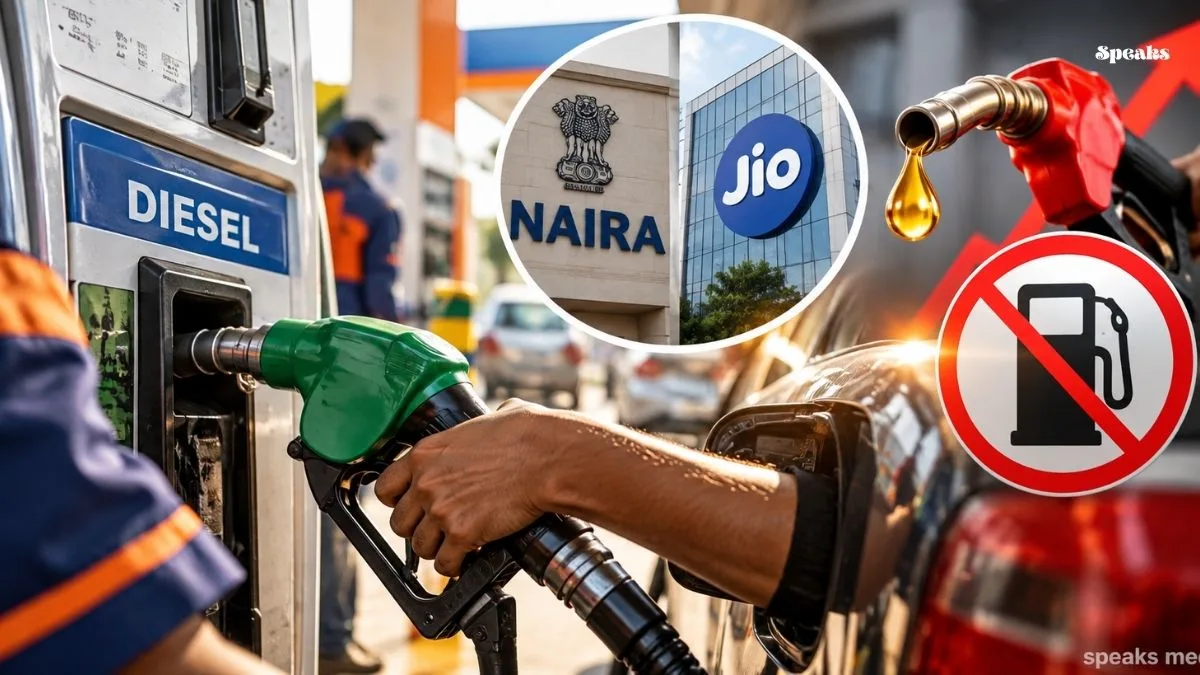
A new change can be seen regarding the purchase of diesel in the country. If you fill more diesel than you need from the petrol pump, there may be a limit on it in the coming days. Private fuel companies Jio-BP and Nayara Energy have limited the quantity of diesel purchased at some petrol pumps. This was done after incidents of buying cheap diesel at retail stations by industries and wholesale buyers. Because diesel is cheaper in retail than in bulk. After private companies, now government oil companies can also take such steps.
According to a PTI report, a limit of maximum 50 liters of diesel per day has been imposed at Jio-BP petrol pumps. At the same time, this limit ranges from 70 liters to 200 liters at Naira Energy pumps. The limit may be different on different pumps. Now Indian Oil Corporation i.e. IOC, Bharat Petroleum i.e. BPCL and Hindustan Petroleum i.e. HPCL can also impose quantity limit on sale of diesel.
Why was there a need to impose a limit on diesel?
There is a big difference in the price of diesel available at petrol pumps and diesel available to wholesale customers. Diesel prices at the petrol pump have remained unchanged since May, while crude oil prices have hovered around $108 per barrel in the international market.
At the same time, the price of diesel available to large consumers has changed more rapidly in line with international crude prices. The price difference between the two has reached around Rs 40 per litre. In such a situation, big consumers have started buying cheap diesel from petrol pumps. Availability of cheap diesel is likely to increase hoarding. Keeping all these things in mind, private companies have taken this step.
Who buys more diesel?
Wholesale customers include factories, manufacturing plants, telecom companies, hotels, malls, data centers and hospitals. In many of these places diesel generators are used for machinery or electricity backup.
According to the report, some big consumers are buying 400 to 600 liters of diesel at a time from petrol pumps. This amount is many times more than what a typical car or other vehicle owner needs.
Stock pressure at the petrol pump
When large consumers buy such large quantities of diesel from petrol pumps, the stock there depletes rapidly. Each petrol pump has a fixed capacity to store diesel and it may take at least a few days for new stock to arrive.
For this reason, Jio-BP and Nayara Energy have started limiting sales volumes. The companies say the aim is to keep diesel available to as many customers as possible.
Government companies have the largest number of pumps in the country. There are a total of 1.04 lakh petrol pumps in India. The share of government oil companies is the highest in this. Indian Oil has around 43,289 petrol pumps. BPCL has around 25,587 outlets and HPCL has around 25,238 outlets. While Jio-BP has 2,227 outlets and Naira Energy has around 7,105 outlets.
If the cheap retail-wholesale price differential of diesel continues, the purchase of diesel by large consumers at state-owned petrol pumps may increase. In such a situation, these companies may also have the option of limiting the volume of sales.
What did Jio-BP say?
Jio-BP has said that all its mobility stations are operational and there is sufficient fuel stock. According to the company, keeping in view the current demand, necessary steps are being taken to manage fuel availability.
The company said that especially in view of the growing demand for industrial and non-transportation use, such steps are being taken to make the fuel available to customers for mobility and transportation as well.
What will be the impact on the common consumer?
Currently this limitation is mainly a concern for consumers buying diesel in large quantities. The daily diesel requirement of normal vehicle owners is usually much less than this limit.
However, if large consumers continue to buy diesel from petrol pumps, companies may impose stricter limits on sales. Its objective will be to maintain the stock of diesel at the petrol pumps and ensure availability of fuel to the common consumers.


