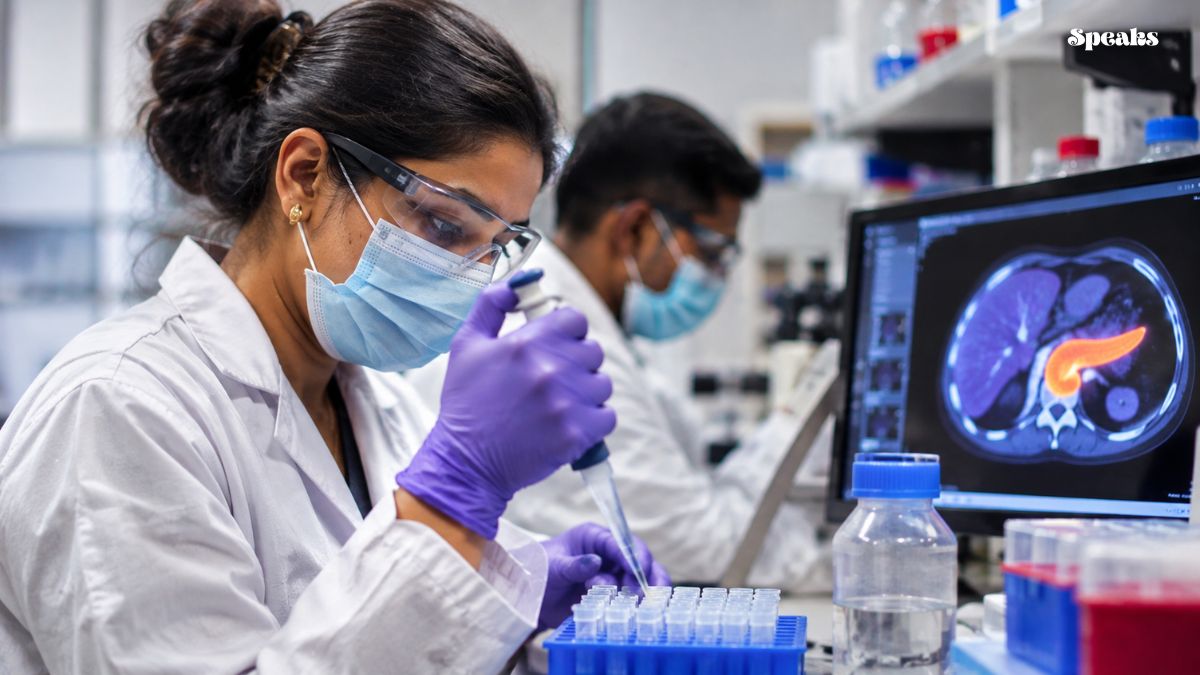
A new clinical trial has raised hopes for people with advanced pancreatic cancer after an experimental treatment combination involving daraxonrasib produced significant tumor responses in patients whose disease had spread to other organs.
The once-daily pill, developed by US biotechnology company Revolution Medicines, was tested alongside two chemotherapy drugs in a study involving 61 patients with metastatic pancreatic cancer.
Updated findings presented on November 20, 2026, at the EORTC-NCI-AACR Symposium in Barcelona showed that tumors shrank or disappeared in 60.7% of participants. Researchers also reported that cancer growth was controlled in approximately 90% of patients.
Five patients experienced a complete response, meaning their tumors were no longer detectable on imaging scans. Although the results represent an encouraging development, researchers emphasize that larger clinical trials are needed to establish how much the combination improves long-term outcomes.
Daraxonrasib Pancreatic Cancer Drug: What Did the New Trial Find?
The latest findings come from the Phase 1/2 RMC-GI-102 clinical trial, which evaluated daraxonrasib combined with standard chemotherapy as an initial treatment for metastatic pancreatic ductal adenocarcinoma.
The study included 61 patients who had not previously received treatment for their metastatic disease. Participants received a daily 200 mg dose of daraxonrasib alongside gemcitabine and nab-paclitaxel, two established chemotherapy medicines.
After a median follow-up of 18.3 months, researchers reported several encouraging results.
- Tumor response rate: 60.7% of patients experienced tumor shrinkage or disappearance.
- Complete response: 8.2% of participants had no detectable tumors on scans.
- Disease control rate: 90.2% of patients experienced a response or stable disease.
- Median progression-free survival: 12.8 months.
- One-year overall survival: 76.6%.
- Median duration of response: 11.1 months.
These findings suggest that combining a targeted RAS treatment with chemotherapy could offer substantial disease control for some patients with advanced pancreatic cancer.
However, the study was relatively small and did not include a separate chemotherapy-only control group. The results therefore cannot establish that the combination improves survival compared with standard chemotherapy.
How Does Daraxonrasib Work Against Pancreatic Cancer?
Daraxonrasib targets the RAS signaling pathway, which plays an important role in controlling how cells grow, divide and survive.
In pancreatic cancer, mutations affecting the KRAS gene are particularly common. These mutations can keep growth signals switched on, encouraging cancer cells to multiply and helping tumors develop.
Daraxonrasib is designed to interfere with the activity of mutant RAS proteins, disrupting signals that cancer cells depend on for continued growth.
Unlike traditional chemotherapy, which attacks rapidly dividing cells, daraxonrasib is a targeted treatment designed to interfere with specific molecular pathways involved in cancer development.
The drug is taken orally as a daily pill, while the chemotherapy medicines used in the trial are administered through intravenous infusions.
Researchers are studying whether this combination can produce deeper and more durable responses than existing treatment approaches.
Why the 60.7% Tumor Response Rate Matters
Pancreatic cancer remains one of the most difficult cancers to treat, particularly when it has already spread beyond the pancreas.
Many patients are diagnosed at an advanced stage because early symptoms can be vague or difficult to recognize. By the time the disease is discovered, surgery may no longer be an option.
The response rate reported in the new trial is therefore important because it shows that a substantial proportion of participants experienced measurable tumor shrinkage.
Five of the 61 patients had complete responses, meaning imaging scans could no longer detect their tumors.
However, a complete response on a scan does not necessarily mean that every cancer cell has disappeared. Patients still require medical monitoring because microscopic disease may remain.
The durability of these responses will be an important factor in determining the treatment’s long-term value.
Daraxonrasib Results: 76.6% of Patients Alive After One Year
One of the notable findings was the reported one-year overall survival rate of 76.6%.
This means that approximately three-quarters of the patients included in the study were alive 12 months after beginning treatment.
Researchers also reported a median progression-free survival of 12.8 months. This measures the length of time patients lived without their cancer progressing or worsening.
The median duration of response was 11.1 months, indicating that patients who responded to treatment maintained that response for a meaningful period.
These figures provide important information about the treatment’s potential, but they should not be directly compared with historical chemotherapy survival figures as if the patients had participated in a randomized head-to-head trial.
The RMC-GI-102 study was an early-phase investigation without a separate control group, making larger comparative research essential.
How Daraxonrasib Compares With Standard Pancreatic Cancer Treatment
Treatment for metastatic pancreatic cancer commonly involves chemotherapy combinations selected according to a patient’s overall health, disease characteristics and previous treatment history.
Gemcitabine and nab-paclitaxel are among the established treatment options for advanced pancreatic ductal adenocarcinoma.
The new study examined whether adding daraxonrasib to these medicines could produce stronger tumor responses and longer disease control.
The early findings were encouraging, particularly because researchers observed responses in more than six out of every 10 participants.
However, the results do not yet prove that the three-drug combination should replace existing first-line treatment.
A randomized Phase 3 trial will provide more reliable evidence by comparing treatment outcomes between patients receiving the daraxonrasib-based combination and those receiving standard chemotherapy.
Is Daraxonrasib FDA Approved?
Daraxonrasib has received US Food and Drug Administration approval under the brand name Rasonque for a defined group of adults with previously treated metastatic pancreatic adenocarcinoma.
The approval followed results from a separate Phase 3 clinical trial that compared the drug with standard chemotherapy in eligible patients.
In that study, median overall survival was 13.2 months among patients receiving daraxonrasib, compared with 6.7 months in the chemotherapy control group.
Those results represent a different clinical setting from the newly reported first-line combination study.
The November 2026 findings examined daraxonrasib alongside gemcitabine and nab-paclitaxel in patients who had not previously received treatment for metastatic disease.
Consequently, the new findings should not be interpreted as an approval for every newly diagnosed patient or as evidence that the combination is already an established first-line standard.
Patients should discuss eligibility, treatment availability and potential risks with their oncology teams.
What Is the RASolute 303 Trial?
The next important step is the ongoing Phase 3 RASolute 303 study.
The trial is evaluating daraxonrasib as a potential first-line treatment for patients with previously untreated metastatic pancreatic cancer.
Researchers are investigating daraxonrasib both as a standalone treatment and in combination with gemcitabine and nab-paclitaxel.
The study also includes a standard chemotherapy comparison group, allowing investigators to examine whether the new treatment strategies improve outcomes.
Unlike the smaller Phase 1/2 study, a randomized Phase 3 trial can provide stronger evidence about survival benefits, disease progression and treatment safety.
The results will help determine whether daraxonrasib can become a more widely used initial treatment option for metastatic pancreatic cancer.
What Are the Possible Side Effects of Daraxonrasib?
Like other targeted cancer medicines, daraxonrasib can cause side effects that require monitoring by medical professionals.
Its safety profile has been evaluated in clinical studies, including research examining the drug alongside chemotherapy.
When combined with gemcitabine and nab-paclitaxel, patients may also experience side effects associated with the chemotherapy medicines.
These can include fatigue, gastrointestinal symptoms, changes in blood counts and other treatment-related complications.
The updated Phase 1/2 study reported a safety profile consistent with previously observed effects of the individual treatments.
However, individual reactions can differ considerably. Treatment decisions should account for a patient’s medical history, existing conditions and ability to tolerate combination therapy.
Why This Development Matters for Pancreatic Cancer Research
Pancreatic cancer has historically presented major challenges for cancer researchers because of its aggressive behavior, late diagnosis and limited treatment options for advanced disease.
The KRAS pathway has been a major focus of scientific research because mutations in this pathway are common drivers of pancreatic tumor development.
Developing medicines that can directly interfere with these cancer-driving signals has been a long-standing goal in oncology.
Daraxonrasib’s clinical development represents an important step in that research.
The latest findings have strengthened interest in combining targeted RAS inhibition with established chemotherapy, while the ongoing Phase 3 research will determine whether the early results translate into meaningful improvements for patients.