A major federal appeals court has ruled that the U.S. House of Representatives violated the Constitution by counting lawmakers who voted remotely by proxy toward a congressional quorum during the COVID-19 pandemic.
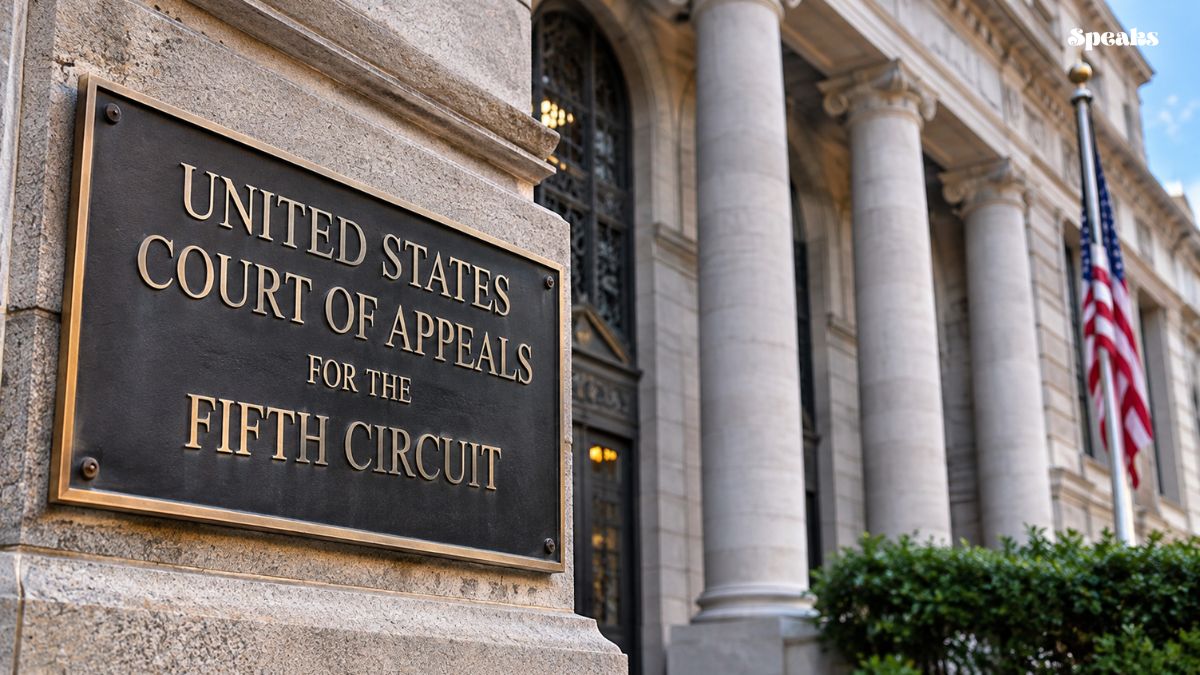
The U.S. Court of Appeals for the Fifth Circuit issued the 9-8 decision on November 20, 2026, in a closely watched case involving the passage of a $1.7 trillion federal spending package in 2022.
The ruling could open the door to additional legal challenges involving legislation passed under pandemic-era congressional voting procedures. However, the immediate legal relief is limited to enforcement of one part of the spending law against Texas.
The decision also raises significant questions about the constitutional limits of remote participation in Congress and the legal status of legislation approved using proxy votes.
What Did the 5th Circuit Proxy Voting Ruling Decide?
The full Fifth Circuit, sitting en banc, concluded that the House could not count absent lawmakers as physically present through proxy voting when determining whether a constitutional quorum existed.
Judge Cory Wilson wrote the majority opinion, arguing that the Constitution requires members of Congress to be physically present for quorum purposes.
The court relied on the text of the Constitution, its historical understanding and longstanding congressional practice to support its interpretation of the Quorum Clause.
The majority concluded that House procedural rules cannot override the constitutional requirement for establishing a quorum.
The decision affirmed a lower court ruling that blocked enforcement of the Pregnant Workers Fairness Act against the state of Texas.
Why the $1.7 Trillion Spending Bill Is at the Center of the Case
The dispute involves the Consolidated Appropriations Act of 2023, a major federal spending package that became law under former President Joe Biden.
The House approved the legislation on December 23, 2022, using voting procedures that allowed lawmakers to cast votes remotely through designated representatives.
According to the court record, the final House vote was 225-201, with one member voting present and four members not voting.
Of the lawmakers participating in the vote, 226 cast their votes remotely by proxy. Only 205 members voted in person.
Texas argued that the House did not satisfy the Constitution’s quorum requirement because fewer than a majority of representatives were physically present.
The state challenged the law’s Pregnant Workers Fairness Act provision, arguing that it was enacted through an unconstitutional legislative process.
How COVID-19 Changed Congressional Voting Procedures
The House introduced proxy voting in May 2020 as the COVID-19 pandemic disrupted normal congressional operations.
Under the system, members could designate another representative to cast their votes and record their presence during designated periods.
The arrangement was intended to allow lawmakers to continue legislative work while reducing the need for large gatherings inside the Capitol.
The House extended the practice into the following Congress, using remote voting procedures during the period when pandemic-related restrictions remained in place.
The Senate, however, continued to conduct its voting in person.
The House ended its pandemic-era proxy voting system after Republicans took control of the chamber in January 2023.
Judge Cory Wilson’s Constitutional Argument
In the majority opinion, Judge Cory Wilson focused on Article I, Section 5 of the U.S. Constitution, commonly known for its Quorum Clause.
The provision states that a majority of each chamber constitutes a quorum to conduct business, unless the chamber has a smaller number of members permitted to adjourn or compel attendance.
Wilson’s interpretation was that the requirement refers to lawmakers being physically present rather than represented by another member.
The majority also pointed to the historical understanding of congressional attendance and a previous Supreme Court interpretation of quorum requirements.
The judges concluded that allowing proxy presence to count toward a quorum would permit congressional rules to bypass a constitutional limitation.
The 9-8 outcome highlights the substantial disagreement among the appeals court’s judges over how the Constitution should apply to modern legislative procedures.
Why the Pregnant Workers Fairness Act Is Affected
The legal challenge has direct consequences for the Pregnant Workers Fairness Act, a federal law designed to strengthen workplace protections for pregnant employees.
The legislation requires covered employers to provide reasonable accommodations for pregnancy-related limitations, unless doing so would create an undue hardship.
Examples of accommodations can include additional bathroom breaks, access to drinking water, adjustments to physical duties and temporary changes to working conditions.
The law was included in the broader Consolidated Appropriations Act of 2023.
Texas challenged the law’s enforcement, arguing that the legislation was passed through a process that violated the Constitution’s quorum requirements.
The Fifth Circuit’s decision leaves the federal government unable to enforce the Pregnant Workers Fairness Act against Texas under the injunction affirmed by the court.
The ruling does not automatically eliminate the law nationwide or mean that every employer can disregard its requirements.
What Did the Dissenting Judges Say?
The decision was not unanimous. Judge James Graves Jr. wrote a dissent questioning the majority’s interpretation of the Constitution and the scope of its reasoning.
Graves argued that the Quorum Clause does not explicitly establish a separate physical-presence requirement in the way the majority interpreted it.
He also questioned why the court’s judgment should be limited to one provision of the larger spending package if the majority considered the legislative process unconstitutional.
The dissent highlighted the potential consequences of the decision for other provisions included in the same federal spending legislation.
The disagreement reflects a broader constitutional debate about how much authority Congress has to establish its own procedural rules and whether courts can review those decisions.
Could the Fifth Circuit Decision Affect Other Biden-Era Laws?
The ruling could encourage new legal challenges to federal legislation passed when the House relied on pandemic-era proxy voting.
The Consolidated Appropriations Act of 2023 contained numerous provisions beyond workplace protections for pregnant employees.
These included federal spending measures and other significant legislative provisions.
However, the Fifth Circuit’s immediate judgment does not invalidate the entire spending package or automatically remove every provision from federal law.
The majority’s constitutional reasoning could become relevant in future cases, but individual challenges would still need to overcome applicable procedural and legal requirements.
The scope of any additional litigation will depend on the arguments raised, the parties involved and how other courts interpret the decision.
Will the Supreme Court Review the Proxy Voting Case?
The ruling is likely to face further legal scrutiny, with an appeal to the U.S. Supreme Court expected to become an important next step.
The case, State of Texas v. Blanche, was decided by the Fifth Circuit sitting en banc under case number 24-10386.
A Supreme Court review could address whether the Constitution requires lawmakers to be physically present when establishing a quorum and whether courts can examine the validity of legislation based on how Congress recorded attendance.
The future of the case could also be affected by political changes in Texas.
A Democratic candidate won the state’s attorney general election in November 2026, meaning Republicans are set to lose control of the office that initiated the challenge when the new administration takes office in January.
Whether the incoming attorney general continues pursuing the case could become another important factor in its legal future.
Key Details of the Fifth Circuit Proxy Voting Decision
| Detail | Information |
|---|---|
| Court | U.S. Court of Appeals for the Fifth Circuit |
| Decision | November 20, 2026 |
| Vote | 9-8 |
| Majority Opinion | Judge Cory Wilson |
| Dissent | Judge James Graves Jr. |
| Case | State of Texas v. Blanche |
| Case Number | 24-10386 |
| Legislation | Pregnant Workers Fairness Act |
| Spending Package | Consolidated Appropriations Act of 2023 |
| Main Constitutional Issue | Congressional Quorum Clause |
| Immediate Relief | Injunction against enforcing the PWFA against Texas |