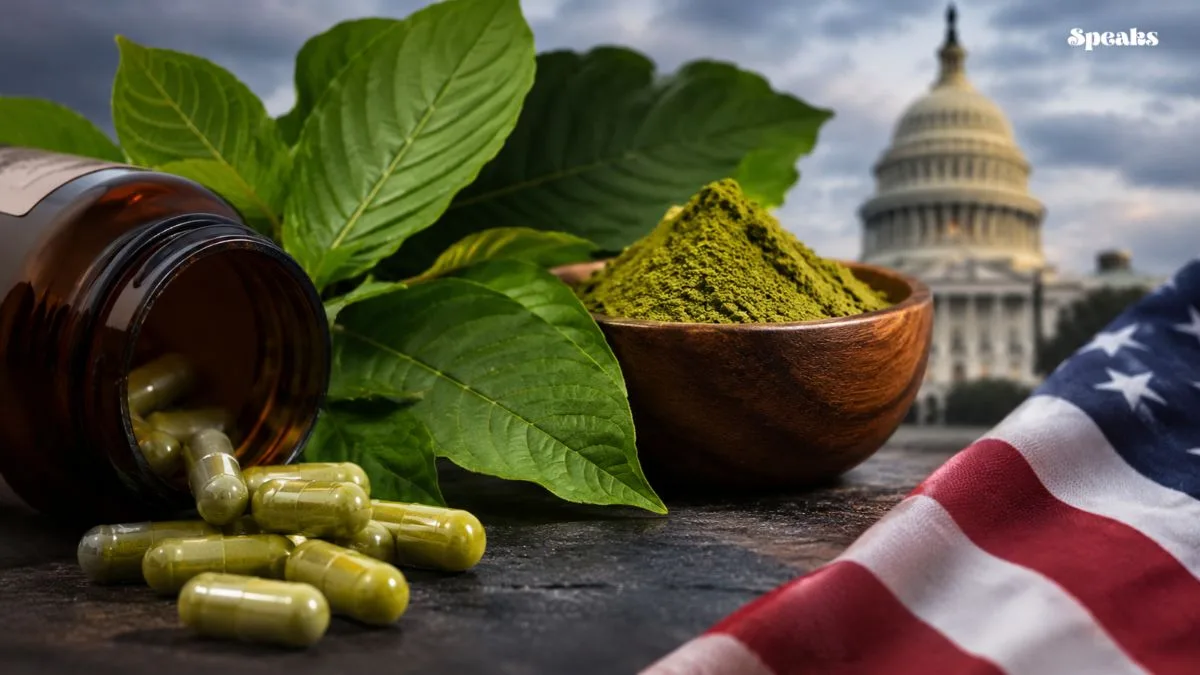
The latest 60 Minutes investigation into kratom is raising serious questions about the safety of a fast-growing herbal supplement industry in the United States. The report examines addiction concerns, deaths linked to kratom use and the government’s approach to regulating products that remain widely available.
The segment aired on Sunday, November 15, 2026, as part of the CBS news program’s latest episode. Correspondent Jon Wertheim investigated the billion-dollar kratom market, speaking with former users, families who lost loved ones, toxicologists and medical experts.
The investigation also examines how kratom products are marketed as natural supplements despite growing concerns about their opioid-like effects and potential health risks.
What Did the 60 Minutes Kratom Episode Reveal?
The 60 Minutes report focuses on the growing availability of kratom products across the United States and the health concerns surrounding their use.
Kratom comes from a tropical tree native to Southeast Asia. Its leaves have traditionally been chewed or brewed into tea for their stimulating effects. In the US, however, products containing kratom are now sold in several forms, including powders, capsules, gummies, extracts and bottled drinks.
Supporters describe kratom as a natural product that may help with energy, pain and opioid withdrawal. Health experts interviewed by 60 Minutes raised concerns about dependence, addiction and potentially fatal complications.
The report also highlights how products containing kratom have become accessible through gas stations, smoke shops, convenience stores and online retailers.
According to the investigation, the industry has grown into a billion-dollar market, creating a difficult regulatory challenge for US authorities.
Kratom Addiction Concerns and Families Share Their Experiences
One of the most powerful parts of the investigation features families who believe kratom contributed to the deaths of their sons.
Jon Wertheim spoke with parents who described how their children initially viewed kratom as a safer alternative to conventional stimulants or other substances. Some believed it could help with energy, anxiety or substance-use recovery.
Susan Eppard, whose son Matthew died at 22, explained that he believed kratom was similar to coffee because of its plant origins.
Other families described similar experiences, saying their sons began using kratom because they believed it was a natural and relatively harmless product.
The report also examined death records. According to CBS, the deaths of Matthew Eppard and Joe Chamberlain were attributed solely to mitragynine, kratom’s primary active compound. Two other cases involved mitragynine alongside prescription or over-the-counter medications.
The investigation included comments from toxicologist Justin Brower of NMS Labs, who said he had examined numerous deaths involving kratom and had identified cases in which no other drugs were involved.
What Makes Kratom Different From an Ordinary Herbal Supplement?
A major issue explored in the 60 Minutes investigation is how kratom interacts with the human brain.
Kratom contains several active compounds, including mitragynine. This compound interacts with opioid receptors, which are involved in pain relief and reward-related responses.
Another compound, 7-hydroxymitragynine, commonly called 7-OH, can produce stronger opioid-like effects.
These properties have raised concerns among addiction specialists because repeated exposure can lead to dependence and withdrawal symptoms.
Dr. Andrew Kolodny, medical director of the Opioid Policy Research Collaborative at Brandeis University, told 60 Minutes that kratom can produce effects similar to powerful opioid drugs.
He also questioned claims that kratom is an effective treatment for opioid use disorder, saying there is not sufficient evidence to support its use for that purpose.
The distinction between traditional kratom leaf products and concentrated or chemically manipulated 7-OH products is also important in the ongoing debate.
Feel Free Drink and 7-OH Products Featured in the Investigation
The report follows Melanie Clark, a Michigan woman who described becoming dependent on Feel Free Classic Tonic, a plant-based drink containing kratom.
Clark initially started using the product because she wanted more energy and better focus. She said she found it through social media advertising and purchased it at nearby gas stations.
According to her account, her consumption increased over time, and she began feeling that she needed the product to get through her daily routine.
After initially stopping the leaf-based kratom drink, Clark later began using concentrated 7-OH tablets. She described experiencing severe withdrawal symptoms and eventually requiring hospital care.
Her experience illustrates one of the central concerns raised in the investigation: consumers may not fully understand the differences between traditional kratom products and more concentrated derivatives.
The segment also examines how some manufacturers market these products through convenience stores and other retail outlets where consumers may not expect to encounter substances with opioid-like effects.
FDA Warnings and the US Government’s Kratom Regulation Debate
Federal regulation is another major focus of the investigation.
The Food and Drug Administration has warned consumers about serious adverse effects associated with kratom, including liver toxicity, seizures and substance use disorder.
The FDA issued an import alert in 2014 to help prevent kratom products from entering the United States. However, the substance has continued to reach American retailers through international supply chains.
Kratom remains legally available in most US states, although regulations and restrictions vary by location.
The investigation also examines the federal government’s changing approach to 7-OH products.
According to the CBS report, federal officials announced plans in July 2026 to restrict 7-OH and three related substances. However, the Department of Health and Human Services subsequently changed its recommendation, increasing the amount of 7-OH permitted in products by 20 times.
The decision reportedly surprised several health officials who had previously supported tighter restrictions.
The controversy has raised questions about how regulators balance consumer access, industry interests and public health concerns.
60 Minutes Examines Kratom Industry Lobbying and Political Influence
Beyond the medical concerns, the investigation explores the political and financial influence surrounding the kratom industry.
60 Minutes reviewed public filings showing years of lobbying activity involving the American Kratom Association and efforts to influence federal agencies and lawmakers.
The report also examined political contributions and financial relationships involving companies associated with kratom products.
Former government officials Calley Means and Dr. Marty Makary raised concerns about changes in federal policy and the influence of industry interests.
The Department of Health and Human Services rejected suggestions that political contributions or outside pressure influenced its recommendation. The American Kratom Association also emphasized the difference between natural kratom and chemically manipulated products.
The competing positions highlight the growing disagreement over how kratom should be classified, marketed and regulated in the United States.
How to Watch the 60 Minutes Kratom Episode
The kratom investigation aired on Sunday, November 15, 2026, as part of Season 59, Episode 9 of 60 Minutes.
The report was presented by correspondent Jon Wertheim and produced by Denise Schrier Cetta and Elizabeth Germino. The kratom segment runs approximately 13 minutes and 31 seconds.
The full episode also includes Norah O’Donnell’s investigation into the deadly Iranian drone attack on American soldiers and Ariel Levy’s interview with actor John Malkovich.
The November 15 episode is available through CBS and Paramount+, allowing viewers to watch the broadcast after its original television airing.