A major disruption to the US aviation system has placed defense technology contractor L3Harris under scrutiny after a nationwide air traffic control shutdown affected more than 20,000 flights. Federal officials are investigating whether a newly installed router or an installation error triggered the telecommunications failure.
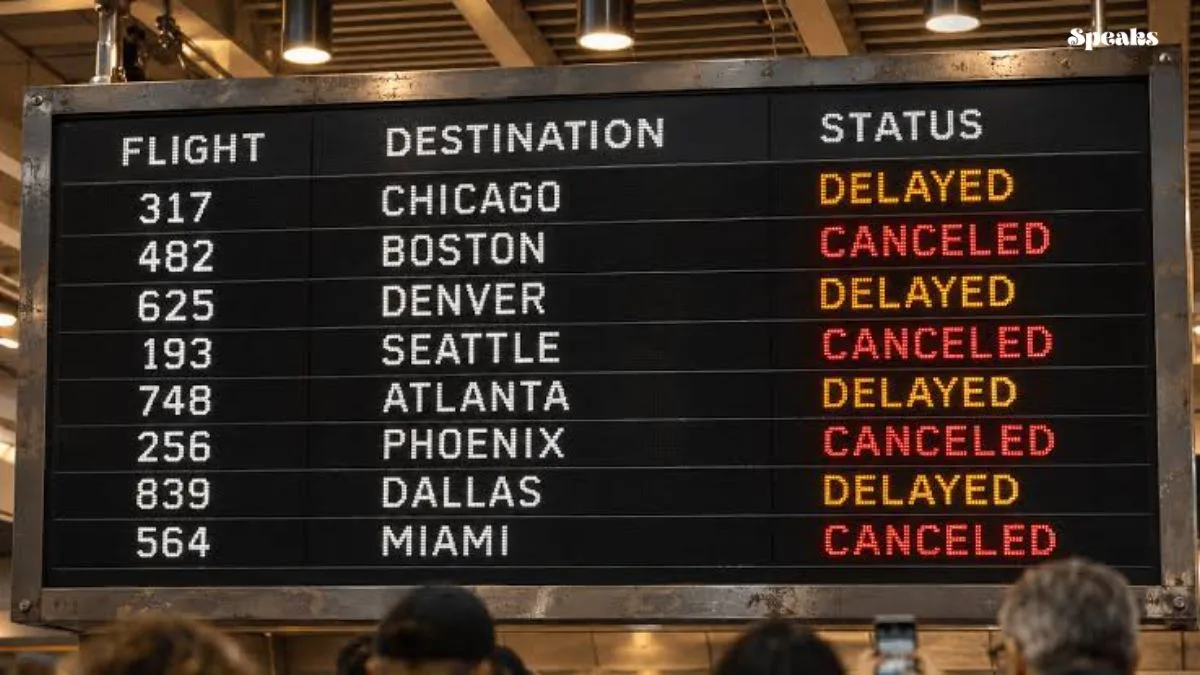
The disruption began on Friday, November 13, when the Federal Aviation Administration (FAA) experienced communication problems across multiple air traffic control facilities. The agency ordered a nationwide ground stop that lasted nearly five hours, forcing airlines to suspend departures and leaving thousands of passengers facing delays and cancellations.
Transportation Secretary Sean Duffy said Saturday that investigators were examining the role of L3Harris, the government contractor responsible for maintaining the telecommunications network involved in the incident.
However, officials have not established whether the problem resulted from defective equipment, incorrect installation or a technical error during routine maintenance.
What Happened During the US Aviation Shutdown?
The incident began during scheduled telecommunications maintenance at a remote FAA facility. The work involved transferring connections from an aging copper-wire network to a modern fiber-optic infrastructure.
According to officials, the transition involved replacing older telecommunications equipment with newer technology. During this process, a newly installed router apparently began sending excessive connection requests to other routers across the FAA network.
The resulting traffic overwhelmed parts of the communications infrastructure, affecting the systems used by air traffic controllers to communicate with aircraft and receive radar information.
Sean Duffy explained that the new routers generated more than 1,000 connection attempts every four to five seconds. This unusual activity created instability across the network and raised concerns about the reliability of critical air traffic control communications.
The FAA identified problems at 17 of its 22 en route air traffic control centers. With the agency unable to establish the precise cause immediately, officials decided to stop flights nationwide as a precautionary safety measure.
Why Is L3Harris Being Investigated?
L3Harris is a major US defense and technology contractor that provides communications and other advanced systems to government agencies. The company has maintained a long-standing relationship with the FAA and is involved in operating the telecommunications infrastructure that supports the country’s air traffic control network.
The contractor was performing maintenance work connected to the transition from copper-based communications to fiber-optic technology when the disruption occurred.
Federal investigators are now examining two main possibilities: whether the newly installed router was defective or whether an installation or configuration mistake caused the equipment to overwhelm the existing network.
Duffy said the government had not yet determined which explanation was responsible. He also indicated that officials would examine the quality of the contractor’s work before deciding whether further action was necessary.
L3Harris said it was taking the incident seriously and supporting the FAA’s investigation into the circumstances surrounding the November 13 ground stop.
The company also reported that it had completed more than 70% of the planned conversion of the FAA’s airspace communications infrastructure from legacy copper connections to fiber-optic technology.
More Than 20,000 Flights Affected Across the US
The nationwide shutdown created significant problems for airlines, airport operators and passengers during an already busy travel period.
The FAA’s ground stop lasted nearly five hours, disrupting flight departures across the country. Although the restriction was lifted on Friday evening, airlines continued dealing with the operational consequences on Saturday.
According to Reuters, the incident had disrupted more than 20,000 flights since Friday. FlightAware data also showed that airlines recorded more than 6,400 cancellations and 8,000 delays on Saturday alone.
Friday had already seen approximately 9,200 flight cancellations and 7,500 delays, highlighting the scale of the disruption.
The impact extended beyond passengers waiting at departure gates. Aircraft and airline crews were left out of position, creating additional scheduling problems that could take time to resolve.
FAA Administrator Bryan Bedford said airlines were working to restore their schedules and expected operations to return largely to normal by the end of Sunday, November 15.
Passengers were advised to check directly with their airlines for updated departure information as recovery operations continued.
FAA’s Aging Air Traffic Control System Raises Concerns
The incident has renewed concerns about the condition of the telecommunications infrastructure supporting America’s air traffic control system.
Although airlines and airports have adopted increasingly advanced technologies, important parts of the FAA’s communications network still depend on equipment and infrastructure developed decades ago.
The transition from copper wiring to fiber-optic connections is intended to improve reliability, capacity and long-term performance. However, the latest incident demonstrates the technical challenges involved in replacing legacy infrastructure while keeping critical systems operational.
Duffy said the FAA spends approximately $1 billion annually maintaining its aging copper-wire network.
Some of the equipment being replaced is around 25 years old. According to the transportation secretary, parts of the system were originally expected to be replaced much earlier, but modernization efforts have taken longer than planned.
The agency has also faced other technology-related failures in recent years, including problems linked to damaged fiber-optic cables, accidentally deleted computer files and malfunctioning equipment.
These incidents have raised questions about whether the existing infrastructure can reliably support the growing demands of US air travel.
FAA Modernization Project Faces Pressure After Latest Failure
The FAA is working on a broader modernization program designed to replace outdated communications and air traffic control technology.
Congress has already provided $12.5 billion for improvements to the country’s air traffic control and telecommunications infrastructure. Duffy has also requested an additional $50 billion to support improvements across air traffic control facilities and airports.
The modernization effort includes replacing older copper-based connections with fiber-optic technology and upgrading systems used to exchange critical information between air traffic controllers and aircraft.
The FAA has also announced plans to replace outdated floppy disks still used to manage weather and other essential information at more than 400 air traffic control facilities by the end of 2028.
Other planned improvements involve replacing older computer equipment and modernizing procedures that air traffic controllers use to track aircraft.
However, the latest outage highlights the difficulty of carrying out these upgrades without affecting existing operations.
What Happens Next in the L3Harris Investigation?
The FAA and federal transportation officials are continuing to investigate the technical failure that triggered the nationwide ground stop.
One of the central questions is whether the router itself malfunctioned or whether the problem resulted from an error during installation or configuration.
Investigators are also examining how the excessive connection requests spread through the existing telecommunications network and why the disruption affected so many air traffic control facilities.
Officials have said the FAA’s communications infrastructure remained operational in the sense that facilities did not completely lose all communications. Instead, instability in the data network affected the reliability of critical systems.
L3Harris has pledged to cooperate with the investigation. The findings could influence how future telecommunications upgrades are tested, installed and monitored across FAA facilities.
The incident has also increased pressure on the government to accelerate its modernization plans while maintaining reliable air traffic control operations.