Washington: Thousands of travelers across the United States continued facing flight cancellations and delays on Saturday, November 14, as airlines struggled to restore normal operations following a nationwide aviation shutdown.
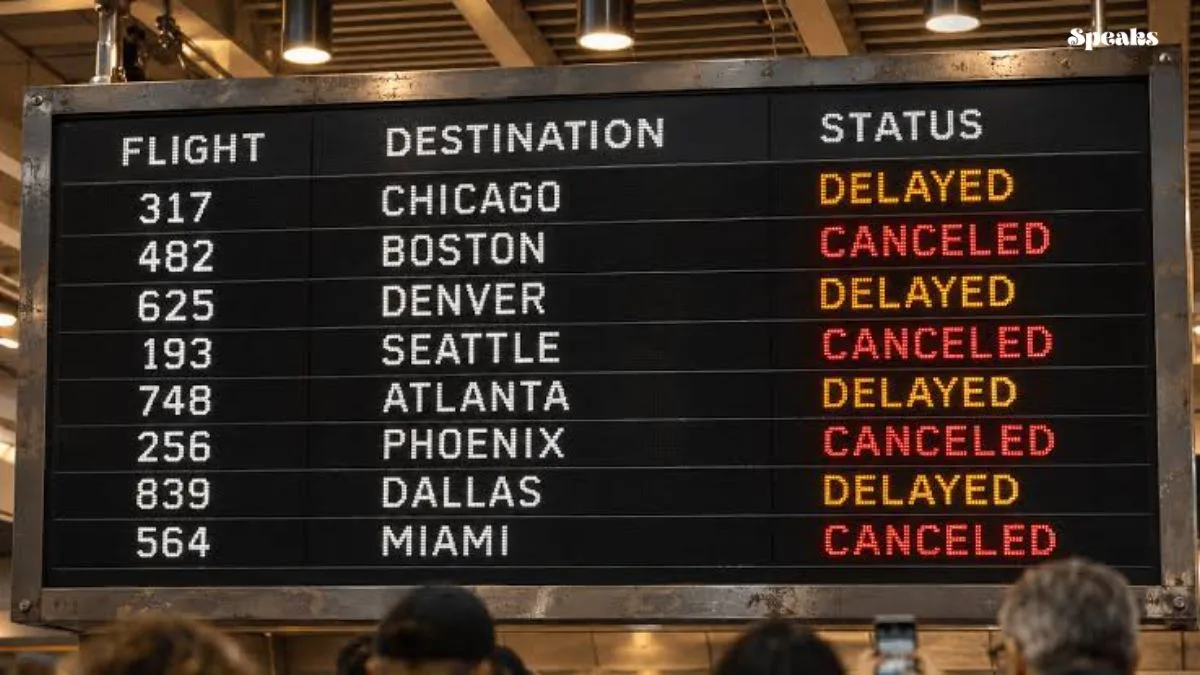
Major US airlines canceled more than 3,700 flights and delayed another 2,000 on Saturday, extending the disruption caused by a nearly five-hour Federal Aviation Administration (FAA) ground stop on Friday.
The shutdown forced airlines to cancel nearly 10,000 flights and delay more than 7,000 others, making it one of the most disruptive days for American air travel in recent history.
Although the FAA lifted the nationwide restriction on Friday evening, the recovery proved difficult. Thousands of passengers remained stranded at airports while airlines worked to reposition aircraft, restore flight schedules and bring crews back to their assigned locations.
According to FlightAware figures reported by Reuters, Saturday’s disruption grew to more than 6,400 canceled flights and 8,000 delays. The figures followed approximately 9,200 cancellations and 7,500 delays recorded on Friday.
The disruption affected major aviation hubs, including Chicago O’Hare International Airport and New York’s LaGuardia Airport. United Airlines and Delta Air Lines temporarily introduced their own ground stops at these airports to manage congestion and gate availability.
American Airlines also adjusted its recovery strategy by prioritizing international services and flights to smaller cities outside its major hubs. The move was intended to reposition aircraft and flight crews and help restore its wider network.
The FAA ordered the original ground stop after a communications failure affected its air traffic control infrastructure. The problem involved a network responsible for supporting critical radio communications between air traffic controllers and pilots.
Transportation Secretary Sean Duffy said the disruption occurred during maintenance work involving the replacement of older copper-based telecommunications connections with modern fiber-optic technology.
Investigators are examining whether a newly installed router or an installation error involving contractor L3Harris caused the network instability. Officials said excessive data requests overloaded communications equipment and affected systems used for radar and aircraft communications.
The technical problems affected 17 of the FAA’s 22 en route air traffic control centers. These facilities manage aircraft during the cruising portion of their journeys, making reliable communication essential for safe and efficient operations.
FAA Administrator Bryan Bedford apologized for the disruption and said the agency was working to stabilize operations. Officials expected airline schedules to return largely to normal by late Sunday, although passengers could continue experiencing delays during the recovery.
The incident has renewed concerns about the condition of America’s aging air traffic control infrastructure. The system has faced repeated technical problems, outdated equipment and a shortage of several thousand air traffic controllers.
Duffy has called for $50 billion in additional funding to modernize the country’s air traffic control network. The proposed investment would support technology upgrades, communications improvements and the replacement of outdated infrastructure.
The FAA and L3Harris are continuing technical assessments to determine whether the router-related failure created any additional risks. Officials are also examining how routine maintenance triggered such widespread disruption across the national aviation network.