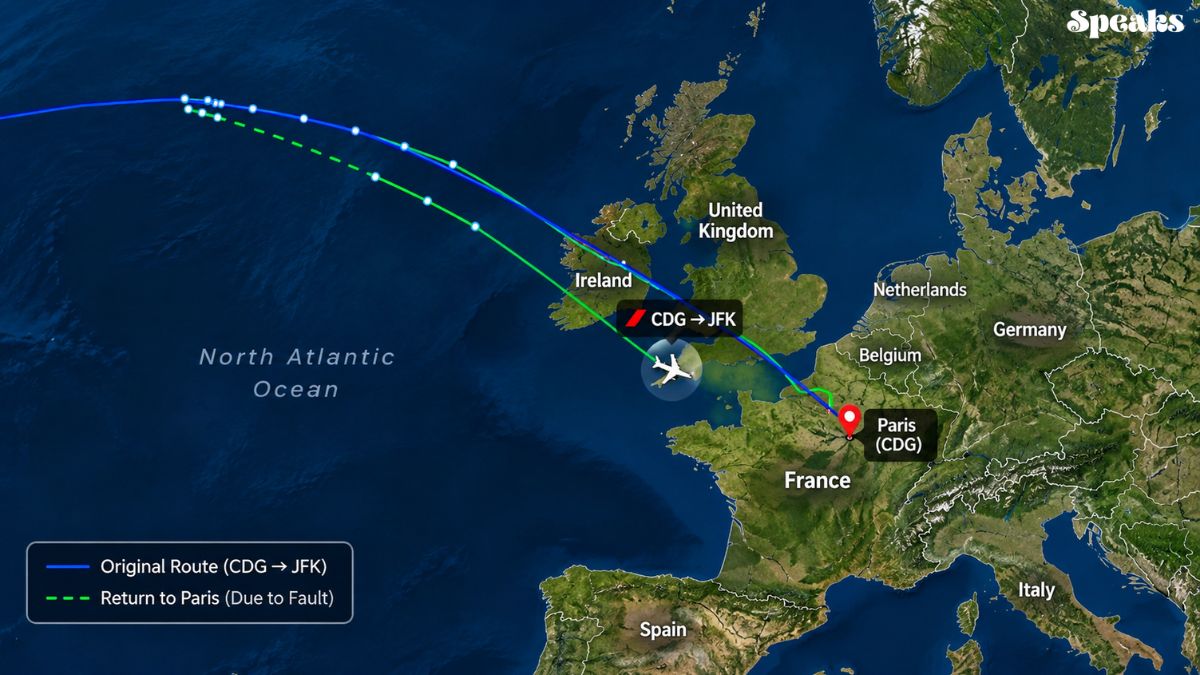
An Air France flight traveling from Paris to New York was forced to reverse course over the Atlantic Ocean after its pilots reportedly detected a technical problem with the aircraft’s fuel monitoring system.
The Boeing 777-300ER was operating flight AF4 to John F. Kennedy International Airport on November 20, 2026, when the crew decided to abandon the transatlantic journey and return to France.
The aircraft, registered as F-GZNK, had already spent nearly three hours in the air before turning east toward Paris Charles de Gaulle Airport. The decision was reportedly taken because of concerns involving fuel information displayed in the cockpit.
Why Did the Air France Boeing 777 Turn Back Over the Atlantic?
The incident involved a malfunction in the fuel quantity indication system on the captain’s side of the cockpit, according to aviation outlet AIRLIVE.
This system provides pilots with information about the amount of fuel available in the aircraft’s tanks. Reliable readings are essential during long-distance flights, particularly when an aircraft is crossing an ocean with limited opportunities to land.
The reported fault affected the crew’s ability to rely fully on the fuel monitoring information. Rather than continue toward New York with reduced monitoring redundancy, the pilots elected to return to their departure airport.
There has been no confirmed indication that the aircraft suffered a fuel shortage or experienced an engine failure. The reported problem concerned the accuracy and availability of fuel quantity information.
Air France Flight AF4: What Happened During the Flight?
Flight AF4 was scheduled to depart Paris Charles de Gaulle Airport at 10:30 a.m. local time on November 20.
However, the aircraft left approximately 40 minutes behind schedule, departing at around 11:10 a.m. CET before beginning its journey toward New York.
The Boeing 777 climbed to approximately 34,000 feet and proceeded west across the North Atlantic. Its journey initially followed the planned transatlantic route.
Nearly three hours after departure, the crew changed course and began heading back toward France. The aircraft subsequently re-entered French airspace and returned to Charles de Gaulle Airport.
It landed at approximately 5:05 p.m. local time, bringing the disrupted journey to an end after several hours in the air.
Boeing 777 Fuel Quantity Processing Unit Under Attention
The reported cockpit malfunction has also drawn attention to the aircraft’s Fuel Quantity Processing Unit, commonly known as the FQPU.
This onboard component processes fuel measurement information and sends the calculated data to cockpit displays used by the flight crew.
AIRLIVE reported that maintenance records indicated the aircraft’s processing unit had previously been replaced. However, the available reporting does not establish that the earlier maintenance work caused the latest malfunction.
A problem with fuel indication equipment does not necessarily mean that the aircraft has lost fuel. It can instead create uncertainty about the information pilots need to manage fuel consumption and reserves.
For a long-haul flight across the Atlantic, dependable fuel monitoring is especially important because crews must account for weather changes, potential diversions and alternative landing airports.
Why the Pilots Chose Paris Instead of Continuing to New York
Returning to Paris allowed the aircraft to reach Air France’s main operational base, where maintenance teams and technical support were available.
An aircraft experiencing a technical problem does not always have to land at the nearest airport. Pilots and airline operations teams assess the nature of the fault, aircraft condition, available landing options and operational circumstances.
In this case, the reported decision to return to Charles de Gaulle provided access to the airline’s maintenance facilities and an opportunity to arrange another aircraft for passengers.
The return also avoided continuing a long transatlantic journey while the reported fuel monitoring issue remained unresolved.
Air France Arranges a Replacement Boeing 777 for Passengers
The unexpected return disrupted the original Paris-New York schedule, leaving passengers facing a significant delay.
Air France arranged another aircraft to operate the service rather than requiring passengers to wait for the original Boeing 777 to undergo technical checks.
According to published flight-tracking reports, the replacement aircraft was scheduled to depart Paris at approximately 8 p.m. CET.
Further flight-tracking information identified the replacement aircraft as another Boeing 777-300ER, registered F-GSQK. It eventually operated the delayed service to New York.
How Important Is the Fuel Monitoring System on a Boeing 777?
The Boeing 777 is designed for long-distance commercial operations, including some of the busiest transatlantic routes between Europe and North America.
Its fuel management systems provide pilots with information needed to monitor fuel quantities, consumption and remaining reserves throughout a journey.
Flight crews compare actual fuel figures with their flight plans at different stages of the route. This helps them identify unexpected consumption and determine whether sufficient reserves remain available.
If a fuel indication system develops a fault, pilots may need to rely on alternative indications and approved procedures. The appropriate response depends on the specific malfunction and the aircraft’s operational condition.
On an ocean crossing, accurate information is particularly important because suitable diversion airports may be hundreds of miles away.
What the Incident Means for Passengers on Transatlantic Flights
For passengers, an unexpected return after several hours in the air can create major disruption, especially when connecting flights and onward travel arrangements are involved.
However, a flight returning to its departure airport because of a technical issue should not automatically be interpreted as an aircraft emergency.
Airlines and flight crews regularly make operational decisions to address technical concerns before they become more complicated during a journey.
The Air France incident demonstrates how a relatively specific cockpit indication problem can change an entire long-haul flight plan, even when there is no reported engine failure or confirmed shortage of fuel.
The original aircraft will require appropriate technical inspection before returning to normal passenger operations.