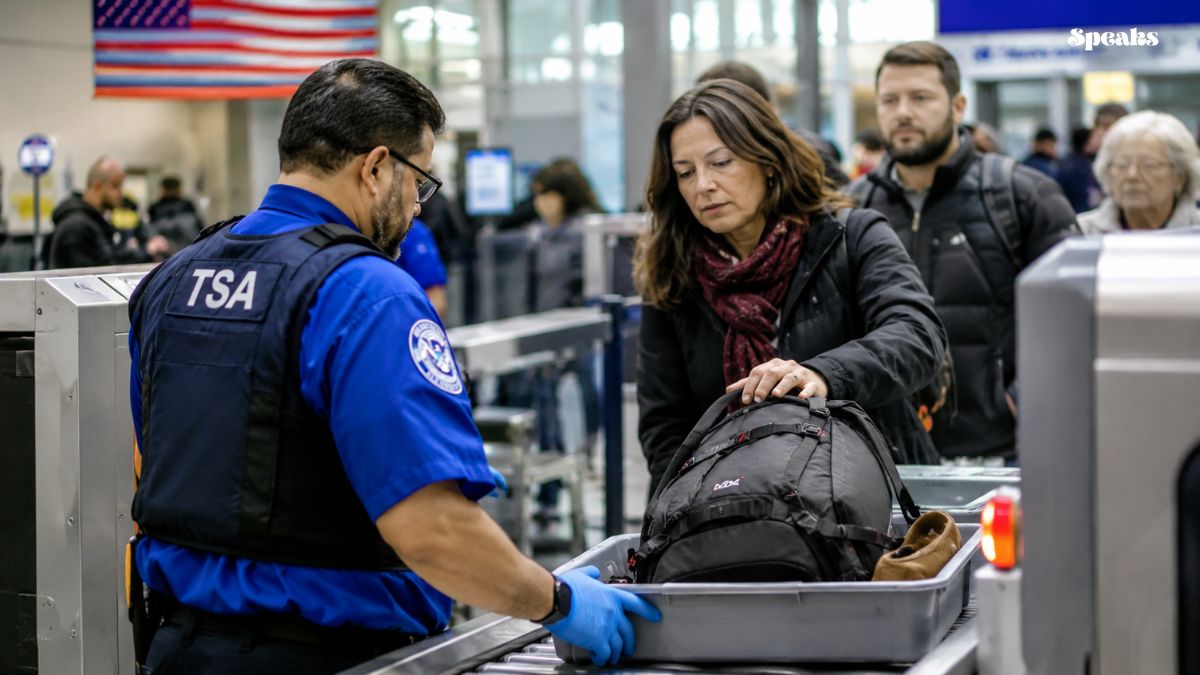
The upcoming holiday travel season in the United States could face significant disruption as a looming federal funding deadline raises concerns about airport security staffing and air traffic control operations. Millions of Americans preparing to travel for Thanksgiving, Christmas and New Year’s could encounter longer airport lines, flight delays and cancellations if Congress fails to reach a funding agreement.
Federal funding for the Transportation Security Administration (TSA) and the Federal Aviation Administration (FAA) is scheduled to expire on December 12, 2026. That deadline falls just two weeks before the busiest part of the holiday travel season, creating fresh uncertainty for airlines, airport workers and passengers.
If lawmakers fail to approve new funding, essential aviation employees could once again be required to work without receiving their regular paychecks.
TSA and FAA Funding Deadline Raises Holiday Travel Concerns
The potential funding lapse has become a major concern for aviation industry unions, particularly those representing airport security screeners and air traffic controllers.
Both agencies play essential roles in keeping the country’s aviation system operational. While TSA employees manage passenger and baggage screening at airports, FAA controllers coordinate aircraft movements and maintain safe air traffic operations.
During previous government shutdowns, employees in both agencies were required to continue working because their responsibilities were considered essential. However, delayed paychecks created financial pressure, leading some workers to miss shifts or face difficulties covering basic expenses.
Those staffing problems contributed to longer security lines, airport congestion and flight disruptions during earlier shutdowns.
The timing of the latest funding deadline is particularly concerning because airlines are already preparing for one of the busiest travel periods of the year.
Why a Government Shutdown Could Create Long TSA Security Lines
A government shutdown does not automatically close every airport security checkpoint. However, a shortage of available security officers could significantly affect passenger processing.
During previous funding disruptions, some airport security lines stretched for hours, with passengers waiting outside terminal buildings at particularly busy locations.
Workers who continued reporting for duty without pay faced growing financial difficulties. Some struggled to afford transportation, childcare and other essential expenses, making it harder to maintain normal staffing levels.
Hydrick Thomas, a council president for the American Federation of Government Employees (AFGE), which represents TSA employees, warned that airport workers take their responsibilities seriously and want passengers to reach their families during the holidays.
The union has also been involved in a dispute with the Trump administration following an executive order issued in early 2025 that ended federal recognition of the union and its contract.
For airport travelers, the central concern is whether enough trained personnel will be available to manage the expected passenger volumes.
FAA Air Traffic Controller Shortages Add Another Risk
Airport security is only one part of the potential disruption. The FAA is also dealing with an existing shortage of air traffic controllers, adding another layer of uncertainty to the holiday travel outlook.
Air traffic controllers coordinate aircraft movements, manage departures and arrivals, and help maintain safe distances between planes. Their availability is essential to keeping airport operations running efficiently.
Nick Daniels, president of the National Air Traffic Controllers Association, has raised concerns about the pressure on employees who are already working with aging equipment and staffing shortages.
The latest funding uncertainty could make those challenges harder to manage.
If more controllers become unavailable during a shutdown, the FAA could restrict flight operations at certain busy airports. That could result in fewer available departures, longer delays and cancellations.
Passengers could also struggle to find replacement flights because airlines typically operate close to their maximum scheduled capacity during major holiday periods.
Previous Government Shutdowns Show What Could Happen
Past shutdowns have demonstrated how quickly staffing problems can affect the US aviation system.
When federal aviation employees are required to work without regular pay, financial pressure can lead to increased unscheduled absences and operational challenges.
During the previous shutdown, staffing shortages at air traffic control facilities contributed to flight cancellations. The FAA restricted operations at some of the country’s busiest airports, reducing the number of flights that could safely operate.
TSA checkpoints also experienced significant delays as fewer available employees handled large numbers of passengers.
The potential for similar problems in December is especially concerning because airlines are already reporting strong holiday bookings.
Political Negotiations Could Determine Whether Holiday Flights Face Disruptions
Despite growing concerns from aviation unions, political leaders are expected to pursue an agreement to prevent another government shutdown.
One possible approach is passing another short-term funding measure, allowing federal agencies to continue operating while lawmakers negotiate a longer-term spending agreement.
However, negotiations have effectively stalled ahead of the Senate Democrats’ internal leadership election scheduled for December 1, according to lawmakers and senior aides cited by CNN.
That timing leaves a relatively short window before the December 12 funding deadline.
Both political parties have reasons to avoid a shutdown during the holiday season. A prolonged disruption could affect millions of travelers, create additional pressure on airport operations and damage confidence in the country’s aviation system.
Nevertheless, an agreement is not guaranteed, leaving federal employees and passengers waiting for greater clarity.
Strong Holiday Flight Demand Could Make Disruptions Worse
The US holiday travel period is traditionally one of the busiest times for airlines and airports. Thanksgiving, Christmas and New Year’s generate substantial passenger demand across domestic and international routes.
According to figures cited by CNN, TSA screened approximately 140,000 more passengers per day than its average during the period from the Saturday before Christmas through the Sunday after New Year’s last year.
That additional demand puts pressure on airport security checkpoints, baggage handling operations and airline schedules.
Airlines typically add capacity to accommodate holiday travelers, but high operating costs have forced some carriers to reduce less profitable flights.
As a result, passengers whose flights are canceled may have fewer alternative options, particularly on popular routes.
A staffing shortage affecting both airport security and air traffic control could make an already crowded travel period more difficult.
What US Travelers Should Know Before Booking Holiday Flights
Travelers planning to fly during Thanksgiving and the December holidays should pay attention to developments surrounding federal funding negotiations.
Although a potential shutdown does not mean every flight will be canceled, staffing shortages could create additional delays and airport congestion.
Passengers can take several practical steps to reduce the impact of unexpected disruptions:
- Check airline websites and mobile apps regularly for flight status updates.
- Arrive at the airport with sufficient time for security screening.
- Keep boarding passes and important travel documents accessible.
- Consider booking alternative flights when traveling on particularly busy routes.
- Monitor official airport and airline announcements before leaving home.
- Keep receipts for eligible expenses if a flight disruption affects travel plans.
Passengers whose flights are canceled and who choose not to travel are generally entitled to a refund under applicable US Department of Transportation rules, including when the airline is responsible for the cancellation.
Travelers should also review their airline’s rebooking policies and any relevant credit card travel protections.
TSA and Aviation Unions Urge Lawmakers to Avoid Another Shutdown
Union representatives are increasingly concerned about the financial and operational consequences of another funding lapse.
AFGE representatives say TSA employees remain committed to protecting passengers, but requiring essential workers to report for duty without timely pay creates unnecessary pressure on an already demanding workforce.
Air traffic controllers have also called attention to the need for better staffing, modern equipment and stable working conditions.
The aviation system depends heavily on trained employees who perform critical responsibilities every day. A funding dispute that affects their ability to work could have consequences extending well beyond individual airports.
With December 12 approaching, the outcome of negotiations in Washington could become an important factor in determining how smoothly millions of Americans travel during the 2026 holiday season.