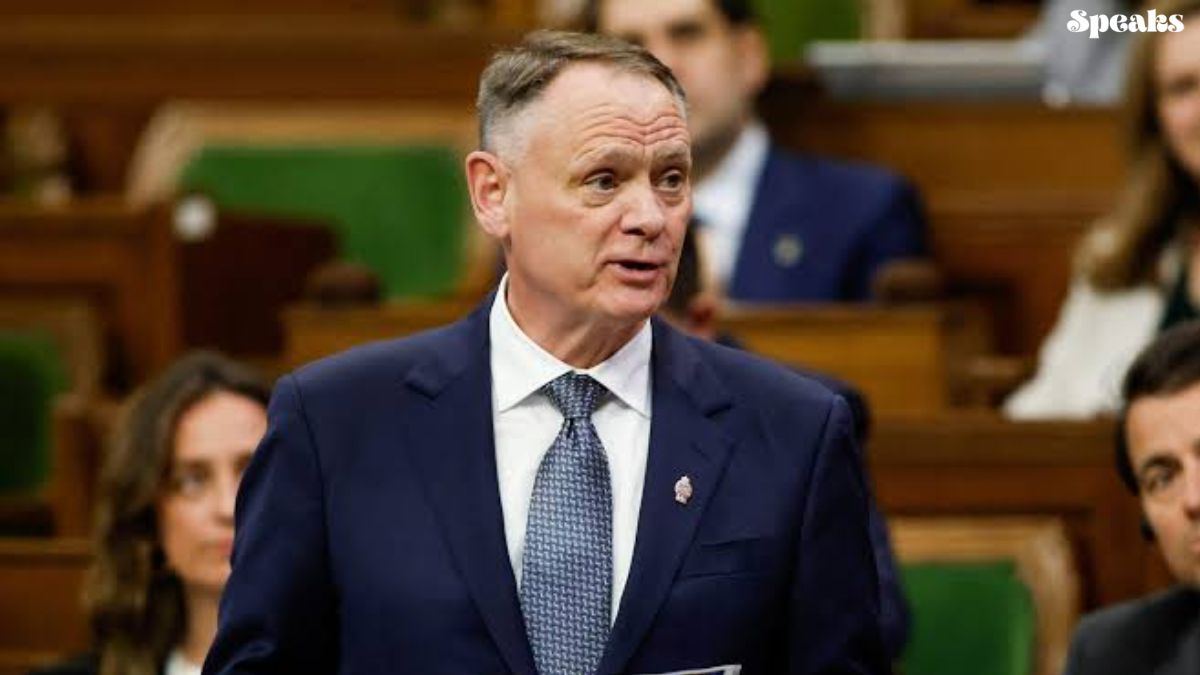
Halifax: Canadian Defense Minister David McGuinty said Saturday that military cooperation between Canada and the United States remains unchanged, despite reports of a classified Pentagon memo introducing new restrictions on the countries’ defense relationship.
Speaking to Reuters on November 21 during a security conference in Halifax, Nova Scotia, McGuinty said he had not seen the alleged document and had observed no significant change in how the two countries’ armed forces work together.
The remarks come one day after The Washington Post reported that U.S. Defense Secretary Pete Hegseth had issued a classified directive outlining new limits on military engagement with Canada. The report cited officials familiar with the matter.
McGuinty said Canadian and American military personnel continue to cooperate closely across several defense operations, including efforts to intercept illegal drug shipments in the Caribbean, integrated missile defense systems and fighter jet deployments across North America.
“I still see no daylight between what we’re doing, military to military, and otherwise,” McGuinty said, emphasizing that operational cooperation between the neighboring countries continues.
The Pentagon has not publicly provided detailed information about the alleged restrictions. However, its spokesperson previously indicated that the directive would not affect intelligence sharing or military cooperation through NATO and the North American Aerospace Defense Command, known as NORAD.
The distinction is important because NORAD remains a central part of North America’s defense infrastructure. The organization coordinates aerospace warning, surveillance and defense operations between Canada and the United States.
McGuinty described the countries’ 70-year partnership through NORAD as an effective continental defense arrangement. He said Canada wants to continue investing in the system and maintaining close cooperation with Washington.
His comments also come amid growing political tensions between the two countries. President Donald Trump’s repeated remarks about making Canada part of the United States have raised concerns in Ottawa about the future of the bilateral relationship.
Despite those disagreements, McGuinty said he had not seen evidence that political tensions had changed the way Canadian and American military forces work together.
Canada, however, is increasingly focused on strengthening its independent defense capabilities. McGuinty said the country needs to take greater responsibility for protecting its territory, particularly its extensive Arctic region.
The Arctic has become an increasingly important security priority as governments pay closer attention to strategic competition, military activity and the protection of critical infrastructure in the region.
Canada is also developing a communications system designed to compete with Elon Musk’s Starlink satellite network. The initiative is intended to strengthen the country’s communications sovereignty and reduce its reliance on foreign-controlled infrastructure.
McGuinty acknowledged that some recent changes in Canadian defense policy were influenced by Trump’s comments and broader concerns about the changing international security environment.
Prime Minister Mark Carney has repeatedly highlighted the need for Canada to respond to a shifting global order by increasing national security investment and strengthening its defense capabilities.
Canada reported reaching NATO’s defense spending benchmark of 2% of gross domestic product for the first time last year. The government has also outlined plans to increase defense spending to 5% of GDP by 2035.
The spending increase reflects Ottawa’s effort to modernize its armed forces, improve Arctic security and take on a greater role in protecting North America.
“We’ve been in a comfortable position for decades, but things have now changed,” McGuinty said.
The latest developments highlight the delicate balance facing Canada: maintaining its long-standing military partnership with the United States while building greater independence in defense, technology and national security.