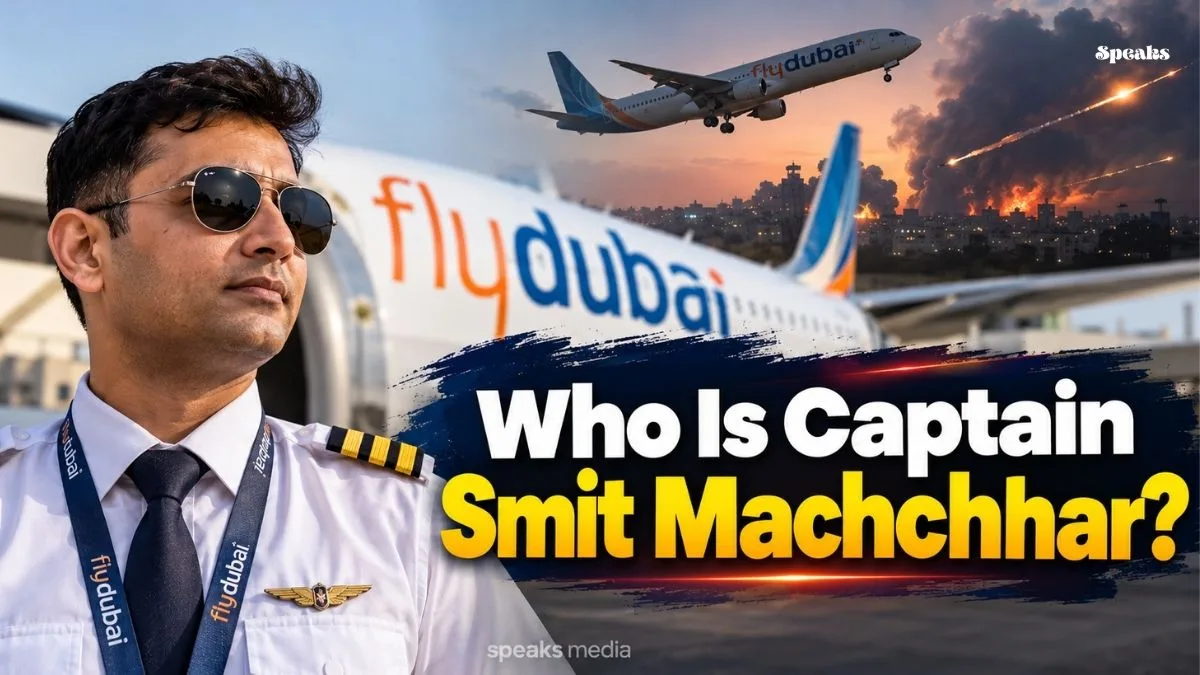
The September 30 incident on flydubai flight FZ1073 from Dubai to Tel Aviv has raised questions about aircraft safety. The Boeing 737 MAX 8 with 174 passengers was at an altitude of about 34,000 feet when the two pilots collided violently. According to Israeli officials, the co-pilot attacked Indian captain Smit Machar with a knife and tried to bring the plane down. However, the final confirmation will be done only after the investigation. Flydubai said there was a scuffle on the flight deck and other on-duty crew secured the plane.
At about 5:21 GMT the plane began its rapid descent. According to flight-tracking data, it soon descended more than 14,000 feet and settled at about 15,000 feet. After this the plane sent the code 7700, which is the sign of a normal emergency. A 7500 code was then sent, which is used to report hijacking or unlawful interference with aircraft. According to the BBC, two additional flydubai pilots on the plane handled the situation with the help of passengers and crew. The wounded captain opened the cockpit door, after which the men subdued the assailant. The plane made a safe emergency landing in Tabuk, Saudi Arabia.
Why was the cockpit made into a fortress after 9/11?
Terrorists used airplanes as weapons in the September 11, 2001 attacks. Previously, the purpose of cockpit security was to protect passengers and crew in the event of a hijack. After the attacks, the US implemented new standards for flight deck security in 2002. Cockpit doors were reinforced, required to be locked during flight, and strict regulations were made for their use. These standards were also related to the international aviation security system.
But the 2015 crash of Germanwings Flight 9525 revealed another threat. The co-pilot locked the cockpit door from the inside and kept the captain out. The plane crashed and 150 people died. After this, the European Aviation Safety Agency EASA recommended the presence of at least two people in the cockpit during flight. This was later modified based on risk, which also included psychological and safety tests.
How much are pilots tested?
Pilots undergo medical and safety checks. Psychological evaluations, medical records, behavior, substance use, employment and personal history may be reviewed, if necessary, under US FAA guidelines. But this investigation reveals the situation at that time. It is difficult to detect changes in someone’s behavior in the future.
Are strong doors and automation enough?
No. A strong cockpit door is designed to prevent outside attackers. The US has also mandated additional secondary flight-deck barriers on new commercial aircraft by 2023 to provide protection when the main door opens. An autopilot helps keep an airplane on course and at altitude, but it cannot stop an aggressive pilot. The FAA also considers automation to be an aid to the pilot, not a replacement.
How much can cabin crew and ATC help?
If the pilot becomes unconscious, the cabin crew may attempt to contact and, if necessary, use the emergency cockpit entry system in accordance with aircraft procedures. But a violent pilot can prevent the door from opening from the inside. So this system is not effective in all situations. ATC can help the aircraft to reach the airport safely, clear the path and make an emergency landing. But he cannot control the aircraft from the ground.
Who is the last wall of protection?
A second trained pilot is the most important safety layer. Then the cabin crew, cockpit entry system, ATC, emergency regulations and automation help in different situations. FAA research has also analyzed the role of these systems in the event of pilot incapacitation. But the biggest gap in an incident like Flydubai is that other systems can provide time if one pilot attacks another, but do not guarantee an immediate stop to the attacker. Therefore, access to the cockpit, role of the crew, screening of pilots and emergency procedures will be important questions in the investigation.