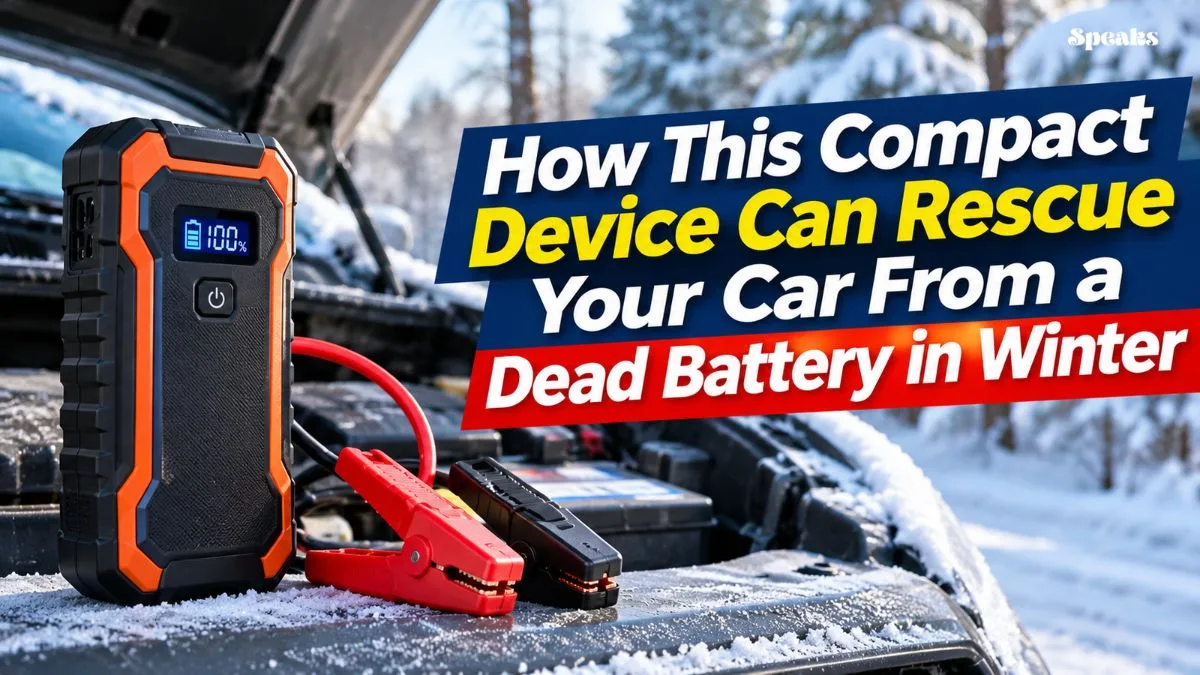
New Delhi: A dead car battery can ruin your morning, especially during winter when vehicles sometimes struggle to start after sitting overnight. A portable car jump starter offers drivers a convenient way to restart their vehicles without waiting for another car or roadside assistance.
The compact device looks similar to a power bank and can easily fit inside a car’s glove compartment. It carries its own rechargeable battery and supplies the electrical power needed to crank an engine when the vehicle’s battery cannot deliver enough starting power.
With temperatures dropping across parts of India, motorists may face more battery-related starting problems. Understanding how this device works, what features matter and how much it costs can help drivers make a smarter purchase.
Why Do Car Batteries Struggle to Start Engines in Winter?
Cold weather can significantly affect a vehicle’s battery performance. Lower temperatures slow down the chemical reactions inside traditional lead-acid batteries, reducing their ability to deliver the electrical current required to start an engine.
At the same time, engine oil becomes thicker in colder conditions. This increases the resistance the starter motor must overcome, potentially requiring more electrical power during ignition.
The problem can become worse for people who primarily drive short distances. Frequent short trips may not give the alternator enough time to replace the energy consumed during repeated engine starts.
Vehicles parked for several days can also experience battery drain. Security alarms, GPS trackers, electronic control systems and other accessories may continue drawing small amounts of electricity even when the engine is switched off.
An ageing battery, loose terminals or a faulty charging system can make these problems more noticeable. A portable starter can help in an emergency, but it cannot repair an underlying battery or alternator fault.
How Does a Portable Car Jump Starter Work?
A portable jump starter is generally powered by a rechargeable lithium-ion or lithium-polymer battery pack. It comes with jumper cables featuring two clamps, usually marked red for positive and black for negative connections.
When a vehicle’s battery becomes too weak to start the engine, the jump starter temporarily supplies the high electrical current needed by the starter motor. This allows the engine to crank without requiring another vehicle.
Most modern models include an intelligent control unit that monitors the electrical connection. Depending on the device, this system can prevent operation when the clamps are connected incorrectly or an electrical fault is detected.
However, a jump starter does not recharge a completely discharged car battery like a conventional battery charger. Its primary purpose is to provide enough power to start the engine so the vehicle can be checked and its charging system assessed.
What Features Should You Check Before Buying a Car Jump Starter?
Choosing the right model requires more than comparing prices or selecting the device with the highest advertised power rating. Buyers should check whether the starter is compatible with their vehicle’s engine size and fuel type.
Peak amperage is one of the most important specifications. It represents the maximum current a jump starter can deliver for a short period, although manufacturers may use different testing methods when advertising this figure.
Petrol hatchbacks generally require less starting power than larger diesel SUVs. Buyers should follow the manufacturer’s vehicle compatibility recommendations instead of relying exclusively on headline peak-amp numbers.
Battery capacity is another important consideration. A higher-capacity power pack may support more starting attempts and provide additional charging capacity for smartphones and other electronic devices.
The quality of jumper cables and clamps also matters. Strong, well-insulated clamps and sufficiently thick cables help establish a reliable connection with the vehicle’s designated jump-start points.
Essential Safety Features Every Buyer Should Look For
Modern vehicles contain electronic control units, sensors and sensitive electrical components. An incorrectly connected jump starter can potentially damage the vehicle’s electrical system, making built-in protection particularly important.
Reverse-polarity protection helps prevent damage when the positive and negative clamps are accidentally connected to the wrong terminals. This feature is especially useful for motorists who have limited experience with jump-starting vehicles.
Short-circuit protection helps stop the electrical supply when the device detects an unsafe connection. Overcurrent and overtemperature protection provide additional safeguards during operation.
Spark-proof technology is another useful feature. It helps prevent dangerous electrical sparks by controlling when current reaches the clamps.
Buyers should also look for clear warning indicators showing connection errors and the jump starter’s remaining battery level. A device with straightforward operating instructions can make emergency use easier.
Portable Car Jump Starter Price in India
Portable car jump starters are available through automotive accessory retailers and online shopping platforms. According to the buying information reported by TV9 Marathi, prices in India generally range from approximately ₹4,000 to ₹15,000.
The final price depends on battery capacity, starting current, vehicle compatibility, safety features and additional functions. Buyers should compare specifications and warranty coverage rather than choosing a product simply because it is inexpensive.
Budget models may be suitable for smaller petrol vehicles if their specifications meet the manufacturer’s requirements. Larger petrol engines and diesel-powered SUVs generally need more powerful units.
Before ordering, check the seller’s return policy, manufacturer warranty and availability of customer support. Purchasing from an authorized seller can also help reduce the risk of receiving an unsuitable or poorly supported product.
Can a Jump Starter Also Charge Your Smartphone?
Many portable jump starters offer additional functions beyond emergency engine starting. Several models include USB charging ports that allow users to charge smartphones and other compatible electronic devices.
An integrated LED flashlight can also prove useful when dealing with battery problems at night or in poorly lit parking areas. Some premium products include emergency lighting modes for roadside situations.
However, these additional features should not be the main reason for choosing a model. Starting performance, battery capacity, compatibility and electrical protection should remain the primary purchasing considerations.
How to Use a Portable Jump Starter Safely
Before connecting the device, switch off the vehicle’s ignition and all electrical accessories. Read the jump starter’s instructions and consult the vehicle owner’s manual to identify the correct jump-starting terminals.
Connect the red positive clamp to the designated positive terminal and the black negative clamp to the appropriate negative connection or manufacturer-recommended grounding point.
Never assume that every vehicle uses the same connection procedure. Some modern cars provide dedicated jump-starting points, and hybrid vehicles may have specific requirements.
Once the connections are secure, activate the device according to its instructions and attempt to start the engine. Avoid repeated long cranking attempts, as this can overheat the starter motor and damage equipment.
After the engine starts, disconnect the clamps in the sequence specified by the jump starter manufacturer. Keep the cables away from moving engine components and store the device safely.
If the vehicle repeatedly fails to start, stop attempting to jump-start it and seek professional assistance. A damaged battery, electrical fault or charging-system problem may require inspection.
How to Maintain a Portable Jump Starter
A portable jump starter is useful only when it has enough stored power during an emergency. Drivers should check its battery indicator regularly and recharge the unit according to the manufacturer’s maintenance recommendations.
Avoid leaving the device exposed to direct sunlight or extreme temperatures inside a parked vehicle. Excessive heat can accelerate battery degradation and affect long-term performance.
Store the starter in a dry, secure location and inspect its cables and clamps periodically for visible damage. Damaged cables should not be used.
For motorists who regularly travel long distances, keep the jump starter accessible rather than buried underneath luggage or other equipment. Checking its charge before a road trip can also prevent unpleasant surprises during an emergency.